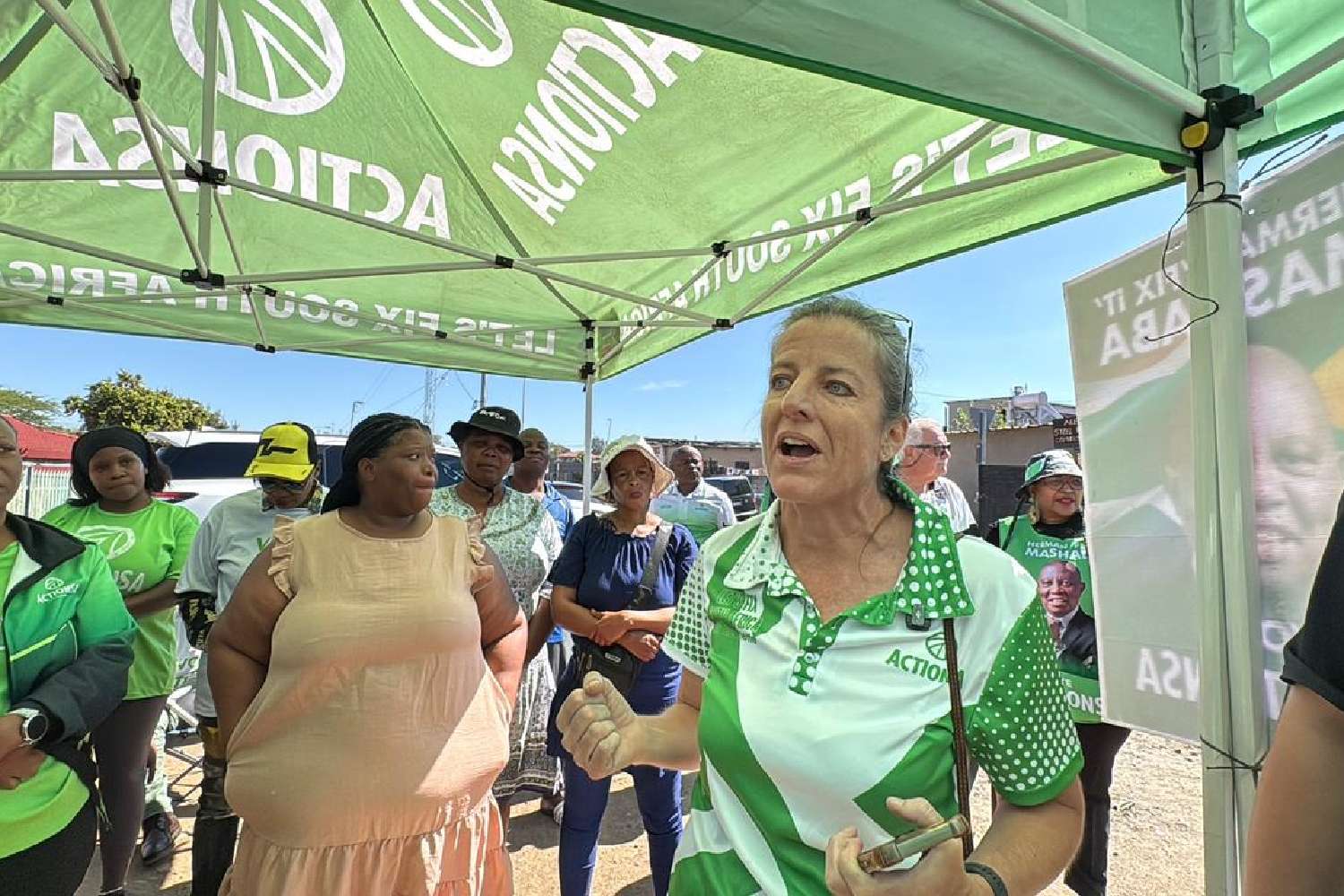

More than 500 South Africans marched through central Johannesburg on Wednesday, shutting down large sections of the city’s business district and calling on the government to crack down on illegal immigration, as ActionSA and the civil organisation March and March brought some of the city’s busiest commercial corridors to a standstill.
The protest assembled at Mary Fitzgerald Square in Newtown from 09:00 before moving through the CBD and ending at Beyers Naudé Square, and it is the latest flashpoint in South Africa’s intensifying public debate over undocumented foreign nationals and the government’s capacity to manage the country’s borders.
Shop owners across the CBD, both local and foreign-owned, shuttered their businesses ahead of the march over fears of looting, a precaution that underscored the charged atmosphere surrounding the demonstration.
The Ghana High Commission issued a warning to Ghanaian nationals to avoid the Johannesburg CBD for the duration of the protest, and the march drew coverage from the Washington Post, ABC News and Al Jazeera.
What the marchers are demanding
The coalition behind the march is calling for stricter immigration controls, tighter visa regulations and a comprehensive review of South Africa’s asylum processes.
Protesters also want action against businesses that employ undocumented foreign nationals, and they are pushing for a more visible government presence at ports of entry.
ActionSA, one of the key organising parties, has built much of its political identity around the immigration issue, arguing that undocumented workers drive unemployment and strain public services in already-stretched urban communities.
The march drew a mix of labour activists, residents’ associations and political party members, and the route through the Johannesburg CBD was chosen to maximise visibility and disruption.
Government pushes back
The South African government rejected claims on Wednesday that it has failed to crack down on illegal immigration, as reported by EWN.
The response came while demonstrators were still on the march, underlining the degree to which immigration has become a live political point of tension between civil society groups demanding action and an administration that insists enforcement measures are already in place.
No specific new policy announcement accompanied the government’s pushback, and no senior minister addressed the protest directly or committed to a formal policy review.
The demonstration took place against a backdrop of broader economic anxiety, with South Africa’s unemployment rate feeding a narrative that undocumented foreign nationals are competing for a shrinking pool of jobs and public resources.
Labour economists and civil society groups challenge that narrative, pointing to the more complex relationship between migration, labour markets and economic output.
The scale of Wednesday’s march suggests the government will face ongoing pressure to respond with something more substantive than a blanket rejection of criticism.
ActionSA has not confirmed a date for a follow-up demonstration. The immigration debate is likely to remain a central political flashpoint in the weeks ahead.