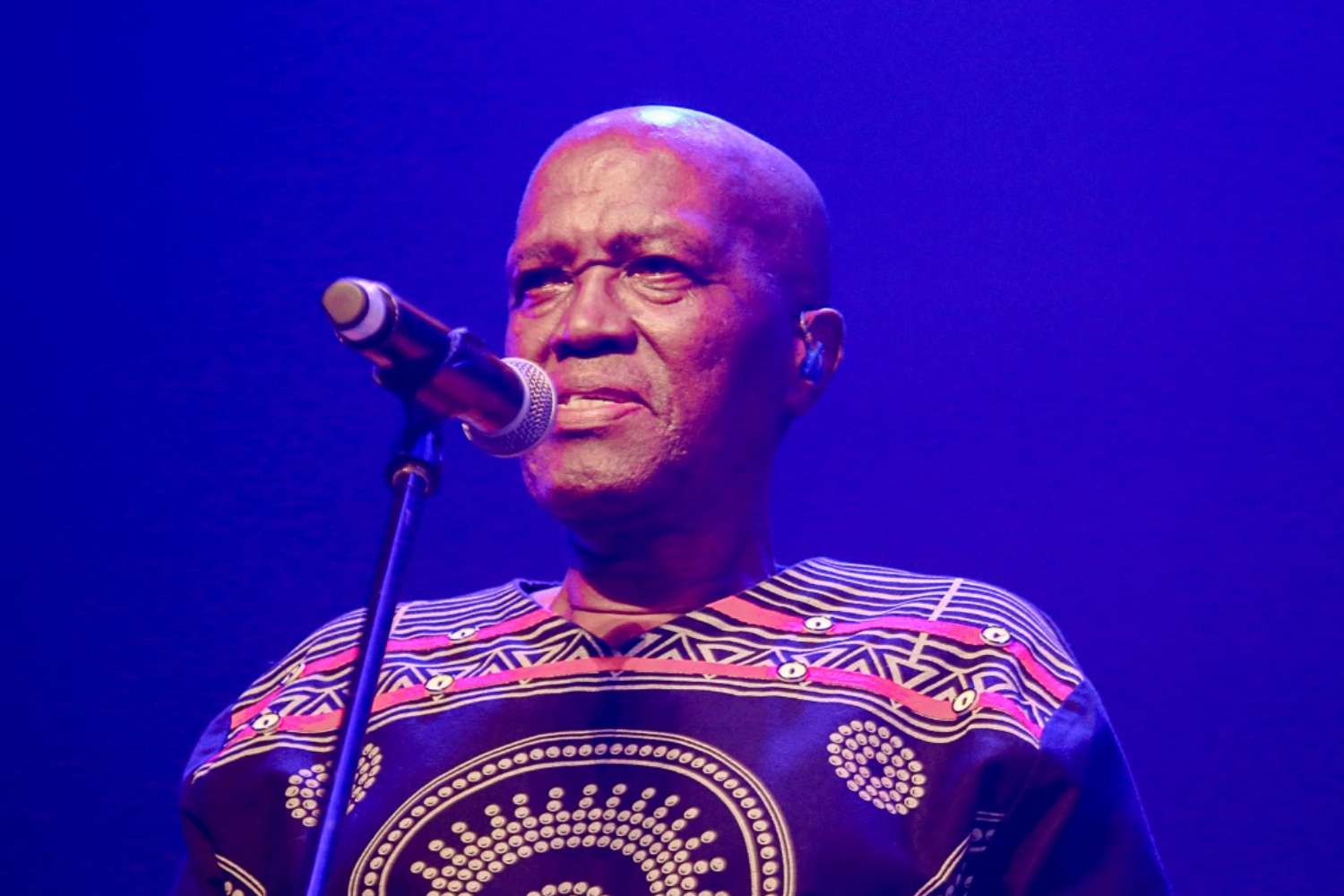

Albert Mazibuko, the stalwart co-founding member of Grammy-winning ensemble Ladysmith Black Mambazo, has died at age 77 following a short illness. Mazibuko passed away on 6 April 2026, ending more than five decades of artistic collaboration with the legendary South African isicathamiya group.
The death of Mazibuko represents a profound loss for the global music community and marks the passing of a foundational figure in one of Africa’s most celebrated musical exports.
The group’s manager Xolani Majozi confirmed the news, though details regarding memorial services and funeral arrangements are expected to follow.
Mazibuko joined Ladysmith Black Mambazo in 1969 at the invitation of founder Joseph Shabalala, beginning a partnership that would span 55 years. Throughout his tenure, he became known as Shabalala’s “right-hand man,” serving as a central and stabilising force within the ensemble during periods of remarkable artistic growth and international expansion.
His role extended far beyond performance; Mazibuko provided mentorship, artistic guidance, and institutional knowledge that proved essential to the group’s cohesion and creative direction.
The formation of Ladysmith Black Mambazo in 1956 by Shabalala established a distinctive sound rooted in isicathamiya, a form of male vocal harmony singing that originated in the Durban region of KwaZulu-Natal.
The group remained largely known within South African circles until 1986, when American musician Paul Simon featured them on his landmark album Graceland.
That collaboration introduced Ladysmith Black Mambazo to global audiences and fundamentally altered the trajectory of their career, earning them subsequent Grammy Awards and international recognition.
Following Shabalala’s retirement from active performance in 2014, Mazibuko assumed an increasingly visible leadership role within the ensemble. He became the primary presence guiding newer members, ensuring that the group’s distinctive vocal techniques, choreography, and spiritual philosophy were transmitted to subsequent generations.
His mentorship was instrumental in preserving the authentic character of Ladysmith Black Mambazo during a period of transition and generational change.
The isicathamiya vocal tradition practiced by Ladysmith Black Mambazo represents a uniquely South African contribution to world music. The form emphasizes intricate vocal layering, rhythmic precision, and lyrical content that frequently addresses social, spiritual, and cultural themes.
Mazibuko’s participation in this tradition spanning more than half a century positioned him as a cultural ambassador and custodian of an important musical heritage.
Ladysmith Black Mambazo’s achievements in the international music landscape include numerous Grammy nominations and awards, sold-out performances across multiple continents, and sustained critical recognition from music critics and scholars worldwide.
The group has performed at major venues including Carnegie Hall and the Grammy Awards ceremony itself, representing South African artistic achievement on the world’s most prominent stages.
Throughout these successes, Mazibuko remained a steady and respected member of the ensemble.
The impact of Mazibuko’s contributions extends beyond commercial success or critical acclaim. His presence within Ladysmith Black Mambazo helped establish a model of artistic excellence, cultural pride, and dignified representation that transcended entertainment to embody broader themes of South African identity and resilience.
His collaborations with Shabalala and fellow ensemble members created a body of work that continues to resonate with audiences across generations and geographic boundaries.
Mazibuko is survived by his family and by the enduring legacy of his musical contributions.
The loss of such a foundational figure will be felt deeply within the music community, particularly among those who have worked alongside or learned from him throughout his remarkable career.