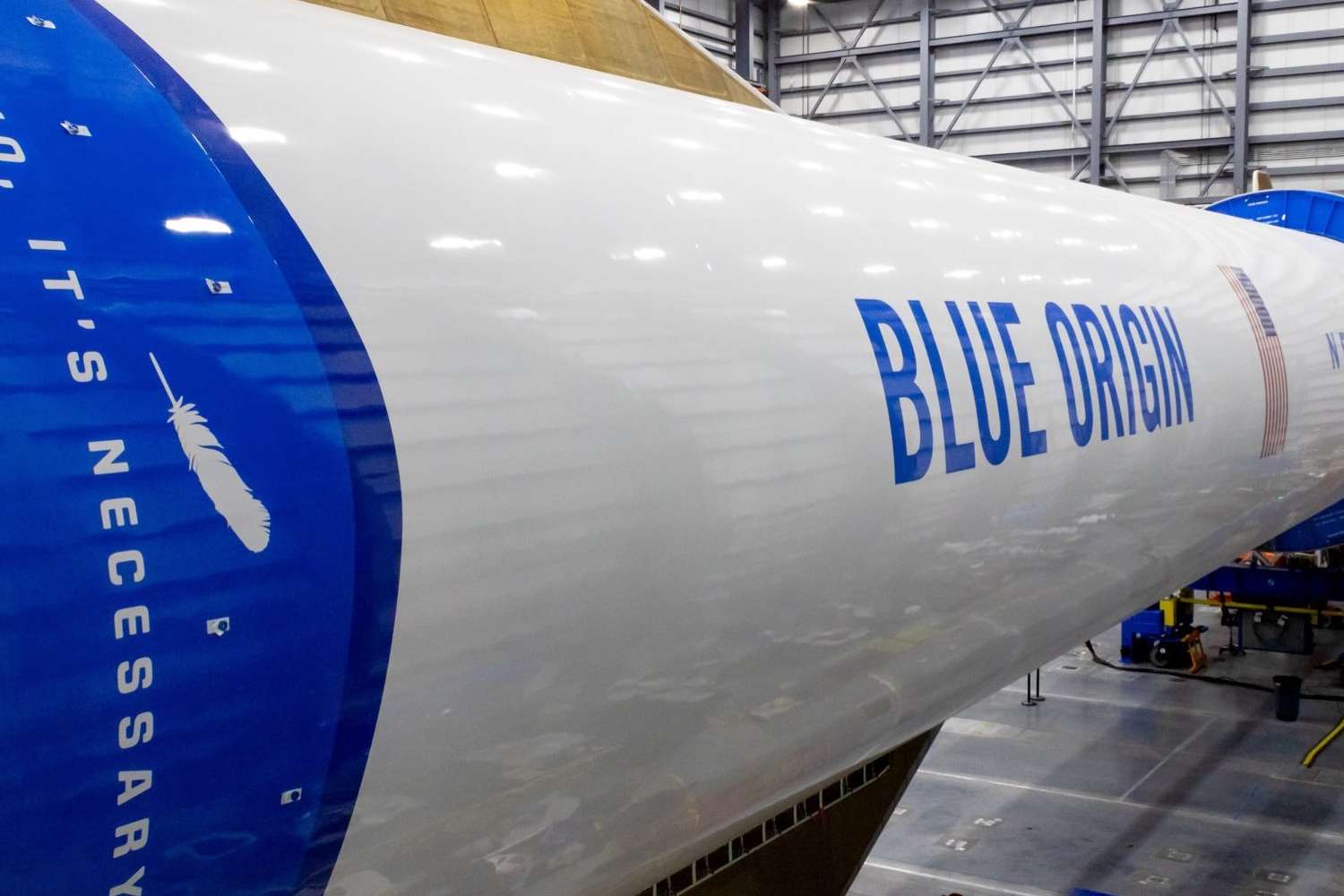


Blue Origin’s New Glenn rocket exploded on its launch pad at Cape Canaveral on Thursday, 28 May 2026, during a pre-launch engine test, destroying the vehicle in what is being described as one of the largest rocket explosions in United States history, as reported by CBS News.
The explosion occurred at approximately 21:00 EDT as Blue Origin engineers conducted a static fire test of the New Glenn’s seven BE-4 methane-fueled engines.
A static fire is a controlled ground test in which a rocket’s engines are ignited while the vehicle remains bolted to the pad.
It is one of the final verification steps before a rocket is cleared for an actual launch. Something went wrong almost immediately after the engines began to fire.
How the Blue Origin New Glenn explosion unfolded
The 188-foot-tall first stage became enveloped in rapidly expanding fire within seconds of ignition. The 86-foot upper stage could then be seen tilting and beginning to fall as the structure of the first stage collapsed beneath it.
The entire stack was consumed. Blue Origin confirmed in a statement that all personnel had been accounted for and that no injuries were reported.
The decision was made to allow the fire to burn itself out naturally rather than risk additional structural damage through suppression efforts.
Jeff Bezos, who founded Blue Origin in 2000, addressed the incident on social media. “Very rough day,” he wrote, “but we’ll rebuild whatever needs rebuilding and get back to flying.” He added a separate statement:
“It’s too early to know the root cause but we’re already working to find it.”
The explosion is the most serious incident in Blue Origin’s history. While its primary competitor in the heavy-lift market has publicly embraced early failures as part of an iterative development philosophy, Blue Origin has historically operated with greater caution and less public transparency around technical setbacks.
The scale of this event represents a significant departure from that pattern.
What the New Glenn explosion means for Blue Origin
The New Glenn had been in the final pre-launch phase for its next commercial mission: placing a batch of Amazon Leo internet satellites into low Earth orbit.
Amazon’s Project Kuiper broadband satellite network, which is competing directly with established players in the consumer internet satellite market, has been counting on New Glenn as a primary launch vehicle.
That mission is now indefinitely delayed.
New Glenn is a heavy-lift rocket Blue Origin has been developing for the better part of a decade. The vehicle completed its first successful orbital mission in January 2025, making this explosion a significant reversal after what had been a promising first year of operational flight.
The BE-4 engines that power the New Glenn are also supplied to United Launch Alliance for its Vulcan Centaur rocket, a separate programme that may come under scrutiny as investigators examine the cause of the failure.
An independent investigation into the anomaly is expected to follow. The agency that licenses commercial rocket launches in the United States has not yet commented on whether a formal investigation will be opened.
No replacement launch date for the Amazon Leo mission has been announced, and Blue Origin has not provided a timeline for its return to flight.