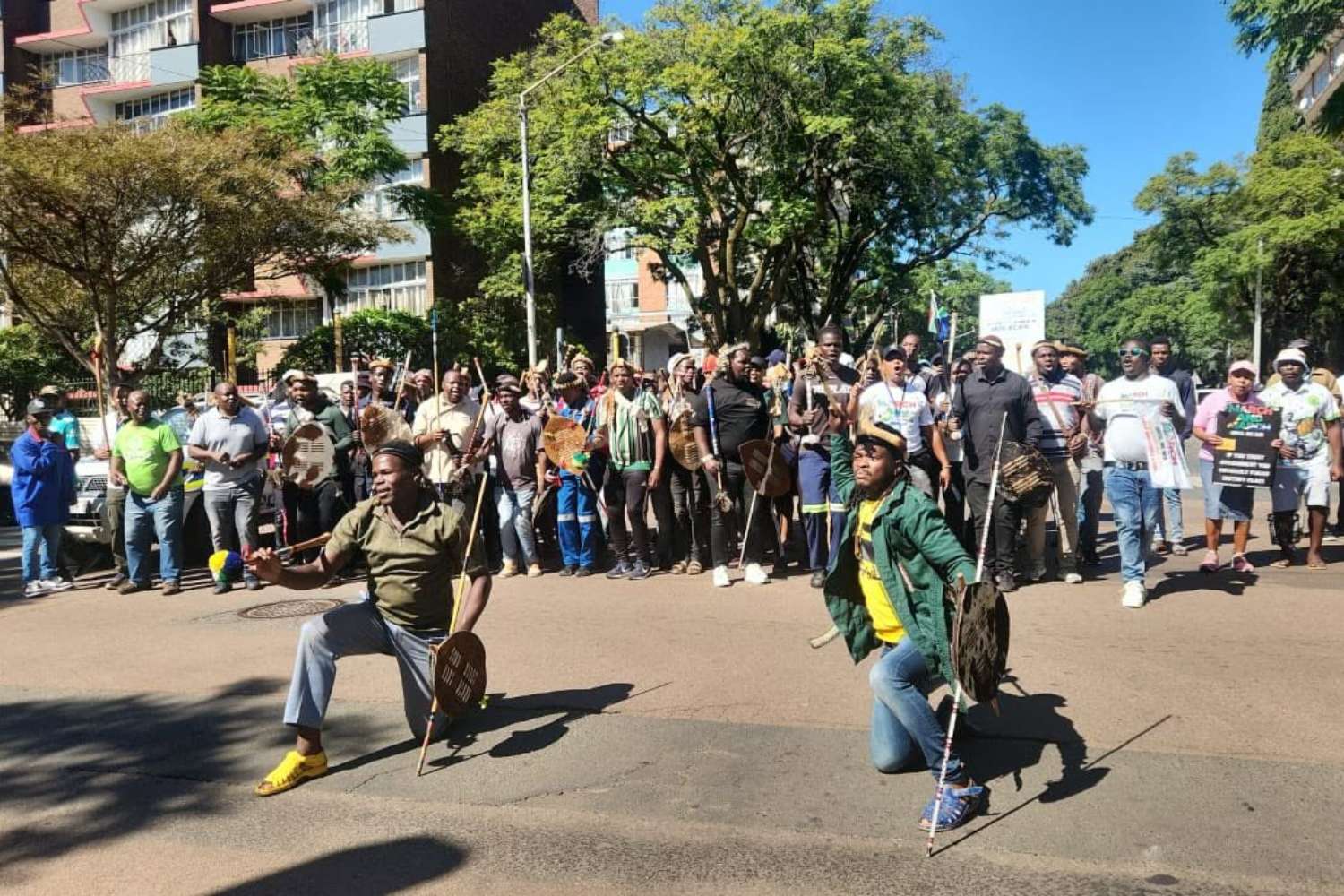


The March and March Movement has confirmed it will go ahead with a national shutdown on Tuesday, 30 June 2026, the date it has set as a deadline for undocumented immigrants to leave South Africa.
The anti-immigration civic group announced this week that the shutdown will proceed as planned, as reported by SABC News.
The movement, which has staged a string of protests since early 2025, is demanding the immediate and mass deportation of undocumented foreign nationals and a tougher government stance on border control.
What the March and March national shutdown demands
March and March was founded by former radio presenter Jacinta Ngobese-Zuma and has framed its campaign as anti-xenophobic, focused on national security rather than on targeting individuals.
Its core demand is simple: the removal of undocumented migrants and stricter enforcement at the country’s ports of entry.
The campaign has tapped into deep anxiety over jobs and service delivery, with organisers linking undocumented migration to South Africa’s stubbornly high unemployment rate.
Economists have long disputed that framing, arguing the relationship between migration and the labour market is far more complex than the slogans suggest.
The 30 June date has been positioned as a hard deadline, after which organisers say undocumented foreign nationals should have left the country.
The movement has gained political backing in recent weeks, with the MK Party publicly aligning itself with the campaign and amplifying its message ahead of the planned action.
How government has responded to the 30 June shutdown
The government has moved to manage the fallout, holding an urgent meeting of the Justice, Crime Prevention and Security Cluster at the Union Buildings in Pretoria to address the escalating protests.
Officials have acknowledged the constitutional right to protest while warning that it carries limits.
Defence Minister Angie Motshekga said the right to strike is protected by the Constitution but cautioned that it comes with conditions.
“The right goes with certain responsibilities,” she said, signalling that the state will not tolerate violence or lawlessness during the shutdown.
The shutdown is the latest flashpoint in a debate that has intensified through 2026. Swisher Post has tracked the movement since hundreds marched through the Johannesburg CBD demanding the same crackdown, a protest that shut down parts of the city’s business district and drew international attention.
With the deadline now days away, attention turns to how widely the shutdown is observed and how authorities police it.
Government has indicated it will keep security forces on standby, and the scale of turnout on 30 June will show whether the movement can convert its momentum into sustained political pressure.