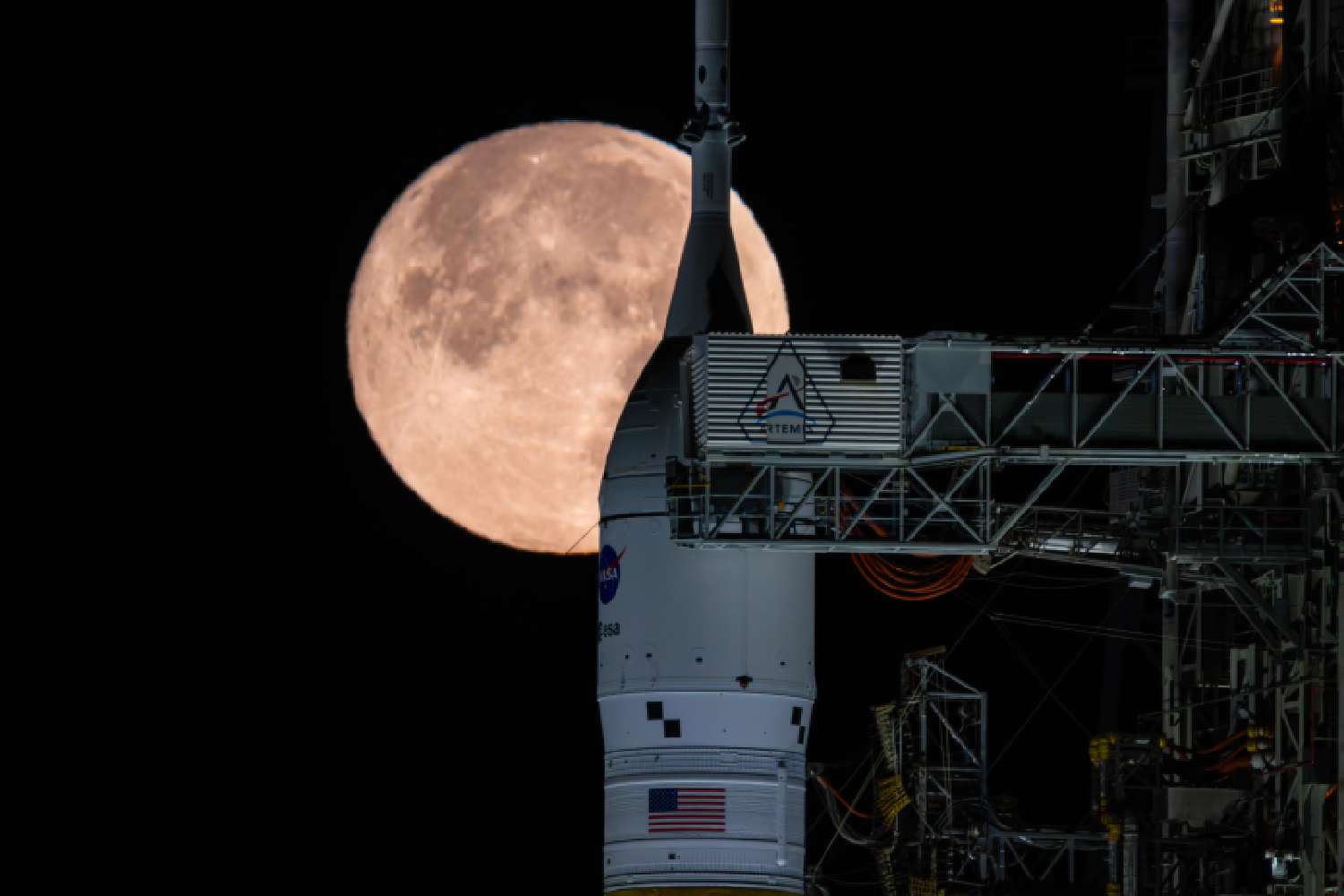


NASA is ramping up activity around the Artemis II launch, with teams at Kennedy Space Centre completing critical tests of the Space Launch System rocket and Orion spacecraft ahead of the first crewed Moon mission in more than 50 years.
The mission will send four astronauts on a 10-day journey around the Moon, marking a major step in NASA’s Artemis programme, which aims to return humans to the lunar surface and prepare for future missions to Mars.
What is happening before the Artemis II launch
NASA has been carrying out a wet dress rehearsal at Launch Pad 39B in Florida. This is a full practice countdown in which the rocket is fuelled with about 700,000 gallons of propellant to test systems, timelines and procedures without actually launching.
Following the fueling test, NASA leaders are scheduled to discuss early results during a news conference at 12:00 EST on Tuesday, 3 February, which is 19:00 SAST. The agency is streaming the briefing live.
If engineers identify issues that need more work, the rocket and spacecraft could be rolled back into the Vehicle Assembly Building for further checks before the Artemis II launch proceeds.
Who is flying on Artemis II?
The Artemis II crew includes four astronauts who will be the first humans to travel this far from Earth since the Apollo era.
Reid Wiseman will serve as mission commander. Victor Glover is the pilot. Christina Koch and Jeremy Hansen, an astronaut from the Canadian Space Agency, are mission specialists.
If NASA gives the final approval after the rehearsal, the astronauts are expected to travel to Kennedy Space Center, where they will continue preparations for launch.
They have already been in quarantine in Houston as part of standard preflight procedures.
What the Artemis II mission will do?
Artemis II is designed to test Orion’s life support systems, communications and navigation with a crew on board. The astronauts will first spend time in Earth orbit performing system checks before heading toward the Moon.
They will travel on a figure eight trajectory around the Moon, passing behind the far side and reaching a distance of about 4,600 miles beyond it. In total, the mission will cover more than 230,000 miles before Orion returns to Earth and splashes down in the Pacific Ocean for recovery.
NASA says the data gathered on this flight will help prepare for Artemis III, which is planned to land astronauts on the lunar surface.
How to watch updates on the Artemis II launch
NASA is providing continuous live coverage as the Artemis II launch campaign unfolds. A 24-hour camera feed shows the rocket on the pad, and additional streams cover major milestones such as the wet dress rehearsal and official briefings.
These broadcasts are available through NASA’s online channels, including YouTube.
As the countdown to the Artemis II launch continues, the focus remains on ensuring that both the rocket and spacecraft are ready to safely carry astronauts on humanity’s next journey around the Moon.