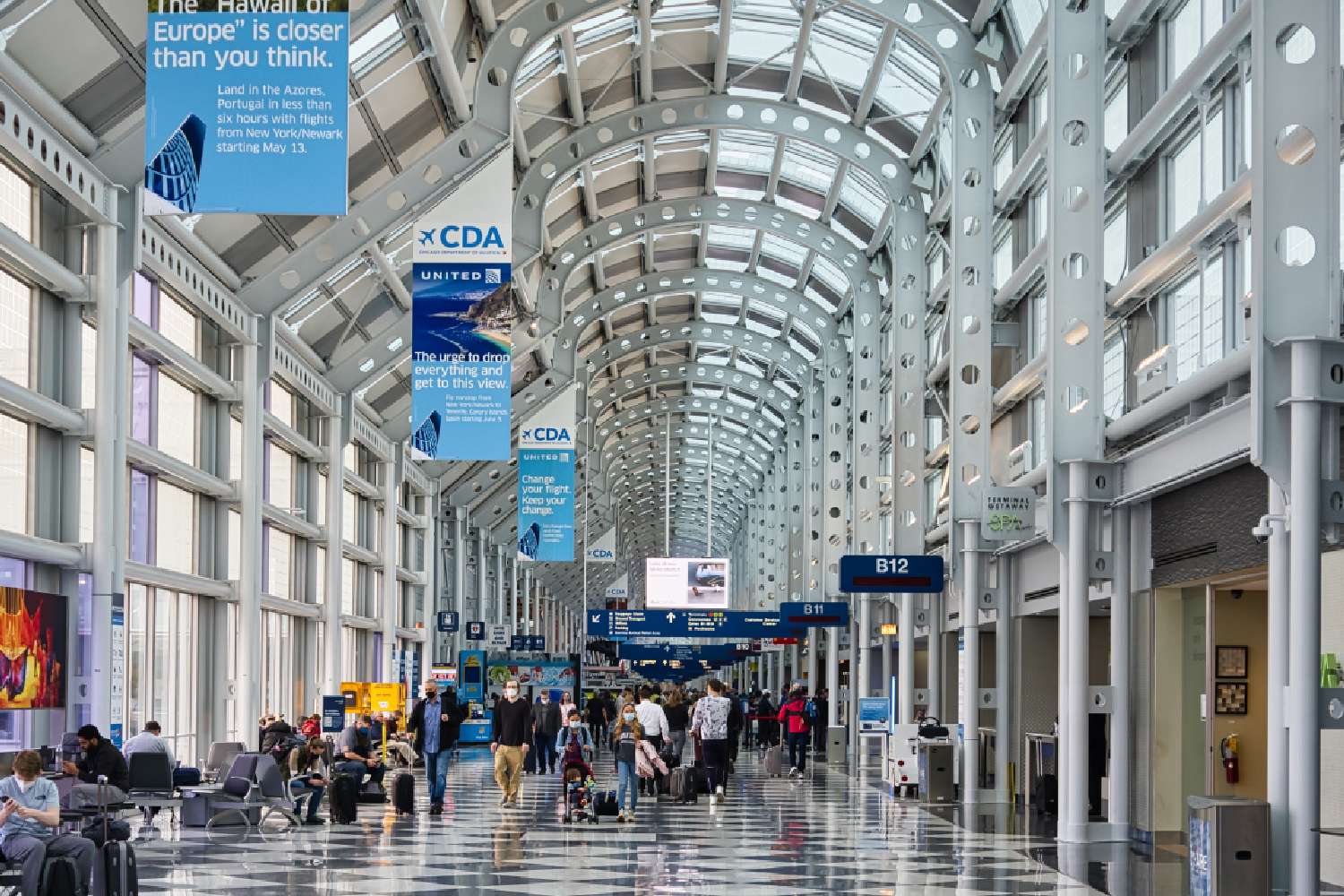


The US Federal Aviation Administration has ordered Chicago O’Hare International Airport to cut its daily flight schedule to a maximum of 2,708 operations from 17 May to 24 October 2026, a reduction that will eliminate as many as 372 flights per day during peak travel days, with direct implications for South African travellers using O’Hare as a transit hub to North America and Latin America.
The FAA’s scheduling reduction, announced in April 2026, was prompted by safety concerns over construction limiting the airfield’s capacity to handle the volume of traffic that American Airlines and United Airlines had both planned to operate out of O’Hare this summer.
The intervention came after a period of sustained disruption at the airport, including record flooding on 15 April that caused five consecutive days of storm-related delays and cancellations, contributing to more than 4,600 flight disruptions across the US aviation network on 18 April alone.
What the Flight Cap Means for Passengers
American Airlines, which operates from O’Hare as a major hub, confirmed it had secured sufficient slots to maintain what it described as a “successful hub” operation at the airport.
“We are pleased to have secured a sufficient level of flights through the FAA’s process to operate a successful hub at O’Hare this summer,” an American Airlines spokesperson said, adding that “the FAA’s action will improve reliability and reduce delays for customers travelling from, to, and through O’Hare this summer.”
United Airlines, which faces a heavier schedule reduction of approximately 200 daily flights at peak times, said it was reviewing the order before commenting further.
“We appreciate Secretary Duffy, FAA Administrator Bryan Bedford and the team for leading the process to find a solution that makes sense for everyone who cares about O’Hare’s success,” United stated.
South African Travellers Should Review Bookings Now
O’Hare is one of the primary US transit points for South Africans flying to cities across North America, including New York, Los Angeles, Chicago itself and onward connections to Canada and Mexico.
The flight cap means that routes connecting Johannesburg or Cape Town (typically via European or Middle Eastern hubs) to O’Hare will face constrained availability during the northern hemisphere summer peak travel window, which coincides with South Africa’s school midyear holiday period in June and July.
Travel advisers contacted by US media have urged passengers with existing O’Hare connections to verify their bookings and consider alternative transit options through airports such as Atlanta’s Hartsfield-Jackson or Dallas Fort Worth, both of which are unaffected by the FAA intervention.
Passengers who need to change connecting flights should contact their airlines directly, as most major carriers have indicated they will accommodate itinerary changes without fees in affected markets.
A Wider US Aviation Crisis in 2026
The O’Hare disruption is part of a broader pattern of US aviation stress in 2026. The FAA implemented its flight cap order on 13 April, just days before widespread storm flooding shut down O’Hare for extended periods and pushed system-wide disruptions to multi-year highs.
Transportation Secretary Sean Duffy has cited both safety concerns and chronic delay rates as justification for the intervention, which effectively overrides the expansion plans of the two largest carriers at the airport.
The next expected milestone in the O’Hare situation is 17 May, when the FAA’s summer scheduling cap formally takes effect. Airlines are expected to publish revised summer schedules by early May, at which point South African travellers will have a clearer picture of available options.