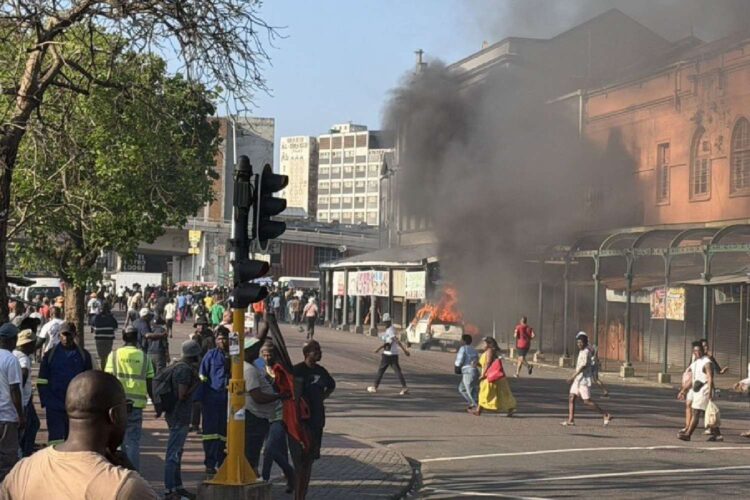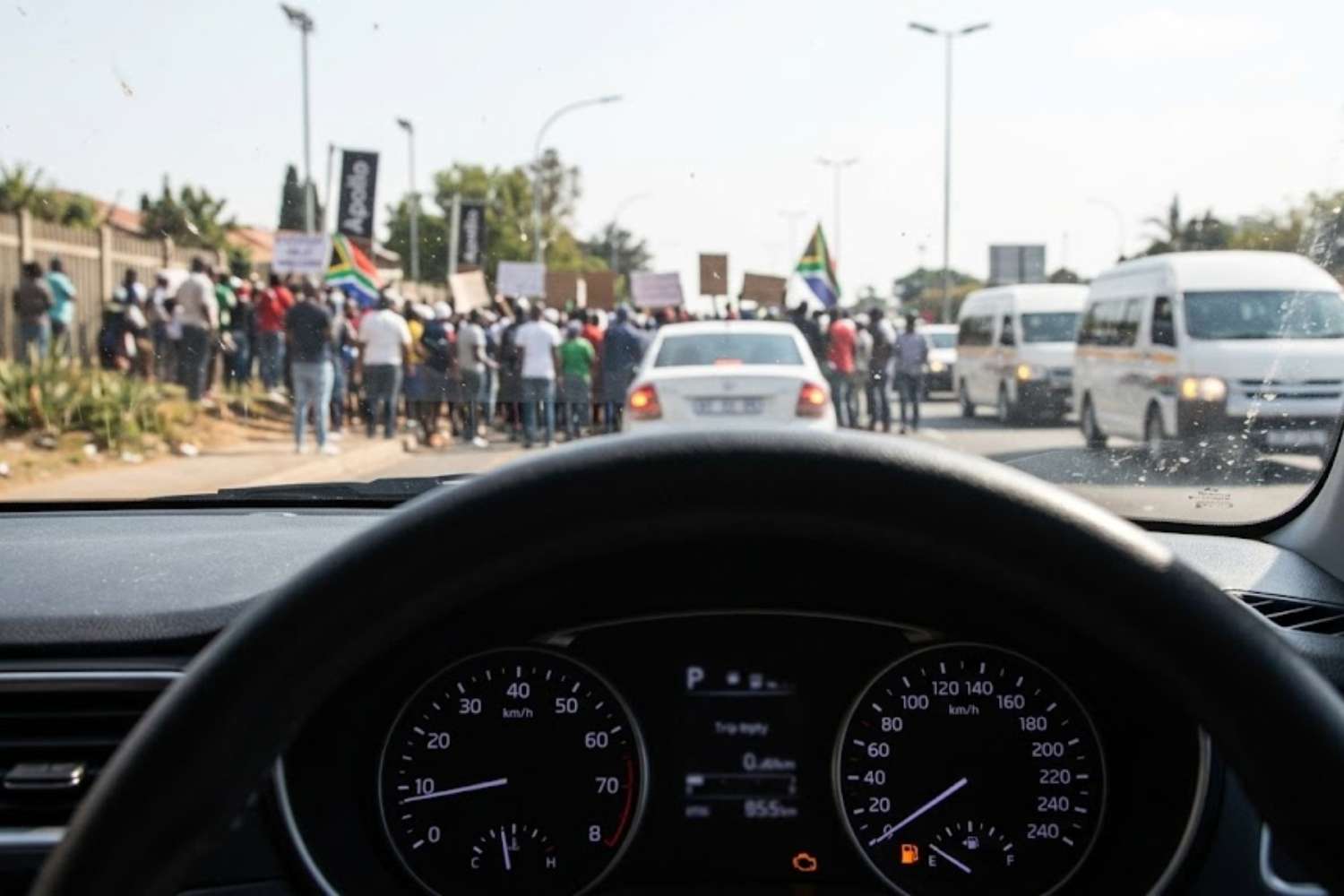


A national shutdown over fuel prices is planned for Monday, 19 October 2026, and the group behind the call wants cuts to fuel taxes and levies after petrol 95 reached R30.25 a litre.
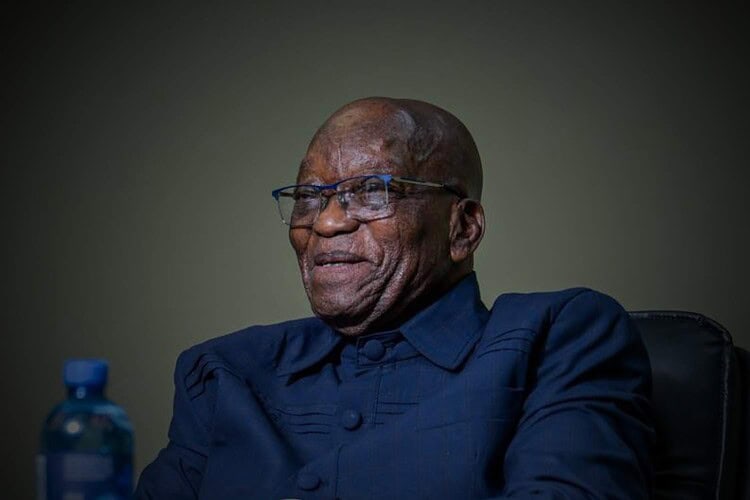
According to EWN, Ntokozo Mkhize, the national organiser of Concerned Citizens of South Africa, says the movement is not linked to any political party. The group wants the government to cut fuel taxes and levies, review what is included in the petrol price and explain how the money raised by those levies is spent.
What is the national shutdown on 19 October?
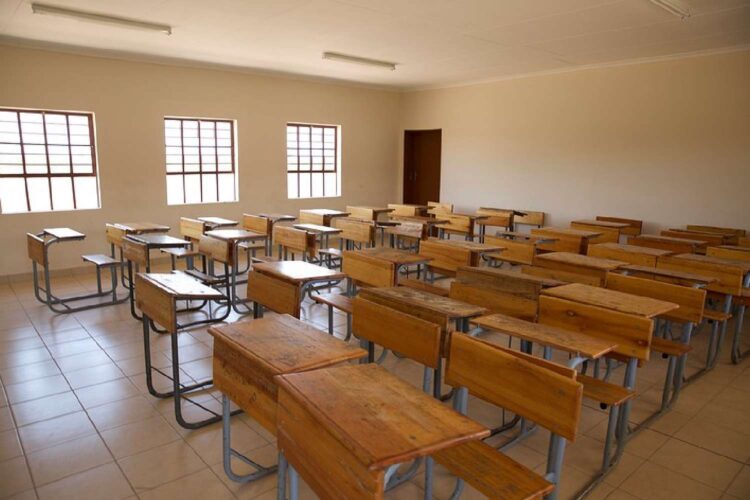
A poster circulating online tells workers not to report for work and learners not to attend school on the day.
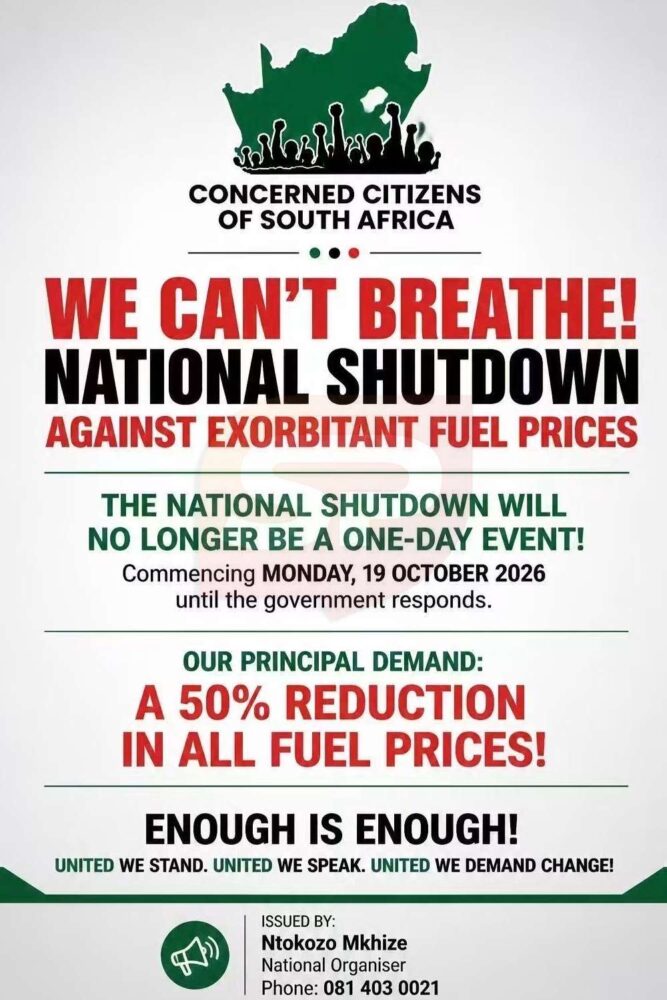
Mkhize has confirmed that the group produced it, and he describes the group as “purely a people’s movement”:
“We are taking full ownership of that poster; it is from us.”
Mkhize says the call is a response to the pressure households are under, and he frames the shutdown as a message to government: “South African people are saying enough is enough.”
He has also questioned why neighbouring countries supplied with South African fuel can buy it at lower prices than South Africans pay.
What does the national shutdown want changed?
Mkhize wants the General Fuel Levy cut by R3 a litre and the Road Accident Fund (RAF) levy scrapped.
Together the two charges add R6.35 to every litre, made up of R4.10 for the General Fuel Levy and R2.25 for the RAF levy. He says the relief must come from cutting the taxes already built into the price at the pump:
“Fuel is the engine of everything that we are doing in this country.”
Can the government cut the fuel levy?
The government has warned that cutting the levy would leave a significant gap in public finances. The General Fuel Levy was suspended in April and May 2026 and then reinstated in two steps of R1.50 a litre, in June and July, which means the earlier relief has already been phased out.
The Automobile Association (AA), which has also called for lower fuel prices, says the April cut of R3 a litre cost the National Treasury about R17 billion. The AA argues that the government can afford another R3 reduction in the General Fuel Levy.
Will petrol rise again in November?
Early Central Energy Fund data reported on Wednesday, 7 October 2026, pointed to November increases of R4.58 a litre for petrol 95 and R4.29 for petrol 93, with oil trading above $100 a barrel.
The figures are recalculated daily, and another published projection points the other way, so the direction requires further confirmation. Mkhize says:
“We’ve heard that projections are saying in November that petrol is also going up.”
He adds that the effect would reach people who never fill a tank, because, he says, the cost of fuel reaches the price of everyday goods: “Even if you don’t own a car, this will affect you when you go to the grocery store.”
Sources
- EWN, 'We are only working for petrol': Calls for national shutdown over rising fuel prices
- BusinessTech, National shutdown warning next week in South Africa
- Swisher Post, South Africa's fuel levy relief to be phased out by July as National Treasury eyes finances
- Swisher Post, Petrol price June 2026: R1.43 hike as fuel relief is halved