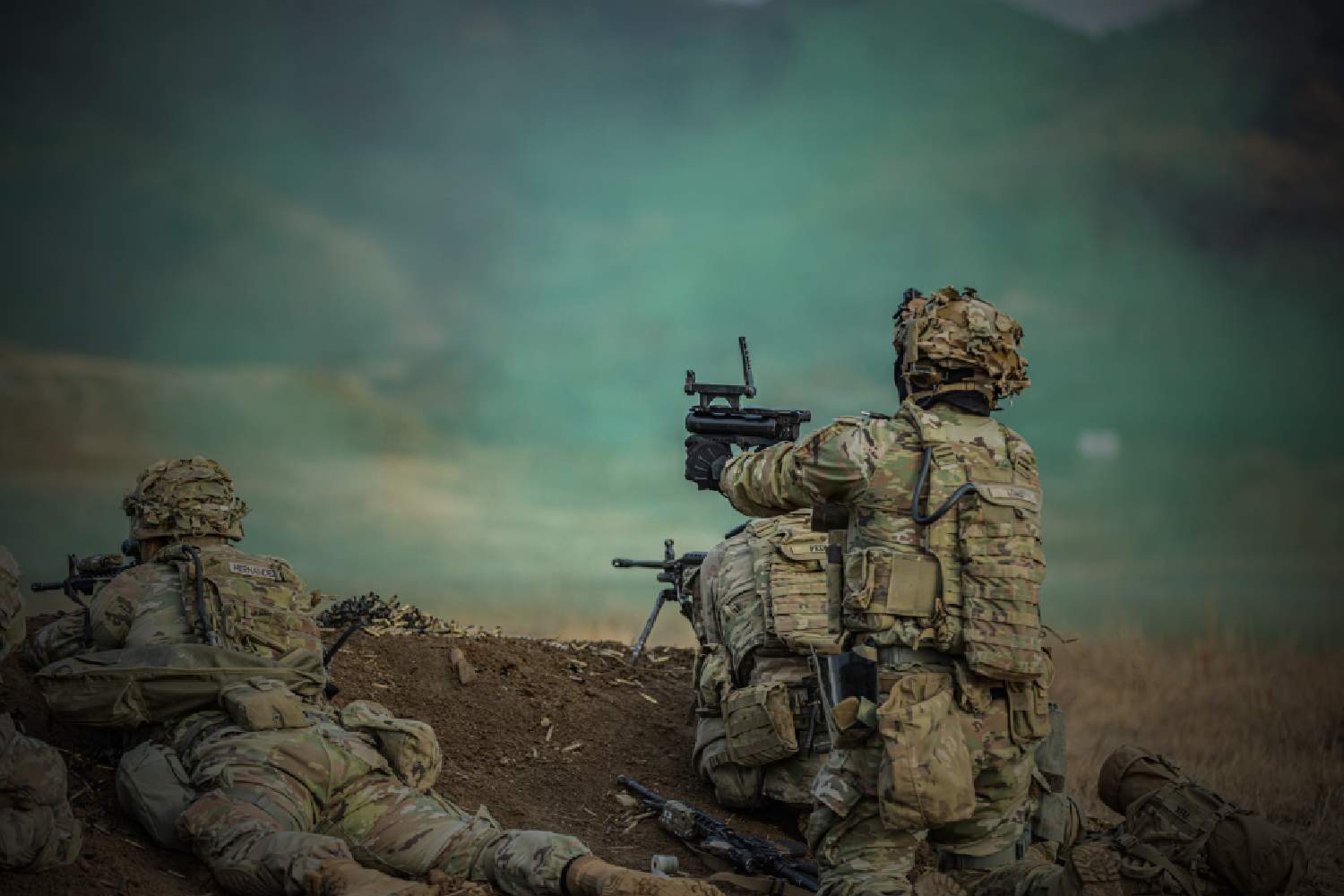


The Nigeria airstrike on ISIL-linked targets in Sokoto state has been confirmed by both Washington and Abuja, after US President Donald Trump revealed that American forces carried out strikes on Christmas Day.
According to News24 and Al Jazeera, Trump said US forces conducted “powerful and deadly” strikes against “Islamic State militants in northwestern Nigeria”, while Nigeria’s foreign ministry described “precision hits on terrorist targets” carried out in cooperation with the United States.
How the joint Nigeria airstrike was coordinated
Nigeria’s foreign ministry says the operation formed part of existing security cooperation with international partners, including the US Africa Command.
In a statement, officials stressed that Nigerian authorities requested assistance and remained “engaged in structured security cooperation” with Washington to address terrorism and violent extremism.
US Africa Command confirmed that the strikes took place in Sokoto state and said “multiple ISIS terrorists” were killed, but did not provide a final casualty count or detailed battle damage assessment.
Where the strikes hit and what we know about casualties
Local officials in Tangaza, a district in Sokoto near the Niger border, told Nigerian media that at least one area hit in the Nigeria airstrike is a “primary route” used by armed fighters moving between the two countries.
They said the locations are believed to be long-standing hideouts in dense forests, but emphasised that casualty figures would only be confirmed after security briefings.
Authorities have not released an official death toll, and there are no confirmed reports yet of civilian casualties from the Christmas Day strikes.
The US and Nigerian governments are both framing the operation as a targeted action against ISIL-linked militants rather than a broader campaign.
Trump’s justification and political messaging
Trump has tied the Nigeria airstrike directly to what he calls an escalating campaign of violence against Christians in the country.
In a Truth Social post, he warned that if “slaughtering of Christians” continues, there would be “many more” such operations, presenting the strikes as a promise fulfilled after earlier threats to act “guns-a-blazing” if Abuja did not stop the killings.
Analysts note that Nigerian authorities and many researchers reject framing the country’s complex security crisis as simple religious persecution, arguing that armed groups target both Muslim and Christian communities.
They say this makes the political messaging around the Nigeria airstrike particularly sensitive in a country already divided along regional and religious lines.
Reaction inside Nigeria to the US strikes
Nigeria’s foreign ministry has publicly welcomed international help against terrorism but is also under pressure over how the Nigeria airstrike was communicated.
The opposition Peoples Democratic Party (PDP) criticised the government for allowing the US president to break the news first, saying Nigerians learned about the operation from Trump’s social media accounts before their own officials confirmed it.
Security experts quoted in local and international reports say discussions about direct US military involvement intensified after Trump warned he might act unilaterally if Abuja did not do more.
They add that a Nigerian delegation visited Washington earlier this year, where officials reportedly signed cooperation agreements and approved US surveillance missions to map militant positions in the northwest.
The Christmas Day strikes mark the first known direct US military action inside Nigeria under Trump, despite years of US support for regional operations against Boko Haram and ISIL offshoots in neighbouring countries.