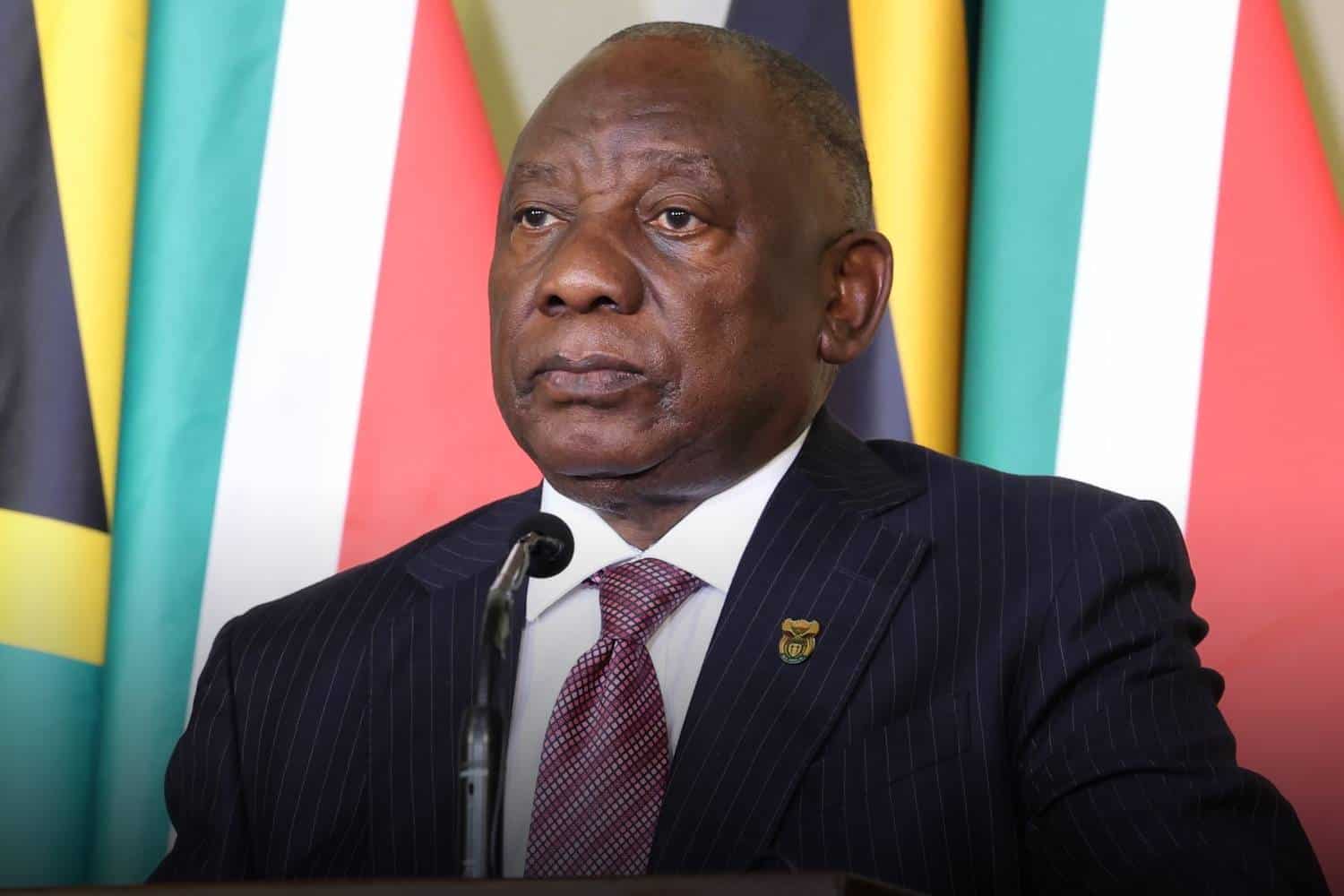


The Constitutional Court ruled on Friday that the National Assembly acted unlawfully when it blocked a formal impeachment inquiry into President Cyril Ramaphosa over the Phala Phala scandal, ordering parliament to establish a committee to investigate his conduct.
Chief Justice Mandisa Maya delivered the ruling on 8 May 2026, finding that rule 129I of the National Assembly Rules was unconstitutional.
The court also set aside the National Assembly vote of 13 December 2022, in which members declined to refer the Section 89 independent panel report to an impeachment committee.
What the Ramaphosa impeachment inquiry ruling means
The Section 89 panel concluded in 2022 that there was sufficient evidence of possible misconduct on the part of Ramaphosa.
According to the court, where a panel arrives at this finding, the matter must proceed to a full parliamentary inquiry. The National Assembly does not have discretion to stop it.
The controversy at the centre of the inquiry relates to the alleged theft of approximately $580,000 from a couch at Ramaphosa’s Phala Phala game farm. Critics have long argued that Ramaphosa failed to report the theft as required by law, and that the origin of the money itself raises questions that have never been adequately answered.
The ruling does not remove Ramaphosa from office. It does not constitute a conviction or a finding of guilt. It requires parliament to carry out what the independent panel already recommended: a formal investigation into whether the president’s conduct meets the threshold for removal under section 89 of the Constitution.
Political reactions to the ConCourt judgment
The ruling drew immediate responses from opposition parties.
Julius Malema, leader of the Economic Freedom Fighters and recently sentenced in the firearms case, called for Ramaphosa to step down.
“This ruling confirms what we have always known: Ramaphosa must resign,” Malema said.
The Democratic Alliance confirmed it would participate in the impeachment process. The ruling puts the governing coalition under pressure, as it includes parties that have so far been reluctant to support further action against the president.
What happens next
Parliament must now establish an impeachment committee to examine the Section 89 panel’s findings. No timeline for this has been confirmed.
Any recommendation for removal from office would still require a two-thirds majority vote in the National Assembly, a threshold the current opposition cannot reach without substantial ANC support.
The ruling nonetheless revives a scandal that Ramaphosa appeared to have successfully closed when the 2022 National Assembly vote killed the inquiry.
What the committee does with the panel’s findings, and how the ANC responds to internal pressure, will define the next chapter of this story.