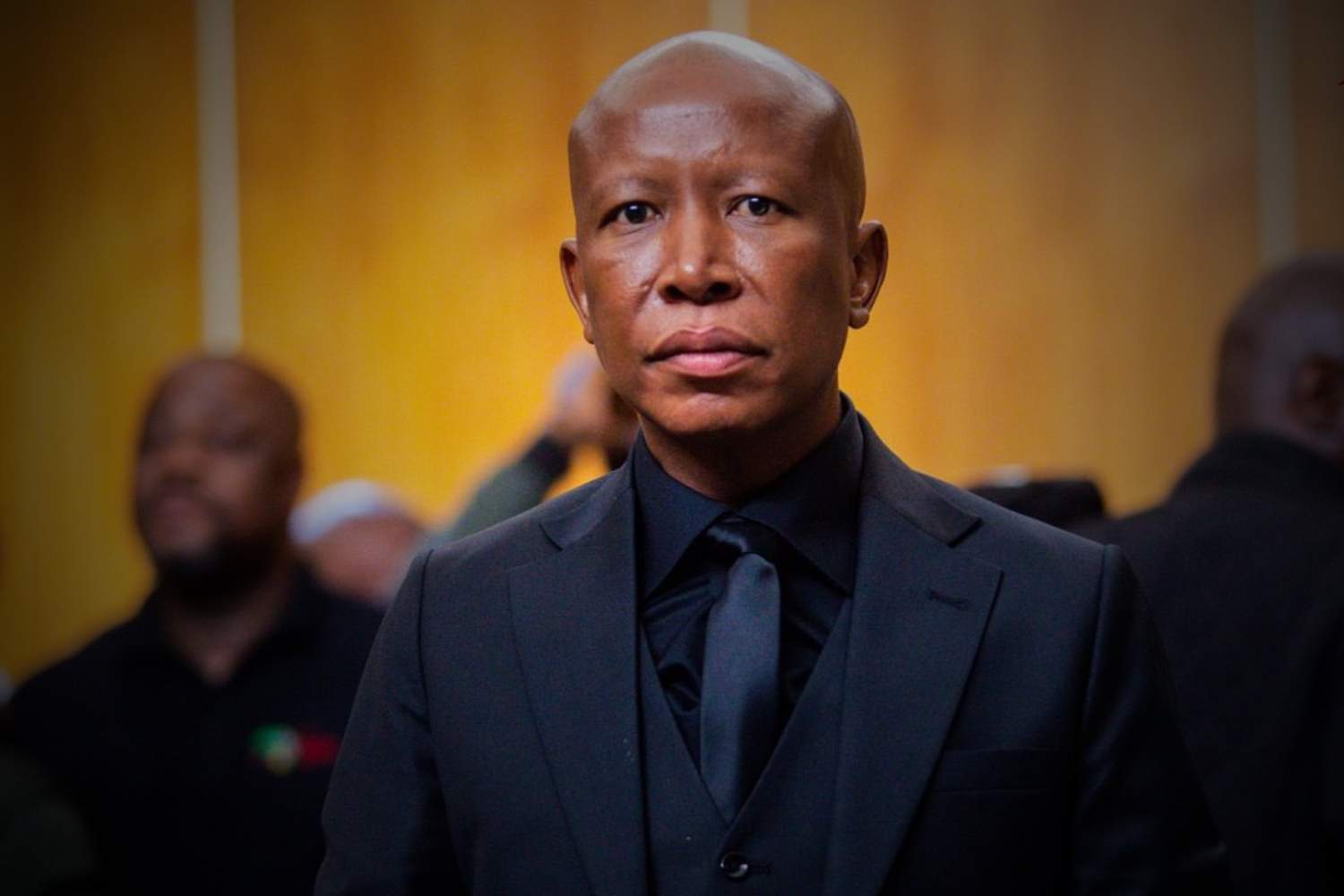


EFF leader Julius Malema was sentenced to five years direct imprisonment at the East London Regional Court in KuGompo City on Thursday 16 April 2026, after Magistrate Twanet Olivier handed down her ruling in his long-running firearm discharge case. His lawyers filed for leave to appeal within minutes of the sentence being read out, meaning Malema retains his seat in the National Assembly while the appeal process plays out and will not be taken to prison today.
Swisher Post covered the pre-sentencing proceedings on Wednesday 15 April as the case entered its final phase, with the state pushing for a maximum 15-year term and Malema’s legal team arguing for a non-custodial sentence.
What the sentence actually consists of
Magistrate Olivier sentenced Malema to five years direct imprisonment on count one. On count two, he was sentenced to two years’ imprisonment. On counts three, four and five, he was sentenced to a R20,000 fine each, or six months’ imprisonment in default.
In terms of Section 280 of the Criminal Procedure Act, the sentences on counts two through five were ordered to run concurrently with count one. The effective custodial sentence is therefore five years. Malema was also declared unfit to possess a firearm.
Handing down judgment, Magistrate Olivier said the shooting was premeditated rather than spontaneous. She noted that the conduct sent an “inappropriate message” about firearm safety, particularly when displayed by a prominent public figure, while also taking into account that this was Malema’s first offence and considering the impact on his employment and family.
“Loss of employment is an inevitable consequence of crime,” she said.
What the case is actually about
The charges originated from an incident on 28 July 2018 during the EFF’s fifth anniversary celebration at Sisa Dukashe Stadium in Mdantsane, Eastern Cape. Video footage showed Malema firing what appeared to be a rifle into the air in front of thousands of supporters.
The case was brought by lobby group AfriForum. During the trial, Malema’s defence argued the weapon was a toy gun and the shots were part of a simulation, but the court rejected this, citing ballistic evidence and eyewitness testimony.
He was convicted last year on five charges, including unlawful possession of a firearm and discharging a weapon in a public place.
Will Malema go to prison?
Not immediately, and possibly not at all for years. The Constitution states that no one is regarded as having been sentenced “until an appeal against the conviction or sentence has been determined.”
Because Malema vowed to launch an immediate appeal the moment the sentence was handed down, he retains his parliamentary seat while the lengthy appeals process plays out in the higher courts.
Malema previously told supporters: “Once I appeal, the jail sentence they imposed on me is suspended.”
Legal analysts say his strategy is sound, noting he is unlikely to be denied bail pending appeal, given his consistent court attendance and public profile.
Malema has vowed to challenge the verdict all the way to the Constitutional Court.
“It doesn’t matter the outcome. The fact that there is a guilty verdict, we are going to appeal this case until the highest court in the land. When you say you are appealing a case, it doesn’t mean you don’t show remorse, it means you disagree with the conclusion,” he said.
Will Malema lose his seat in Parliament?
This is the question with the highest political stakes. Under the Constitution, a sentence exceeding 12 months without the option of a fine technically meets the criteria for disqualification from the National Assembly.
However, the disqualification can only take effect after all appeals are finalised. Given that Malema has signalled he will pursue every avenue up to the Constitutional Court, that process could take years.
The sentence, if confirmed after all appeals, would bar Malema from serving as a lawmaker. That would be a major setback for the EFF, which has strong support among young South Africans frustrated by the racial inequality that has persisted since the end of white minority rule in 1994.
The political reaction
EFF Youth Command leader Mahlatse Dlamini had warned before sentencing that jailing Malema could trigger widespread disruption.
“If the commander-in-chief is jailed, we will render the country ungovernable,” he said.
Former EFF MP Mbuyiseni Ndlozi said South Africa gains nothing from Malema being behind bars.
“This country and society benefits NOTHING with Malema in prison. NOTHING! Not on those charges! His voice is crucial right inside Parliament.”
On the other side of the argument, AfriForum spokesperson Jacques Broodryk said the organisation hoped the sentence would reflect the seriousness of the case and send a clear message “that those with political connections or in politics themselves are not above the law.”
Malema, addressing supporters outside the court on Wednesday, framed his legal battle as part of a broader pattern of political suppression.
“They use us to say whoever dares to speak truth to power must be taken to jail. We shall not be silenced under any circumstances.”
What this means for the EFF
Political analyst André Duvenhage said the lengthy appeal process is Malema’s most viable path.
“Julius is in real trouble. The only thing he can do at this point is to follow what we call the Stalingrad tactic; he will try to appeal and go the Zuma way one way or the other.”
Duvenhage added that Malema “is no longer the figure he was, being able to fill stadiums and being able to mobilise hundreds of thousands of people; that time is gone.”
The EFF entered the 2024 general election as the third-largest force in the National Assembly. Malema’s parliamentary floor presence and combative profile have been central to the party’s visibility.
Whether the appeal process stretches months or years, the sentence hands his political opponents a sustained line of attack and places enormous pressure on the EFF’s leadership structure.
Swisher Post will continue to follow this story as the appeal is filed and as the political fallout develops.