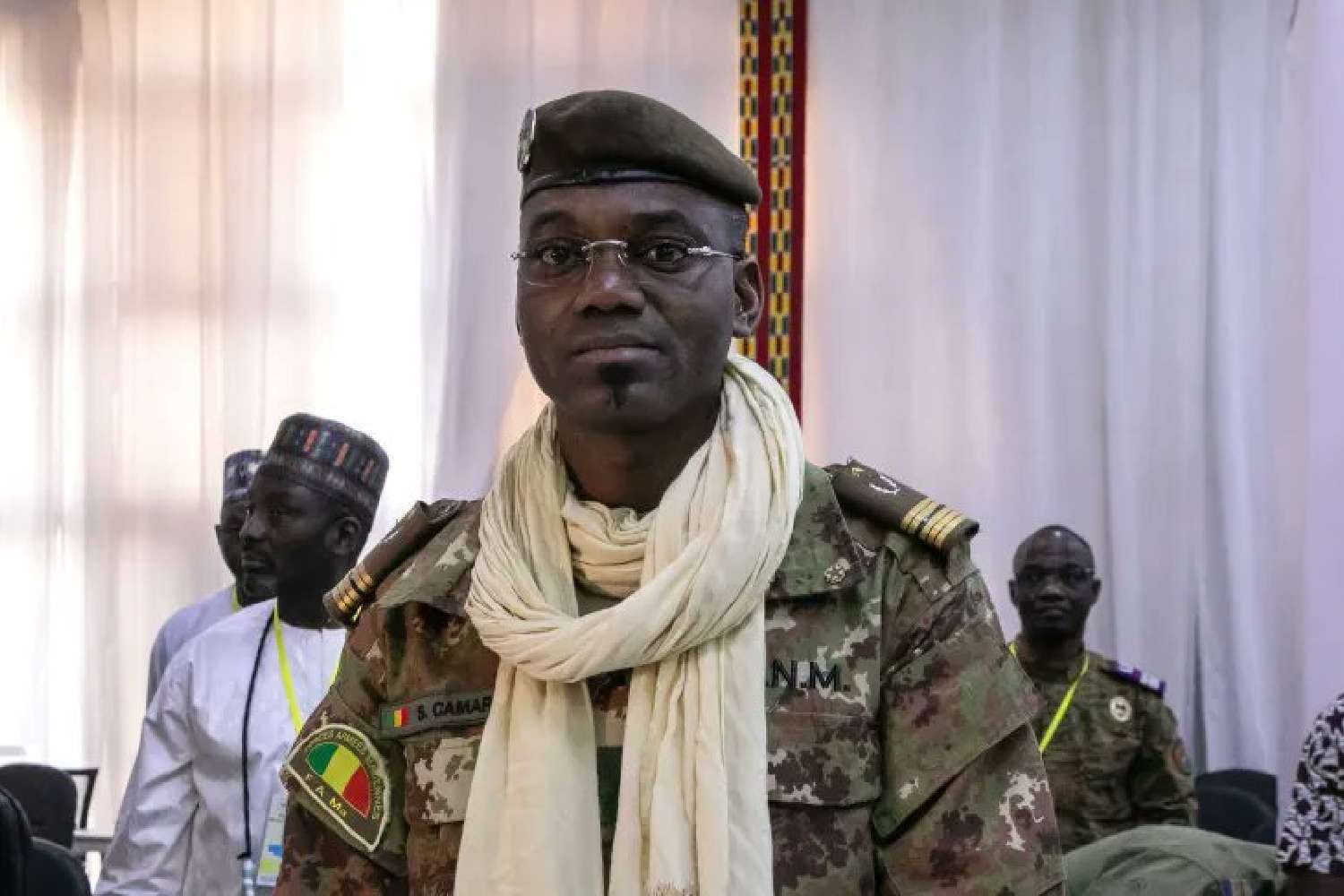

Mali’s defence minister, General Sadio Camara, was killed on Saturday when a suicide bomber drove a car into his residence at a military base in Kati, near the capital Bamako, as armed groups launched one of the most significant coordinated assaults on the country’s military government in years.
Camara died alongside his second wife and two grandchildren. He was one of the most powerful figures in Mali’s ruling junta and had been central to the back-to-back military coups of 2020 and 2021 that brought the current government to power, as reported by Al Jazeera.
His death is being described as a severe blow to the administration, which now faces simultaneous military pressure across multiple regions of the country.
Coordinated attacks across six locations
The assault was carried out by two armed groups operating in parallel: Jama’at Nusrat al-Islam wal-Muslimin, known as JNIM, a jihadist coalition affiliated with al-Qaeda, and the Azawad Liberation Front, the armed wing of a Tuareg separatist movement in northern Mali.
Their combined offensive struck Kati, Bamako, Sevare, Kidal, Gao and Mopti on the same day, as reported by France 24 and Al Jazeera.
Sustained gunfire and explosions near Bamako’s Modibo Keita International Airport forced authorities to cancel incoming and outgoing flights for a period.
The Malian government responded by imposing a three-day nationwide nighttime curfew, according to NPR. The Azawad Liberation Front separately claimed it had seized control of Kidal, a northern city that has historically been a flashpoint in the long-running conflict between Bamako and Tuareg separatist factions.
Those claims could not be independently verified at the time of publishing.
A crisis that reaches the top of the junta
Camara served directly under junta leader Colonel Assimi Goita and was considered the second most influential figure in the military government, according to The Africa Report.
His killing removes a critical institutional pillar from an administration that has already been navigating serious security deterioration across the Sahel.
Mali’s government expelled French troops and United Nations peacekeeping forces in recent years, replacing them with Russian military contractors from the African Corps, the successor entity to the Wagner Group.
Reports from the regional press indicated that African Corps personnel were also caught up in the weekend’s attacks, though casualty figures were not confirmed by the time of publishing.
The coordinated nature of Saturday’s offensive, hitting six cities simultaneously and targeting the defence minister directly, signals a significant escalation by armed groups who have long challenged Bamako’s control of territory beyond the capital.
How the junta responds in the coming days, and whether it can reassert authority in Kidal and the north, will define the next phase of the conflict.