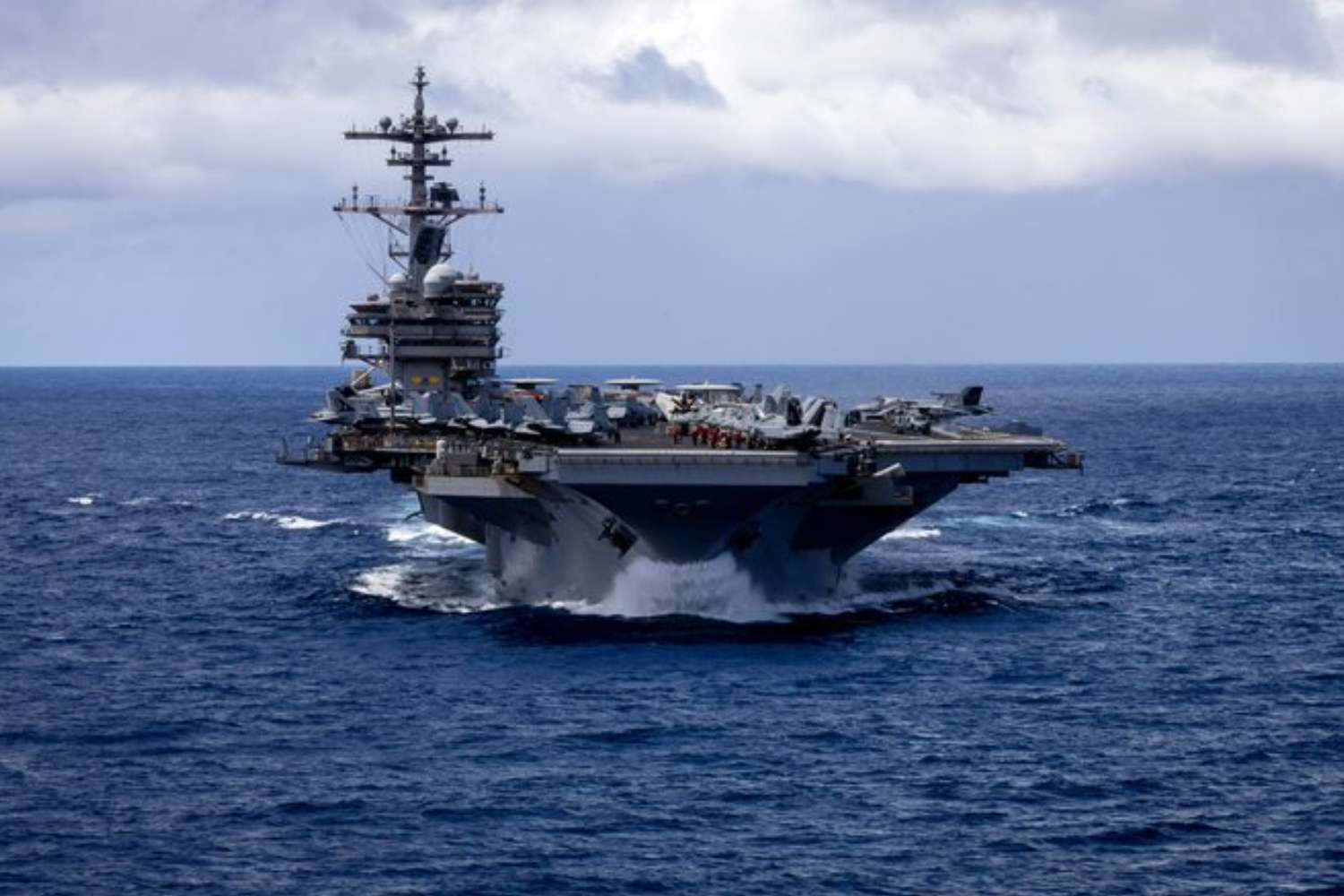

US President Donald Trump has ordered the United States Navy to “shoot and kill” any Iranian boat laying mines in the Strait of Hormuz, an escalation that directly threatens South African fuel supply and is already pushing up the rand-dollar oil bill. Trump issued the Strait of Hormuz shoot and kill directive on 23 April 2026, a day after Iran’s Revolutionary Guards attacked three cargo ships in the strait and seized two of them.
The order marks one of the most aggressive rules of engagement the United States has authorised during the current Middle East crisis, and it lands as South Africa scrambles to reroute fuel imports around the disruption.
What Trump’s shoot-and-kill order actually says
Trump announced the directive on social media and signalled that there would be no tolerance for Iranian vessels planting naval mines along the waterway. “There is to be no hesitation,” Trump wrote.
The message followed Iranian paramilitary attacks on three commercial vessels in the strait earlier this week, with two of the ships captured and taken to Iranian ports.
The Pentagon says its minesweepers are continuing clearance operations in the strait, though assessments on how long the work will take have been disputed.
Roughly 20% of the world’s oil and liquefied natural gas normally passes through the 33km choke point.
Pentagon pushes back on six-month clearance claim
A leaked Pentagon assessment suggested it could take up to six months to fully clear Iranian mines, a figure the department publicly rejected this week. Defence Secretary Pete Hegseth, speaking through Pentagon spokesperson Sean Parnell, said “a six-month closure of the Strait of Hormuz is an impossibility and completely unacceptable,” as reported by Reuters and The Hill.
The United States has deployed underwater drones to speed up the clearance, but insurers and shipping lines are already repricing Gulf cargoes, driving Brent crude volatility higher.
What the Strait of Hormuz escalation means for South Africa
South Africa has responded by increasing fuel imports from the United States, according to Moneyweb reporting on 23 April.
The fuel levy relief Treasury announced in April, which is estimated to have cost the fiscus R6 billion in foregone revenue, is now exposed to renewed import-cost pressure.
A top American bank expects the South African Reserve Bank to hike interest rates next month in part because of the inflation risk tied to imported fuel, according to Business Tech.
The DMRE is due to announce the May fuel adjustment in the coming days, with motorists already braced for a further rise at the pumps.
US and Iranian officials are expected to hold another round of talks in the coming days, with markets watching closely for any de-escalation signal.
South African motorists will learn the official May fuel adjustment when the Department of Mineral Resources and Energy confirms the revised price in the final week of April.