

Milk and Cookies Festival’s Cape Town stop landed as a high-energy, well-produced event that kept momentum through the day and delivered the kind of “big night” payoff a headliner like Gunna is booked for.
The organisers’ recap describes a “packed-out festival show” and says “over 12,000 fans” attended at Kenilworth Racecourse.
Disclosure: Swisher Post attended Milk and Cookies Festival at Kenilworth Racecourse in Cape Town on Saturday, 3 January 2026, at the invitation of organisers.
Milk and Cookies Festival: A strong Cape Town edition with a clear main-stage pull
On the ground, the crowd behaviour followed a predictable festival pattern: the main stage became the gravitational centre long before the headliner arrived, with many fans choosing to hold position rather than circulate widely between zones.
What worked: operations, food, and payments held up
Operationally, the day ran with the kind of stability that matters most to fans: entry, movement, and spending.
The food stalls were largely a success, with most traders moving quickly and serving consistently. Swisher Post did observe one or two vendors shut down due to technical or operational problems, but it did not appear to trigger widespread congestion.
Howler’s cashless payment system also felt practical on-site. The experience was effectively hybrid: fans using card payments were still able to buy without being locked out by a single method, which reduced friction and kept queues manageable.
First critique: stage spacing limited discovery and made zones feel uneven
The festival’s sponsor and discovery zones had real value — particularly for emerging talent — but the way the stages were spaced out did not consistently encourage fans to move around.
Swisher Post’s first extended stop was the Hunter’s Extreme stage area, which included an Extreme-sponsored dome where up-and-coming acts performed.
The concept works on paper: spotlight new talent while the main stage anchors the masses.
In practice, the split created an uneven visual and cultural distribution across the venue, with two zones often feeling under-occupied compared to the main stage.
For emerging artists, the smaller crowd sizes still offered a meaningful upside: the people watching were typically there intentionally, which can be more valuable than playing to distracted foot traffic.
But for the festival’s broader “culture exchange” objective, improved crowd circulation would better match the intent.
Second critique: fans needed clearer, public-facing set times
Swisher Post observed that set schedules existed and were accessible to media, but the public-facing visibility of set times did not feel strong enough to help fans plan their day.
The knock-on effect was noticeable as the afternoon moved into evening: some sets appeared to run long, others felt compressed, and the uncertainty encouraged fans to camp rather than explore.
That matters in a multi-stage festival, because discovery relies on confident movement. If fans don’t know what’s coming, they default to staying put.
Third critique: the unanswered question around Nasty C’s shortened moment
One of the night’s standout talking points was Nasty C’s brief appearance. He hit the stage, ran through Juice Back, Hell Naw and Strings and Bling, then ended the set abruptly and left quickly.
In the organisers’ recap, the build-up is framed as a deliberate ramp: DJ Rarri priming the crowd, then Nasty C setting “a high bar right before the headliner.” But from Swisher Post’s vantage point, the sequence that followed raised questions.
After Nasty C exited, DJ Rarri held the space for an extended period before Gunna arrived, which made the shortened set feel less like a hard timing constraint and more like an unresolved production or backstage issue.
At the time of writing, Swisher Post has not seen an official explanation addressing why the set ended so quickly.
Gunna’s payoff: a crowd that came for the hits got what it wanted
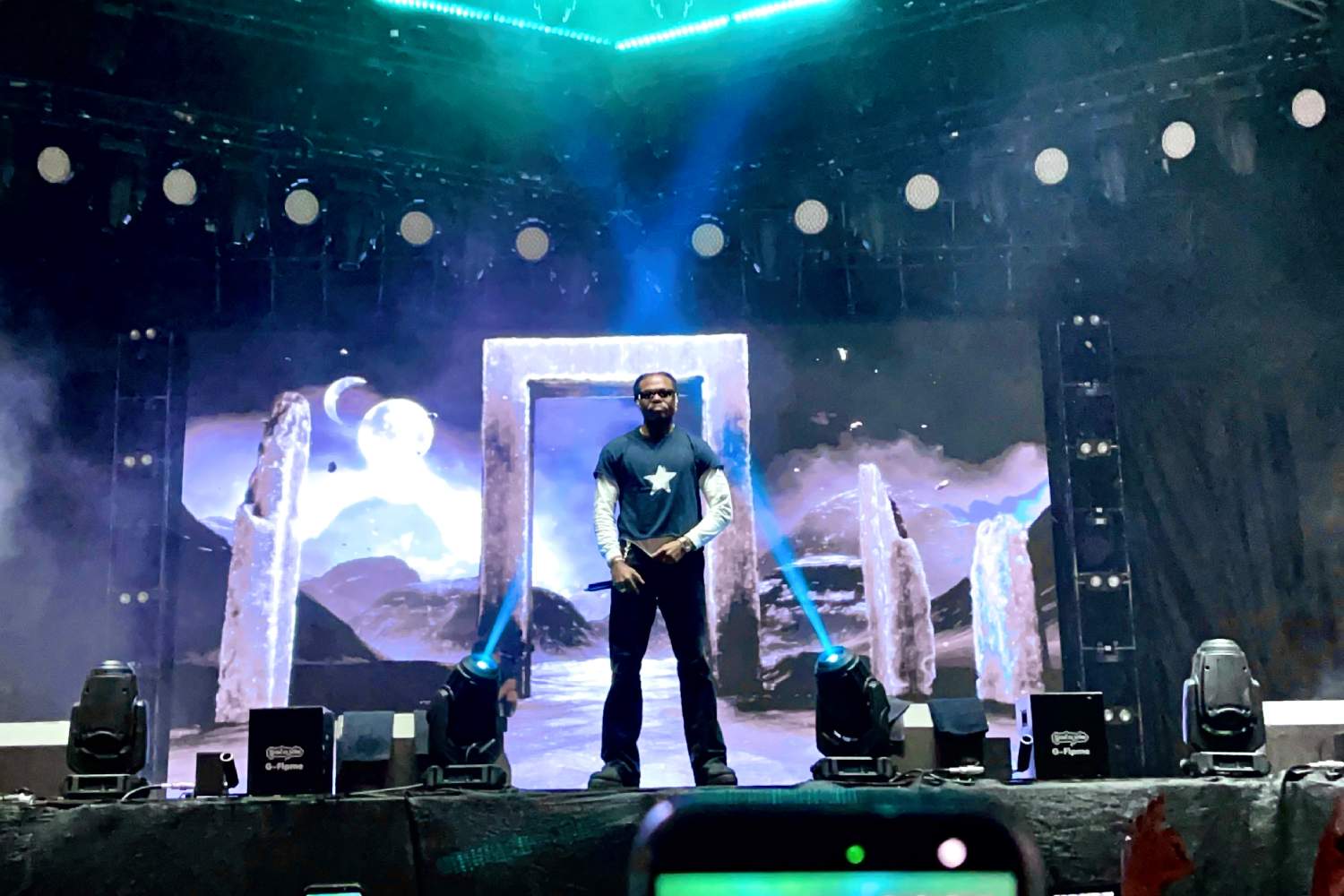
When Gunna took the stage, the atmosphere shifted instantly into full headliner mode.
The set leaned into the global records the crowd expected, with fukumean and wgft functioning as clear anchors.
The organisers’ recap describes a performance that had the crowd “reciting every word of his chart-topping hits.”
Honourable mentions: sets that over-delivered
Odeal was a standout and closed his moment with a surprise appearance from Wale, which lifted the energy in a way the crowd clearly felt.
Internet Girl, a Cape Town punk rock band, delivered with enough impact to justify a future main-stage slot based on presence, sound, and crowd control.
Majid Jordan provided a strong bridge into the final stretch of the night — a set that worked as both performance and build-up.
A major theme in the organisers’ statement is that Milk and Cookies is positioning itself as more than a single-night event, anchored by a wider “Music Week” that invests in education, writing camps, fashion collaborations, and community initiatives.
Chase Freeman, co-founder and head of marketing, describes the origin and the intention in direct terms:
“Milk + Cookies started in Atlanta as a community idea… ‘let’s build something people actually want to be part of.’”
“Coming back to South Africa for a second year wasn’t about chasing a market, it was about honoring a relationship,” he added.
Gregory K. Burton Jr., co-founder and creative director, frames the long game as building access:
“We don’t want this to be a one-night moment… the long-term goal is to build a platform that creates access and opportunity, not just a stage.”
Jhordan Gibbs, co-founder and director of artist and sponsor relations, puts it even more plainly: “Talent isn’t the gap, proximity is.”
What’s next: Johannesburg finale
The organisers say the Cape Town chapter closes with the festival moving north for the Johannesburg finale, positioned as the final leg of Music Week programming.
Milk and Cookies Festival in Cape Town delivered on the core promise: a major headliner moment, high crowd energy, and operations that largely held steady.
The gaps Swisher Post would prioritise for improvement are structural and fixable — stage layout that better supports discovery, clearer public scheduling, and faster transparency when high-profile set moments don’t go to plan.
Check out our Mid and Cookies post-event showreel below: