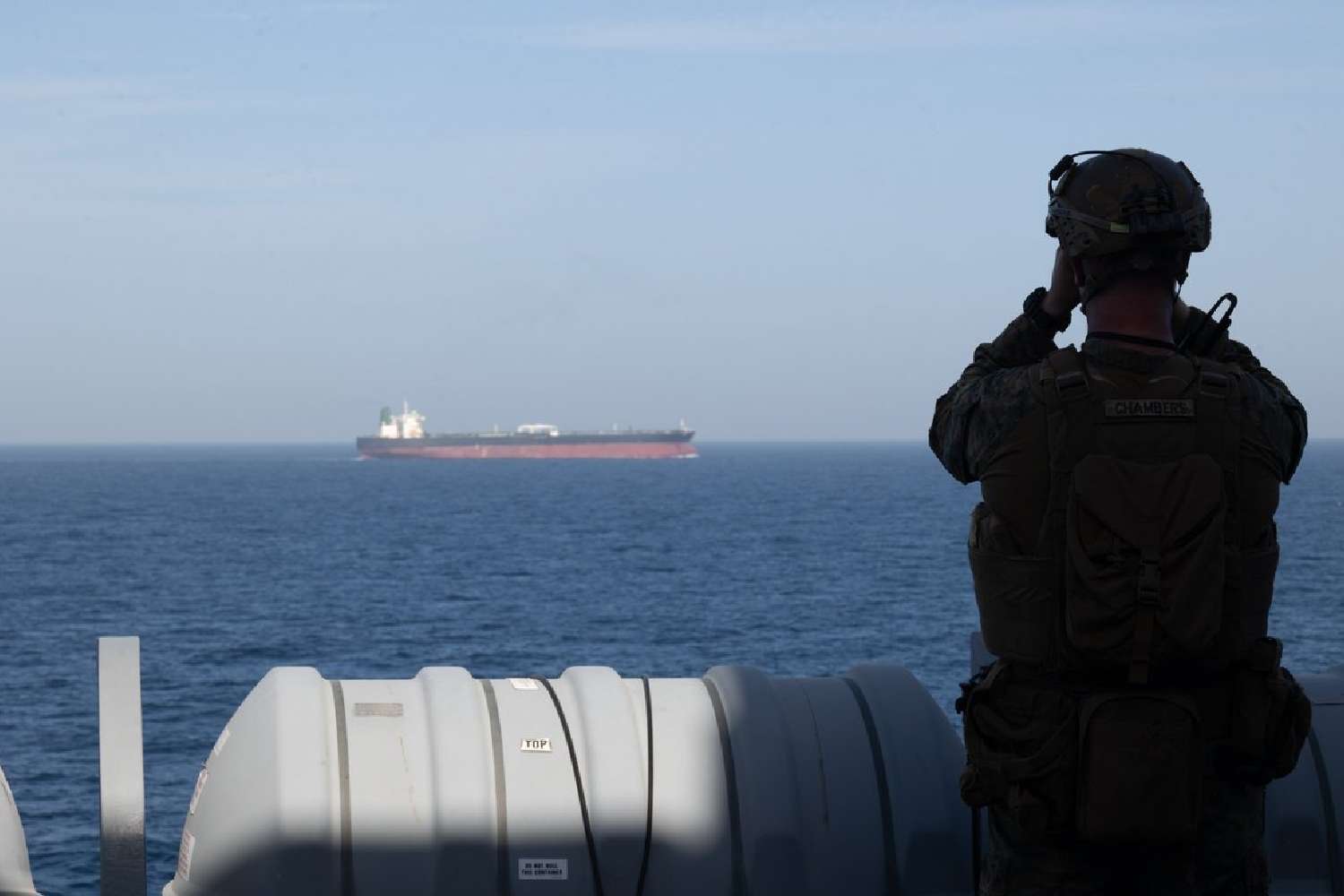


Iranian Revolutionary Guard Corps gunboats fired on a commercial tanker approximately 20 nautical miles off the northeastern coast of Oman on Saturday, 18 April 2026, as Tehran reimposed strict control over the Strait of Hormuz, the world’s most critical oil shipping lane. The closure reverses an announcement made just one day earlier that the waterway would reopen, and threatens to drive South Africa’s already record-high fuel prices even higher heading into May.
The development marks the most dramatic escalation in weeks of the ongoing US-Iran conflict, which erupted in late February 2026 when the United States launched “Operation Epic Fury.”
Iran’s joint military command declared on Saturday that the Strait had returned to its “previous state” under “strict management and control” of the armed forces, blaming Washington for the reversal. An Indian-flagged supertanker was among the vessels forced to turn around after Iranian gunboats opened fire without issuing any radio warning.
What Happened in the Strait of Hormuz
The attack was confirmed by the UK Maritime Trade Operations organisation, which monitors commercial shipping in high-risk maritime zones. Vessels attempting to transit the strait were intercepted by what the organisation described as IRGC gunboats. The tanker and crew were reported safe with no casualties confirmed at the time of publication.
Iran’s foreign ministry spokesperson placed the blame squarely on the United States.
“If Americans are not going to honour their words, there will be repercussions for them,” the spokesperson said, accusing Washington of violating the terms of recent negotiations by continuing what Tehran characterised as “piracy and maritime robbery” under the cover of its naval blockade.
The White House rejected that characterisation. Deputy press secretary Anna Kelly maintained:
“As President Trump said, the Strait of Hormuz is completely open for business, and Iran has agreed to never close the Strait again.”
Kelly added that the US blockade gave Washington “maximum leverage in negotiations to eliminate Iran’s nuclear threat for good.”
Approximately 20 percent of the world’s daily oil supply transits the Strait of Hormuz. Any prolonged closure drives crude oil prices upward and tightens global supply chains, with knock-on effects felt most acutely by oil-importing nations such as South Africa.
Why South African Motorists Should Take Notice
South Africa imports the majority of its crude oil via tankers that transit the Strait of Hormuz, making Tehran’s decision to reimpose restrictions a direct threat to domestic fuel supply and pricing. Brent crude had already surged from $69.08 to $93.67 per barrel during the review period that informed April’s historic fuel price increase.
From 1 April 2026, South Africans have been paying R23.36 per litre for 95 Unleaded petrol in the inland regions, up R3.06 per litre from the previous month.
A standard 60-litre tank now costs inland motorists R1,401.60, representing an increase of R183.60 per fill-up compared with March prices.
The government cushioned the blow with a temporary fuel levy reduction of R3.00 per litre, valid from 1 April to 5 May 2026. Once that relief expires, any further crude oil price spike driven by renewed Hormuz restrictions will feed directly into May’s pricing structure.
Diesel prices have been hit harder still, rising by between R7.37 and R7.51 per litre from 1 April. Transport, logistics, and agricultural operators have warned that sustained crude oil prices above $100 per barrel would make further price relief from government essential to prevent a cascading cost increase across consumer goods.
The Broader South African Dimension
South Africa finds itself in an increasingly difficult diplomatic and economic position as the US-Iran conflict prolongs. Pretoria has sought to maintain diplomatic channels with Tehran while managing its trade relationship with Washington, which remains South Africa’s third-largest trading partner.
The Department of Mineral and Petroleum Resources has not yet issued a statement on the potential impact of Saturday’s developments on the May fuel price adjustment.
The next official fuel price review is expected in early May 2026, and energy analysts are monitoring whether Iran’s reimposition of restrictions will hold or whether a new round of negotiations can restore managed passage through the strait.