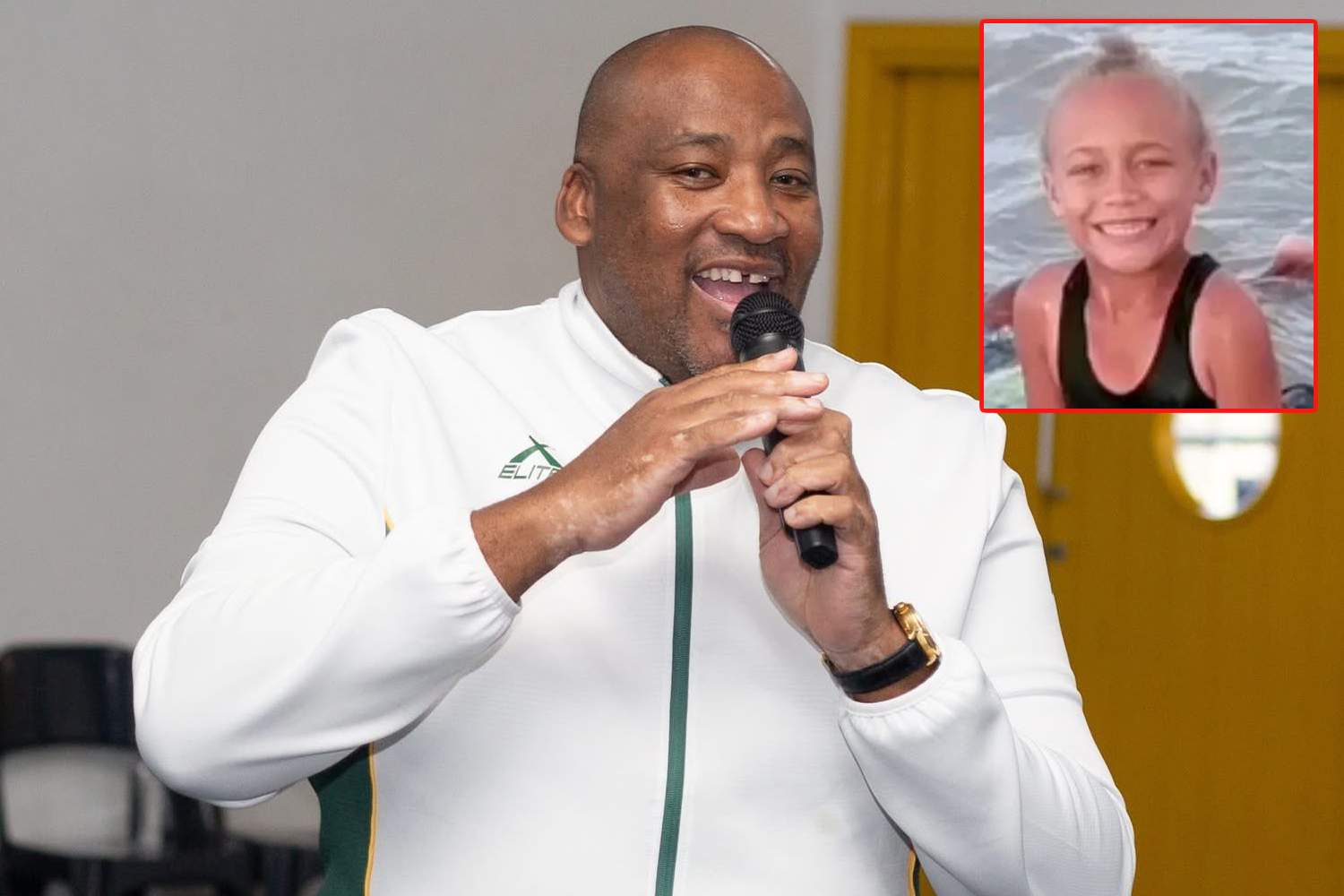


Patriotic Alliance leader Gayton McKenzie has defended the long-delayed launch of the Joshlin Smith Foundation, saying his party believes it has received new and significant information about the disappearance of the six-year-old from Saldanha Bay.
McKenzie, South Africa’s minister of sport, arts and culture, made the remarks during a live broadcast on the party’s Facebook page on Sunday evening after questions were raised about why the foundation has still not been publicly launched more than 500 days after he first promised to establish it.
What McKenzie said about the Joshlin Smith Foundation delay
McKenzie told viewers the delay was intentional and linked it directly to what he described as a breakthrough in the case.
“There is a reason [for the delay of the foundation’s launch], and I’m going to tell you what the reason is why we postponed this, because there is new information that we have received about Joshlin Smith’s disappearance,” he said.
He claimed the information did not come from police and instead pointed to an independent investigation.
“I just need to wait for the people who have been working [on it to share the information, because] I am not the one who did further investigations, and the police also did not do further investigations,” he said.
McKenzie added that the people behind the alleged investigation “did not want to give up,” and said the information would be shared after engagement with South Africa’s minister of police.
He also said he personally allocated money to fund the investigation, but declined to identify who was involved.
He further told viewers the foundation would be launched in Saldanha Bay, Joshlin’s hometown, once those processes were concluded.
The pledge, the timeline, and what has not been explained
McKenzie announced in July 2024 that he would donate his full ministerial salary to establish the Joshlin Smith Foundation focused on missing children.
Research suggests that a cabinet minister earns about R2.5 million a year, and according to McKenzie, the foundation is already registered but has not yet been launched despite repeated public commitments.
The pressure on McKenzie has increased because his “new information” claim has not been accompanied by verifiable detail: no public summary of the alleged findings, no confirmation of who conducted the investigation, and no timeline for when the public will hear more.
What we know about the case: convictions, life sentences, and unresolved questions
Joshlin disappeared on 19 February 2024 in Saldanha, a town on South Africa’s west coast. Despite extensive searches, her body has never been found.
Swisher Post has reported on key legal developments that explain why public emotions remain raw and why any claim of a new “breakthrough” attracts immediate scrutiny.
In one major post-trial update, the Western Cape High Court dealt with applications linked to the convictions and sentences of Kelly Smith, Jacquen Appollis and Steveno van Rhyn. All three are serving life sentences for human trafficking of a child and other charges.
Delivering the ruling on their appeal, Judge Nathan Erasmus said:
“There is no compelling reason that the appeal should be granted.”
Moreover, Lourentia Lombaard, once a co-accused, was indemnified as a Section 204 witness after the court found she met the legal requirements for immunity. A Section 204 witness is someone who agrees to testify truthfully in exchange for protection from being charged for certain crimes related to the case.
Prosecutor says she believes Joshlin may still be alive
Another reason the case continues to generate intense attention is that the state prosecutor has publicly suggested Joshlin may still be alive.
During an online webinar hosted by the National Freedom Network in June 2025, prosecutor Zelda Swanepoel said her belief was based on the lack of positive DNA results from materials recovered during searches.
“We have done a comprehensive search in Saldanha of all the exhibits… and there were no positive DNA results found on anything,” she said.
She added: “I’m convinced that she is still alive. However, I don’t know where she is. I can only hope we find her.”
Swanepoel also addressed what would happen if new, credible information emerges about where Joshlin was taken or who may have exploited her, saying a further prosecution could still follow if the evidence supports it.
Why the “new information” claim is politically sensitive
Joshlin’s disappearance became a political touchpoint during South Africa’s 2024 election season.
McKenzie and Patriotic Alliance members were involved in searches and later used the case as the basis for church services held around the country in the run-up to the election to build support for the party.
The party ultimately became South Africa’s sixth-largest, and McKenzie was appointed a minister in the government of national unity.
That backdrop is why critics are questioning timing and motive now: any suggestion that new evidence exists in a nationally traumatic case carries weight, but it also demands a higher threshold of clarity—especially from a senior government figure.
McKenzie’s statement leaves several concrete questions unanswered:
He has not described what the “new information” is, who gathered it, or how it will be verified.
There has been no public confirmation from police or prosecutors that they have received new evidence from McKenzie or from the people he says conducted the investigation.
No launch date has been provided for the Joshlin Smith Foundation, beyond his statement that it will be launched in Saldanha Bay once discussions with the police ministry are concluded.