

The United States Navy began blockading the Strait of Hormuz on Monday, 13 April 2026, cutting off one of the world’s most critical oil shipping lanes after peace talks between Washington and Tehran collapsed in Islamabad, with Brent crude jumping more than 10% in early trading and analysts warning of severe knock-on effects for South African fuel prices.
The blockade marks a dramatic escalation in the US-Iran conflict that began on 28 February 2026, when the United States and Israel launched coordinated air strikes against Iran.
Since then, Iran’s Islamic Revolutionary Guard Corps (IRGC) has blockaded the strait from the Iranian side, launching 21 confirmed attacks on merchant ships and reportedly laying sea mines that have largely halted commercial traffic through the channel.
What Trump announced and what it means
President Donald Trump declared the US counter-blockade in a post on Truth Social on Sunday, 12 April 2026, after a final round of diplomacy in Pakistan ended without agreement.
“Effective immediately, the United States Navy, the Finest in the World, will begin the process of BLOCKADING any and all Ships trying to enter, or leave, the Strait of Hormuz,” Trump wrote.
He added that the blockade would remain a “complete blockade,” in his words “all or none,” until Iran allowed all traffic through the strait freely.
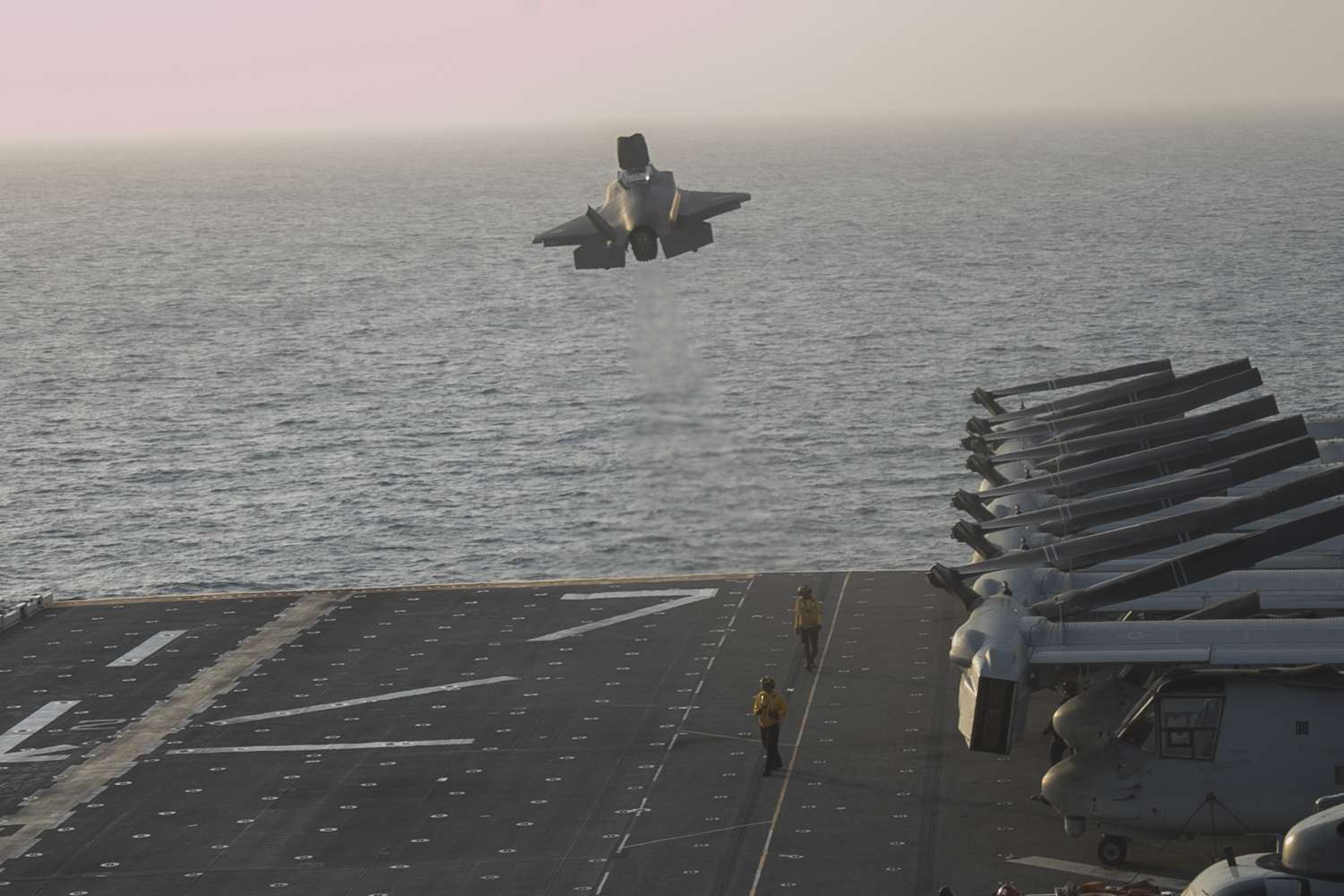
The US military has deployed the USS Abraham Lincoln aircraft carrier group, eleven destroyers and the USS Tripoli amphibious group to the region. Trump subsequently threatened to sink any Iranian naval vessel that approached the US blockade line, a threat that drew immediate condemnation from Tehran, which warned of “widespread consequences” if the blockade was maintained.
Why this matters for South Africa
Roughly 20% of the world’s oil and natural gas normally passes through the Strait of Hormuz. South Africa, which imports the overwhelming majority of its crude oil requirements, is directly exposed to any sustained disruption in that supply chain.
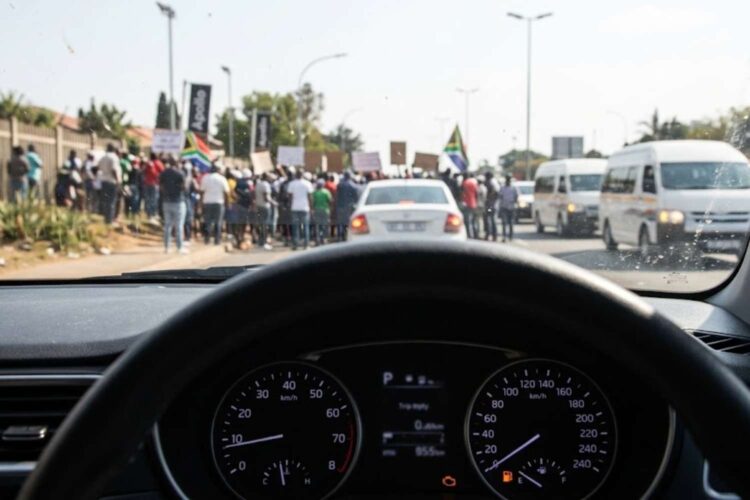
Brent crude prices jumped between 10% and 13% in early trading on Monday, pushing the benchmark above $100 per barrel. South Africa’s petrol price is calculated using a basket of international benchmarks including Brent crude, and the rand-dollar exchange rate means that every dollar increase in the crude price translates materially into higher prices at the pump for South African motorists.
The timing compounds an already difficult picture for local consumers. Petrol prices rose by R3.06 per litre on 1 April 2026, the largest single-month increase in several years, driven by Brent crude climbing from an average of $69.08 to $93.67 per barrel over the preceding period.
The government implemented an emergency reduction in the general fuel levy of R3.00 per litre to cushion the blow, but that relief measure is scheduled to expire on 5 May 2026.
With oil now above $100 and the blockade showing no sign of a quick resolution, analysts project a further increase of up to R4.50 per litre for May, meaning South African motorists could face a record cumulative fuel price shock in the space of six weeks.
What happens next
Peace talks are described as “on hold” by US State Department officials, though multiple parties including China, Qatar and Oman have indicated a willingness to mediate.
The ceasefire that briefly held in late March appears to have collapsed entirely with the announcement of the US counter-blockade.
France and the United Kingdom announced a “peaceful mission” to the region on Monday, with both governments calling for an immediate return to negotiations.
Oil markets will remain volatile until either a diplomatic off-ramp emerges or the blockade is formally suspended. South Africans can expect the next official fuel price announcement from the Department of Mineral and Petroleum Resources to reflect the current crisis; the next adjustment date is 1 May 2026.