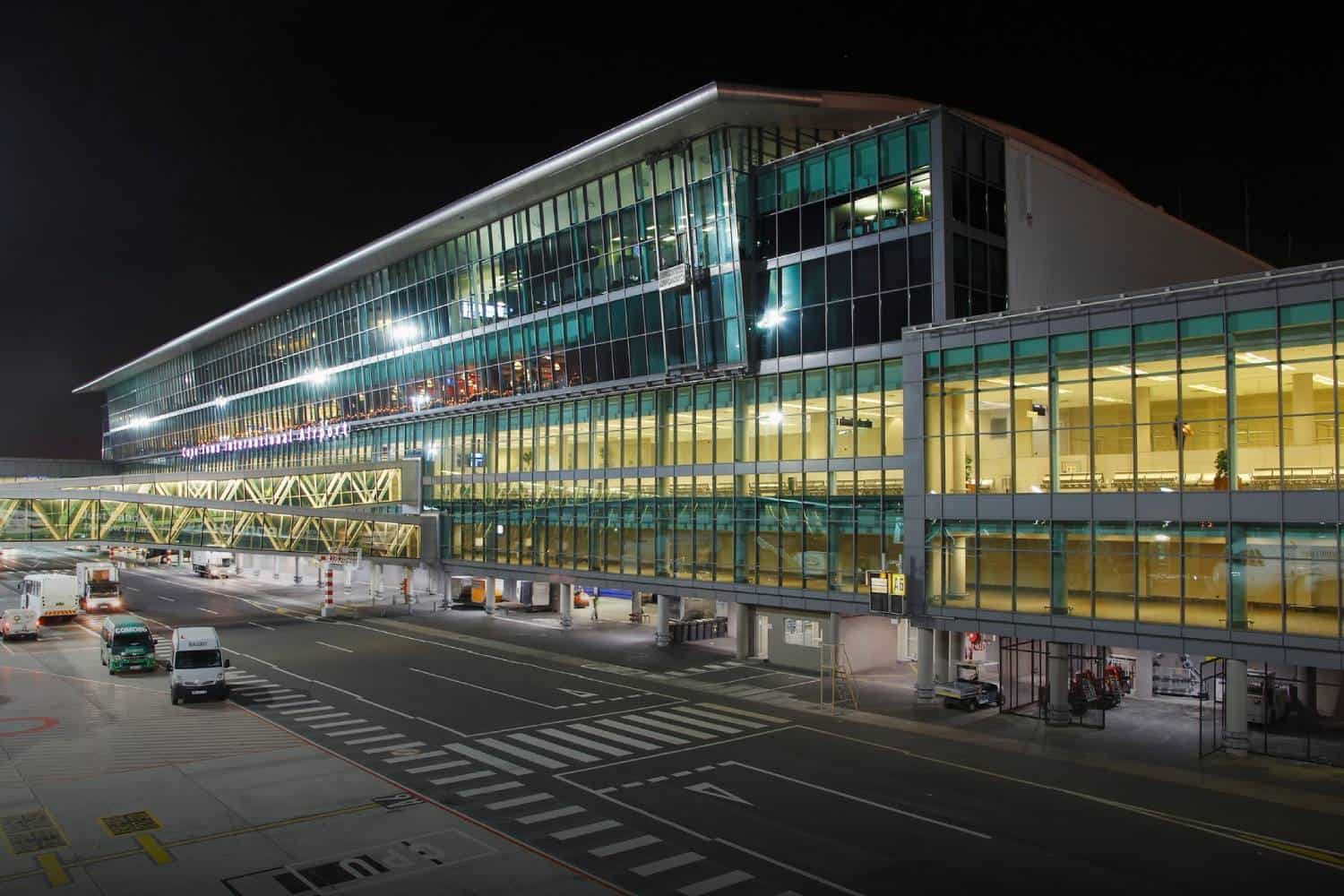

A suspected IT cable fire at Cape Town International Airport (CTIA) forced the temporary suspension of international departures on Tuesday, 24 February 2026, after network and essential systems were compromised.
Cape Town International Airport fire disrupts flights
The Airports Company South Africa (ACSA) confirmed that a fire broke out on the landside of the terminal.
Although emergency crews extinguished the blaze and no injuries were reported, the incident caused significant operational disruption.
International flights departing from Cape Town were halted as a precaution, while incoming international flights were diverted.
Quick Facts
- Date: 24 February 2026
- Location: Landside terminal, Cape Town International Airport
- Impact: International departures temporarily suspended
- Incoming flights: Diverted
- Cause: Suspected IT cable fire affecting network systems
- Injuries: None reported
What happened at Cape Town International Airport?
The incident began with what has been described as a suspected cable fire affecting IT infrastructure at CTIA.
According to the Daily Maverick, the fire occurred on the landside of the airport terminal and was quickly extinguished.
ACSA confirmed in a public statement:
“Cape Town International Airport (CTIA) confirms that a fire occurred on the landside of the airport. The fire has been extinguished, and all passengers, staff and visitors are safe. Passenger safety remains our highest priority.”
While the blaze itself was contained, it affected network and IT services, including airport WiFi and other essential operational systems .
Why were international flights suspended?
International departures were suspended as a precautionary safety measure due to compromised network systems.
ACSA stated:
“As a precautionary measure, international departures have been temporarily suspended, and incoming international flights are being diverted. International flights that have already landed are being processed.”
The airport operator also advised domestic travellers to check directly with airlines and the ACSA mobile app for updated flight information.
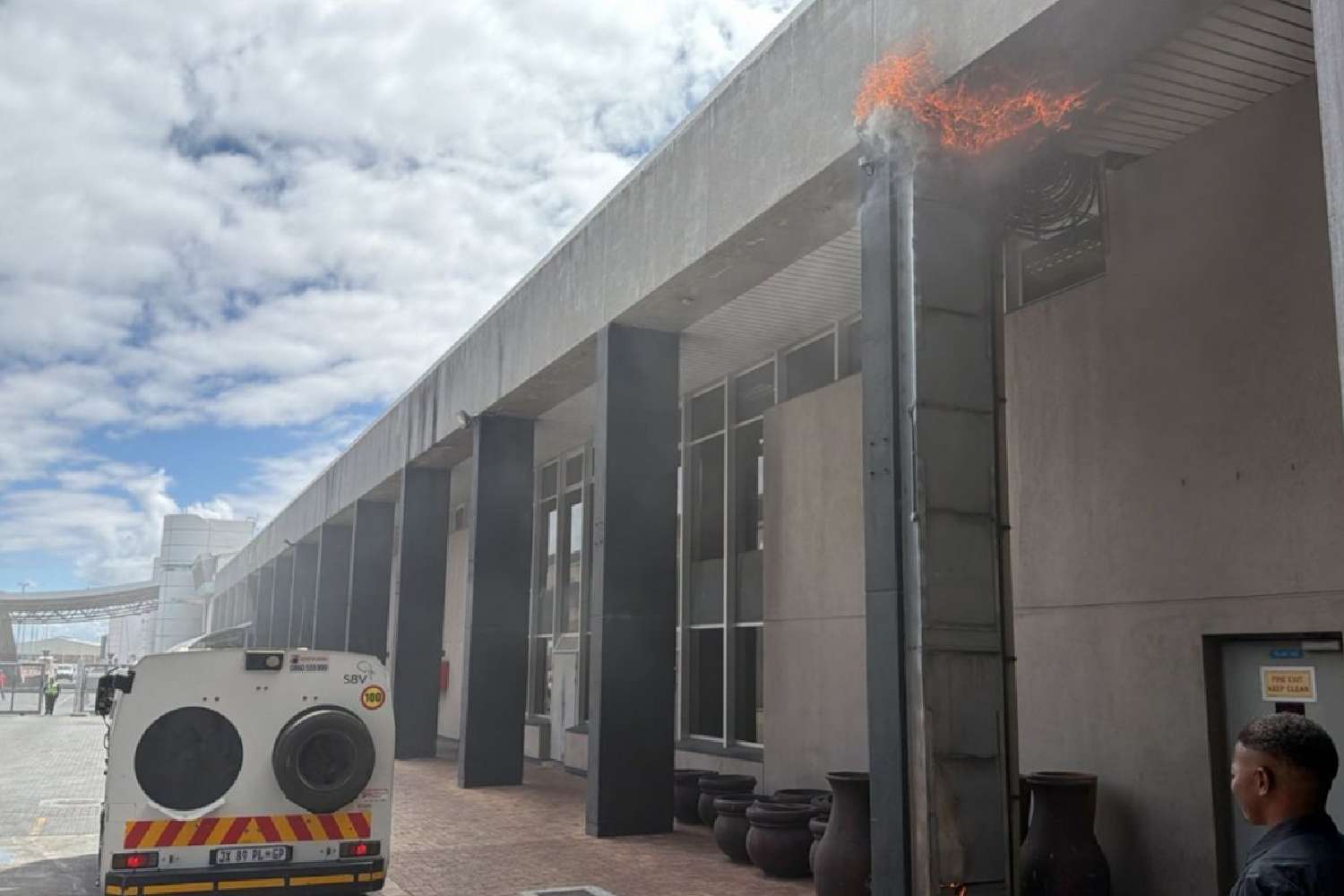
The disruption appears to have stemmed from damage to heavy cabling infrastructure. Visual evidence that surfaced on social media showed thick bundles of electrical cabling engulfed in flames inside an exterior structural column, with smoke venting from the conduit.
Cape Town International Airport is South Africa’s second-busiest airport and a critical gateway for tourism, business travel and cargo operations.
Modern airports rely heavily on integrated IT infrastructure. Core systems manage:
- Flight scheduling and airside coordination
- Passenger check-in and boarding processes
- Immigration and customs systems
- Baggage handling networks
- Security surveillance and communications
A failure in network infrastructure — particularly in shared conduit systems housing heavy electrical and data cabling — can rapidly cascade into operational paralysis.
International operations are particularly sensitive to IT disruption because they rely on real-time coordination with air traffic control, border control databases, airline systems, and international scheduling platforms.
The precautionary halt of departures suggests authorities prioritised safety over operational continuity while assessing system integrity.
Globally, airports have increasingly invested in redundancy and backup systems following incidents involving cyberattacks, power failures, and infrastructure fires.
However, even with redundancy, restoring full operational capacity can take hours or days depending on the extent of damage.
For Cape Town — a major tourism hub — the timing of such disruptions can carry economic consequences, particularly during peak travel periods.
ACSA indicated that further updates would be provided as verified information becomes available.