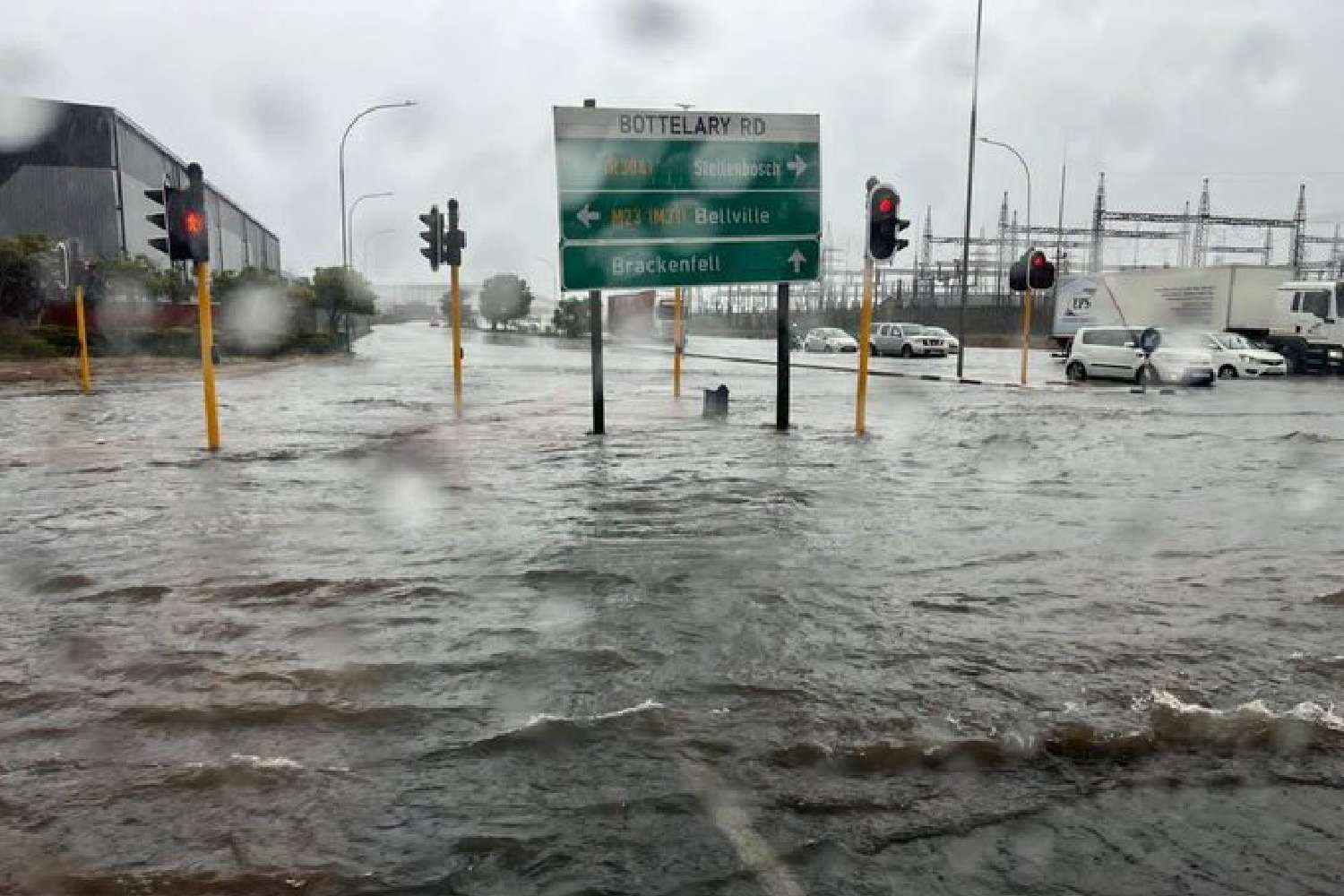


Cape Town’s Disaster Risk Management Centre has mobilised emergency response teams across multiple informal settlements after days of torrential rain and a cold front triggered widespread flooding across the city, with at least 269 structures affected in Vygieskraal alone and a further 55 homes flooded in Belgravia as of Monday, 20 April 2026.
The floods, driven by a severe Western Cape cold front that brought heavy downpours and strong winds over the weekend, have left hundreds of residents displaced in some of the city’s most vulnerable communities.
Mop-up operations are underway across Nyanga, Brown’s Farm, Philippi and Parkwood, with teams deployed alongside non-governmental organisations including the Mustadafin Foundation and Islamic Relief to provide emergency humanitarian relief.
Vygieskraal and Belgravia Bear the Brunt of the Damage
Early assessments confirm that approximately 269 structures in the Vygieskraal informal settlement were affected by the flooding, with close to 600 residents impacted. In Voël Street, Belgravia, a further 55 structures sustained flood damage.
Further assessments are ongoing in Mkhonto Square Informal Settlement in Nyanga and in Brown’s Farm in Philippi, with the City’s disaster operations centre dispatching roads and stormwater teams to affected areas.
Disaster Risk Management Spokesperson Sonica Lategan confirmed the scale of the task ahead.
“The effect of the heavy downpours in Umkhonto square informal settlement in Nyanga as well as Brown’s Farm in Philippi can only be confirmed once assessments are completed,” Lategan said.
Localised flooding also caused widespread road closures across the city, with fallen trees and waterlogged routes making driving conditions hazardous. Residents in low-lying areas were urged to stay indoors where possible.
Cold Front Extends to Snow on the Cape Mountains
The cold front that triggered the flooding was severe enough to bring snow to parts of the Cape mountains, a rare occurrence for the Western Cape in April. Cape Argus reported widespread snow on higher-lying areas over the weekend, adding to the disruption already caused by heavy rain across the peninsula.
The City of Cape Town’s Disaster Risk Management Centre is conducting rolling assessments and has indicated that its emergency response teams will resume operations at first light as conditions allow.
NGO partners are currently providing food, shelter and basic relief to affected families while permanent assessments of structural damage are conducted.
Informal Settlements Remain Most Exposed to Flood Risk
The April flooding has again underscored the structural vulnerability of Cape Town’s informal settlements to extreme weather events.
A November 2025 Amnesty International report warned that the South African government was failing millions of people trapped in informal settlements and exposed to the accelerating impacts of the climate crisis, citing inadequate drainage infrastructure, overcrowded housing and slow post-flood rebuilding as the primary risk factors.
The Western Cape regularly experiences flooding during the winter rainfall season, which typically runs from June to August, but severe cold fronts in April have become increasingly common as regional weather patterns shift.
Community leaders in flood-prone areas have previously called for accelerated infrastructure investment to reduce the recurring displacement of residents in settlements that often have no formal drainage systems.
Anyone with information about affected residents in need of emergency assistance is urged to contact the City of Cape Town’s Disaster Risk Management Centre on 021 597 5500 or the Western Cape Government emergency line.