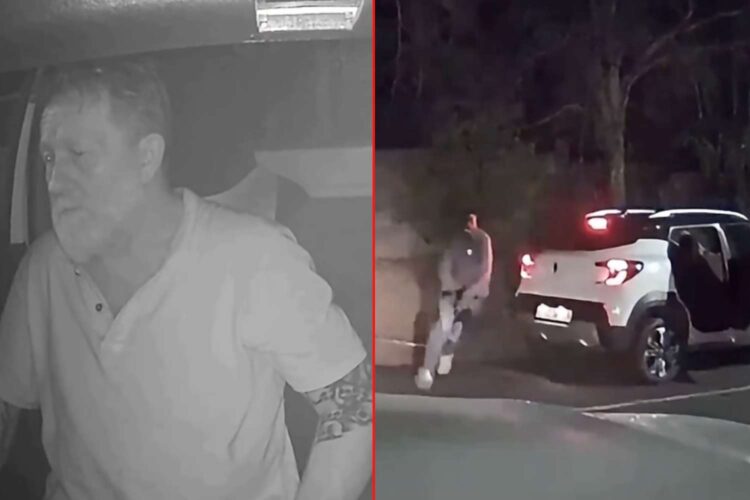


Chinette Gallichan, a 35-year-old labour attorney from Krugersdorp, was shot dead at close range outside the Commission for Conciliation, Mediation and Arbitration offices on the corner of Fox and Joubert streets in the Johannesburg CBD at approximately 09:00 on Monday, 23 March 2026. She was representing mining giant Sibanye-Stillwater in a labour dispute at the time of her murder. No arrests have been made.
According to witnesses, Gallichan had just exited her vehicle when a male assailant approached and opened fire at close range. The suspect fled the scene on foot before entering a waiting vehicle and escaping. Nothing was taken from the scene. That detail, quietly noted by investigators and colleagues alike, is the reason this case is being treated as a targeted hit from the outset.
Gauteng police spokesperson Tintswalo Sibeko confirmed a murder case has been opened and that authorities are actively searching for the suspects.
“The motive behind the attack remains under investigation, and no arrests have been made so far,” Sibeko said, urging anyone with information to contact Crime Stop on 08600 10111.
Who was Chinette Gallichan?
Gallichan obtained her LLB from the University of South Africa, followed by a postgraduate diploma in labour law with distinction from the University of Johannesburg.
She was a rising figure in South Africa’s labour law community, known for representing both employers and employees in matters involving unfair dismissal, unpaid wages and retrenchment disputes.
Colleagues described her as a familiar and respected presence in both legal and athletic circles. Fellow attorney Jacobus Myburgh said she was practising in the labour litigation department at Sibanye-Stillwater, handling cases related to unfair dismissals and unpaid wages.
Outside the law, she was a committed long-distance runner and a member of the Run Zone Athletics Club, which had celebrated her participation in the Cape Town Marathon.
The club’s tribute on social media captured the disbelief felt across the communities that knew her. Her best friend Nicola Coetzee, who described Gallichan as a hard worker who adored her husband Keegan and her family, wrote on social media:
“There’s so much I can’t remember right now, and it makes me angry, because I want to remember everything about you forever.”
Her LinkedIn profile included a link to the Bible verse Jeremiah 29:11, a verse about hope and a future. She was 35 years old.
What case was she working on?
Sibanye spokesperson James Wellsted confirmed Gallichan was part of the company’s legal team at its gold operations and was representing the company in employee disputes at the CCMA.
“She represented us in employee disputes, which often go to the CCMA. I know there was a dispute that she was busy dealing with, but I don’t have all of the details,” Wellsted said.
He added that Sibanye would conduct its own investigation alongside the police.
The specific matter has not been publicly disclosed. But the context is important. Gallichan is reported to have been handling a retrenchment-related matter at the time of the shooting. Sibanye-Stillwater announced several thousand retrenchments in its southern African operations in 2024 and has made no further public announcements on job losses since then.
The previous one-year wage agreement between Sibanye-Stillwater and its unions expired on 30 June 2025, with new negotiations beginning in July 2025. Unions including AMCU presented a consolidated demand for a R1,300 monthly increase for the lowest-paid workers, which the company countered with an offer of R650.
Those talks reached a deadlock, with AMCU president Joseph Mathunjwa publicly accusing Sibanye of sending negotiating teams with almost no mandate to settle. Any unresolved retrenchment disputes from that period would have been flowing through the CCMA system in the months that followed.
Daily Maverick noted that if the murder is indeed linked to a labour dispute, “it would mark an ominous turn in labour relations at a time when one could argue they have never been better in South Africa’s mining industry, which has gone years without a prolonged strike.”
For now, the motive behind the attack remains unconfirmed. But the professional context cannot be ignored.
How has the government and legal community responded?
Justice and Constitutional Development Minister Mmamoloko Kubayi condemned the killing, stating that it “undermines the rule of law and threatens the very foundation of our constitutional democracy.” She called on law enforcement to act swiftly and urged all individuals to reject violence and place their trust in legal processes.
The Johannesburg Society of Advocates Bar Council described the incident as part of an “increasingly discernible pattern” in which legal practitioners face threats, intimidation and, in extreme cases, lethal violence linked to their professional duties. Bar Council chair advocate Don Mahon SC said:
“This tragedy cannot be viewed in isolation. Such conduct strikes not merely at individuals but at the institutional integrity of the administration of justice.”
Alexi Jean Rosenzweig, senior associate at HJW Attorneys, said she was “heartbroken and outraged” by the killing.
“This is an attack on the integrity of our institution and the principle that labour disputes must be settled in forums like the CCMA, not through intimidation or violence,” she said.
“Chinette’s death must prompt a serious conversation about the safety of all who use these institutions.”
Is this part of a wider pattern?
It is not an isolated case, and that is what makes it so alarming to the legal community.
Gallichan’s murder follows the assassination of Johannesburg insolvency attorney Bouwer van Niekerk in September 2025, who was killed in his Saxonwold law offices at a time when he was investigating an alleged Ponzi scheme.
That case cast a spotlight on the rising toll among lawyers working on sensitive matters involving financial crime and corruption.
The murder of Gallichan adds a new dimension to that pattern: a lawyer killed not in a private office, but in broad daylight in a major South African city centre, steps away from the very institution designed to resolve the dispute she was attending to. Legal administrative assistant Bridgette Nikiwe Golele captured the mood of the profession:
“Over the years in South Africa, there have been incidents where labour practitioners and HR professionals have faced threats and intimidation due to the nature of disputes they were involved in. This is a reminder that labour relations professionals are not just dealing with files and hearings, but with highly sensitive human situations.”
The CCMA itself, one of South Africa’s most important institutions for peaceful dispute resolution, is now facing questions about the physical safety of practitioners who use it. Toto Geza, executive director of the South African Anti-Bullying Institute, described the murder as “a sobering breach of the civic space where conflict is meant to be contained by law.”
He said the moment “demands clear resolve, rigorous investigation, accountability for those responsible, and concrete measures to protect practitioners and participants at our institutions.”
There are no confirmed links as yet between Gallichan’s murder and any specific individual or faction. But the manner of the killing, a planned, coordinated daytime shooting with a getaway vehicle positioned and waiting, suggests this was not a random act of street crime.
Investigators will now have to determine who ordered it, and why.