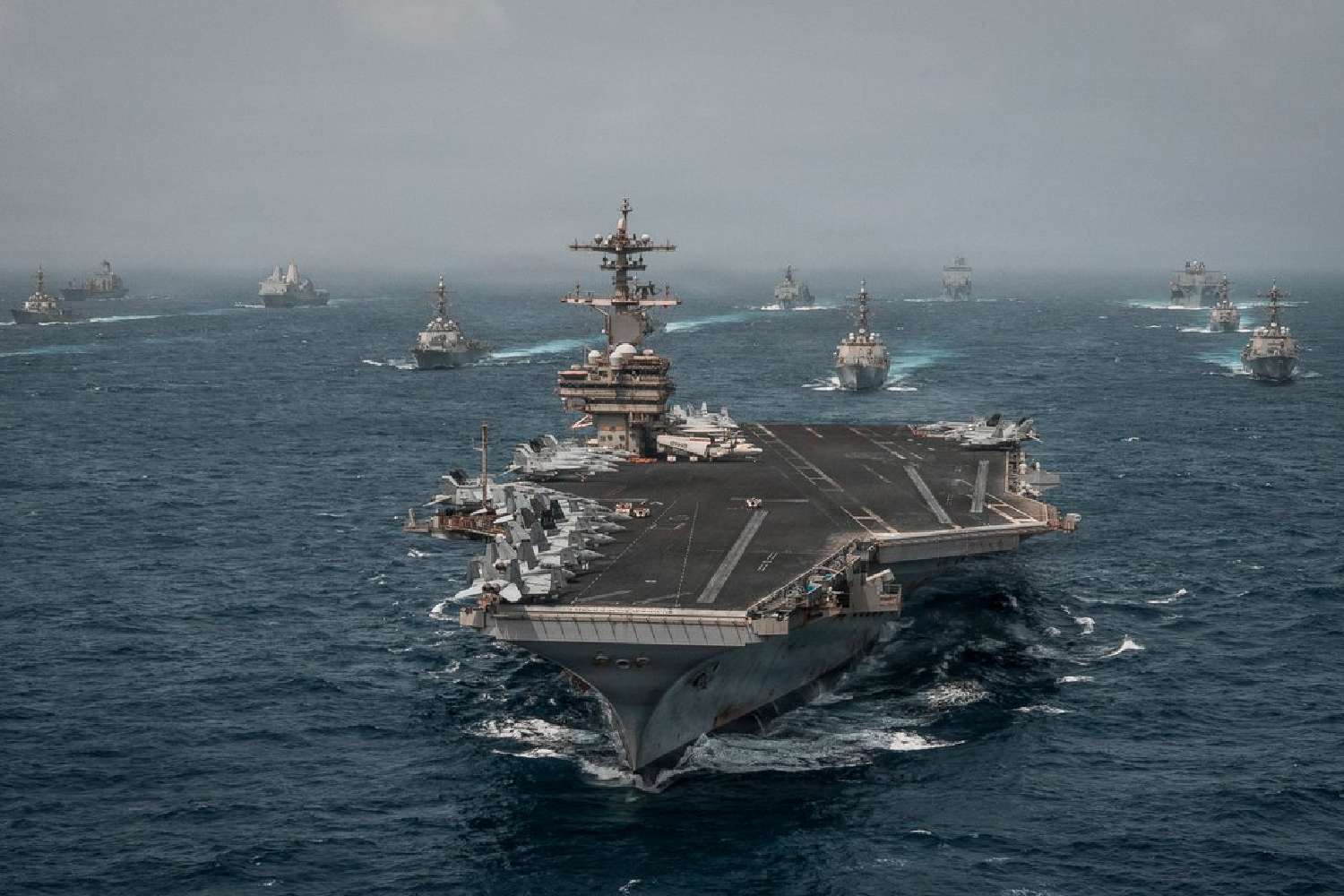


The United States reinstated its naval blockade of the Strait of Hormuz at 16:00 EDT (22:00 SAST) on Tuesday, 14 July 2026, blocking ships travelling to and from Iranian ports.
The blockade resumed a day after President Donald Trump said the United States would act as the “guardian” of the waterway, according to US Central Command.
It followed a fourth consecutive night of American strikes on Iran.
Why the Strait of Hormuz blockade returned
The renewed blockade marks the collapse of a short-lived truce. On 8 July 2026, the interim agreement between Washington and Tehran broke down after Iran allegedly struck several commercial ships passing through the Strait of Hormuz.
That agreement had looked like a turning point. On 17 June 2026, Trump and Iranian President Masoud Pezeshkian signed a memorandum of understanding to end the war, and the blockade was lifted the following day.
Trump had signalled the reinstatement a day earlier, casting the United States as the protector of the waterway rather than an aggressor. The “guardian” framing positions the blockade as a security measure, though Iran views it as an act of war.
In the days since the truce failed, American forces have hit Iran repeatedly. The latest round targeted dozens of military sites near the Strait and along the coast, including missile and drone facilities, naval capabilities and coastal defences.
What the Hormuz blockade means for global trade
The Strait of Hormuz is one of the most important shipping routes in the world. Roughly 20% of global energy supplies pass through the narrow waterway, which makes any disruption there an immediate concern far beyond the region.
A naval blockade means US warships stop vessels from entering or leaving Iranian ports, choking off trade by sea. Enforcing it in a waterway as busy and contested as the Strait raises the risk of direct clashes with Iranian forces.
The standoff has already rippled through markets. Global trade has been disrupted and fuel prices have climbed as buyers price in the risk of a prolonged closure, a pressure that reaches ordinary households well outside the Gulf.
Iran has rejected the American move and vowed to assert its own control over the Strait of Hormuz. Tehran regards the waterway as within its sphere, setting up a direct contest over who governs passage through it.
With the blockade back in force and strikes continuing, there is no sign yet of a return to talks.
The immediate question is whether either side moves to de-escalate, or whether the standoff over the Strait of Hormuz hardens into a longer confrontation.