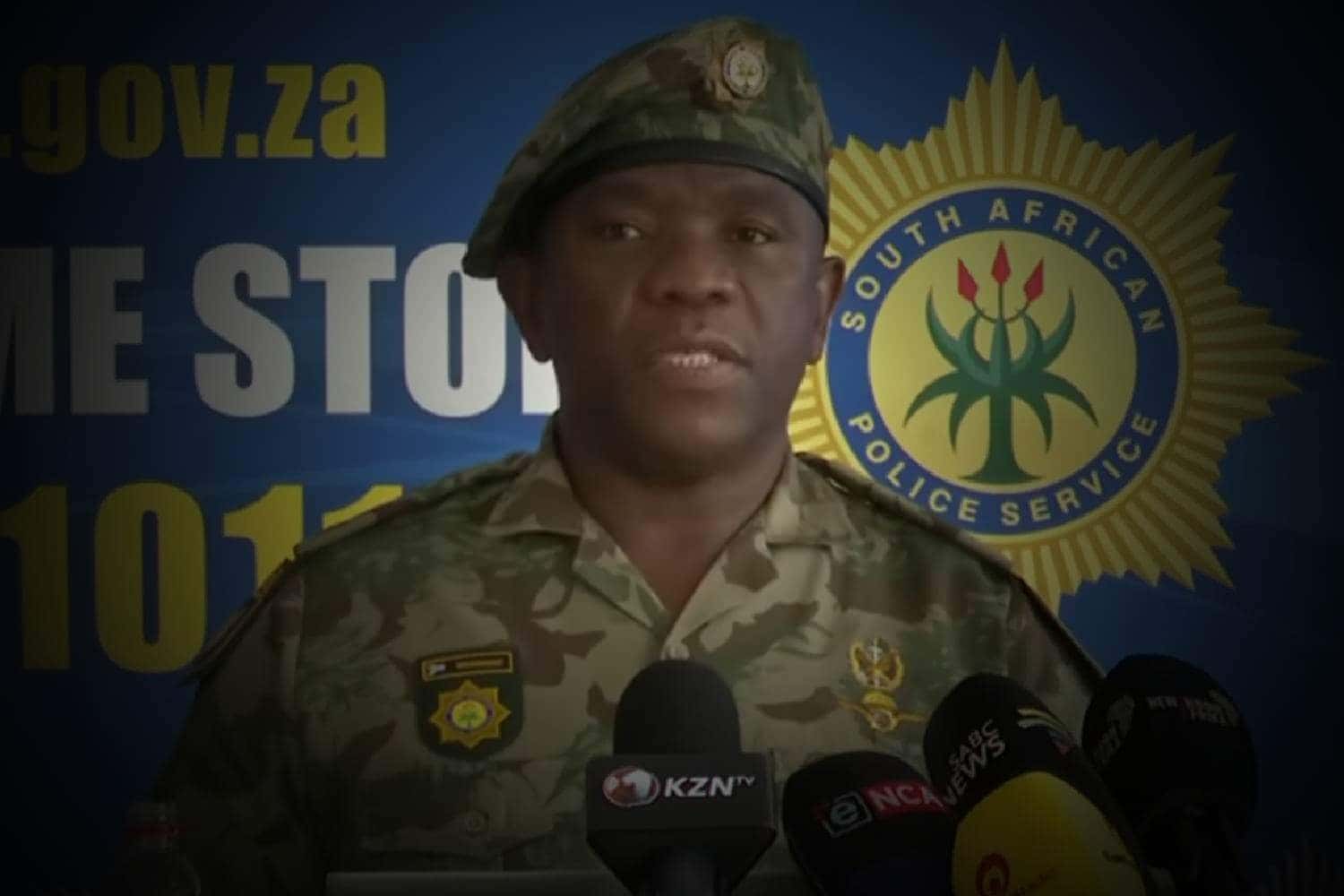


Lt-Gen Nhlanhla Mkhwanazi’s July 6 briefing turned one year old on Monday, 6 July 2026, a year after the KwaZulu-Natal police commissioner accused senior officers of colluding with criminal cartels.
The impromptu briefing on Sunday, 6 July 2025, detonated a political and policing crisis that has not settled since, as reported by TimesLIVE.
Mkhwanazi named names in full uniform, and the fallout reached the cabinet within a matter of weeks rather than months.
What Mkhwanazi alleged on July 6
Standing before reporters in Durban, the KwaZulu-Natal police commissioner alleged that senior officers were working hand in glove with criminal cartels to hollow out the justice system from the inside.
He implicated the then police minister and a deputy national police commissioner in the scheme he laid out.
He told the country that a criminal syndicate had captured parts of the police, that a specialised task team investigating political killings had been disbanded, and that case dockets pointing at powerful figures had been buried.
The claims were extraordinary coming from a serving general speaking on the record.
At the centre of his account was the Political Killings Task Team, a KwaZulu-Natal unit he said had been deliberately shut down to protect the very people it was closing in on.
Mkhwanazi argued the disbandment was no accident but a calculated move by figures who feared where the investigations were heading.
How the Madlanga commission followed
Within a week the allegations forced the president’s hand. On Sunday, 13 July 2025, President Cyril Ramaphosa announced a judicial commission of inquiry chaired by retired Constitutional Court justice Mbuyiseli Madlanga to test everything Mkhwanazi had placed on the public record that afternoon.
The Madlanga commission has since heard months of testimony that widened the scandal far beyond the original briefing, exposing further links between officers, politicians and organised crime networks.
Suspensions and resignations followed as witnesses steadily filled in the picture that Mkhwanazi had first sketched in July.
The two men Mkhwanazi pointed to, then police minister Senzo Mchunu and deputy national commissioner Lt-Gen Shadrack Sibiya, were thrust into the eye of the storm.
Both were placed on the defensive as the commission set about testing the general’s version against documents and sworn evidence.
By Friday, 30 January 2026, Ramaphosa revealed that the commission had referred 14 names for criminal investigation, a tally that turned a single press conference into a formal criminal-justice process.
The referrals covered figures both inside and outside the police service itself.
What happens next
The commission continues its work as the anniversary passes, with criminal referrals now sitting before investigators and prosecutors who must decide whether charges eventually follow.
One year on, the July 6 briefing has reshaped South Africa’s policing debate, and its full consequences are still landing across government and the service.