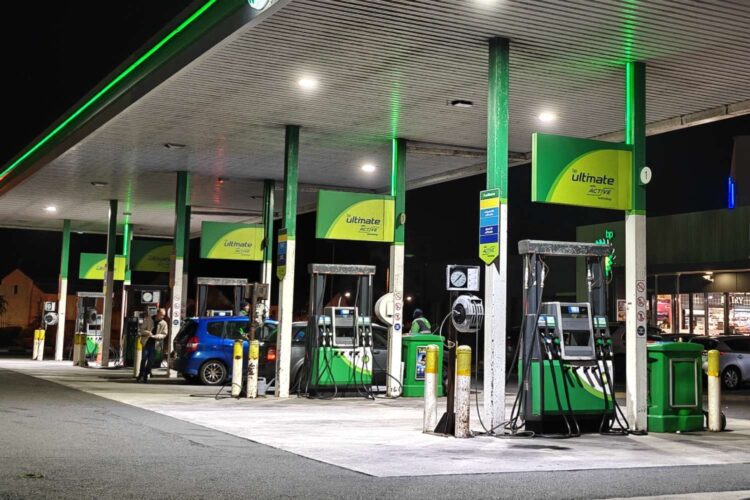


The summer blend gasoline rule will end early in the United States after the Environmental Protection Agency issued an emergency fuel waiver on Thursday, 20 August 2026, to lift supply and ease prices.
The waiver takes effect on 1 September 2026 and runs to 15 September 2026, according to Reuters.
It allows petrol blended with 10% ethanol to be sold at a higher vapour pressure, which the agency said could add hundreds of thousands of barrels a day to national supply.
Why the summer blend gasoline rule exists
Refiners in the United States are required through the warmer months to supply a less volatile petrol blend, because fuel that evaporates readily releases more of the compounds that form ground-level ozone.
The requirement is costlier to meet and narrows the pool of fuel that can legally be sold.
Vapour pressure is the measure at the centre of the rule, describing how easily a liquid fuel turns to vapour at a given temperature. Ethanol raises it, so blends containing 10% ethanol are normally restricted in summer; the waiver suspends that restriction for two weeks.
What the summer blend gasoline waiver means at the pump
The national average price for a gallon of regular petrol stood at $4.10 when the waiver was announced, up by close to a dollar on the roughly $3.13 recorded at the same point a year earlier.
Fuel costs had become one of the most visible pressures on American households.
Loosening the specification widens the range of fuel that can be sold in the affected period, which increases available volume without new production. Additional supply of that size typically eases wholesale prices first, with any effect reaching forecourts over the following days rather than immediately.
What critics said about the summer blend gasoline waiver
Environmental health groups warned that the more volatile, ethanol-rich fuel can worsen ozone pollution during warm months. Ground-level ozone irritates the airways and is associated with higher rates of asthma attacks and hospital admissions, which is why the summer specification was introduced in the first place.
The waiver period falls at the tail end of the American summer, when temperatures in much of the country are falling and ozone formation slows.
That timing is the basis on which emergency waivers of this kind have been justified before, and it narrows the window of exposure to two weeks.
Emergency fuel waivers are a rarely used instrument, granted when a supply shortfall is judged severe enough to justify a temporary departure from clean air requirements.
They are time-limited by design and expire automatically, leaving the standard specification to return without further action.
The waiver expires on 15 September 2026, the point at which the summer specification ordinarily lapses in any event, so no further action is needed for the standard rules to resume.
Drivers will see the effect, if there is one, in the pump prices posted through the first half of September.