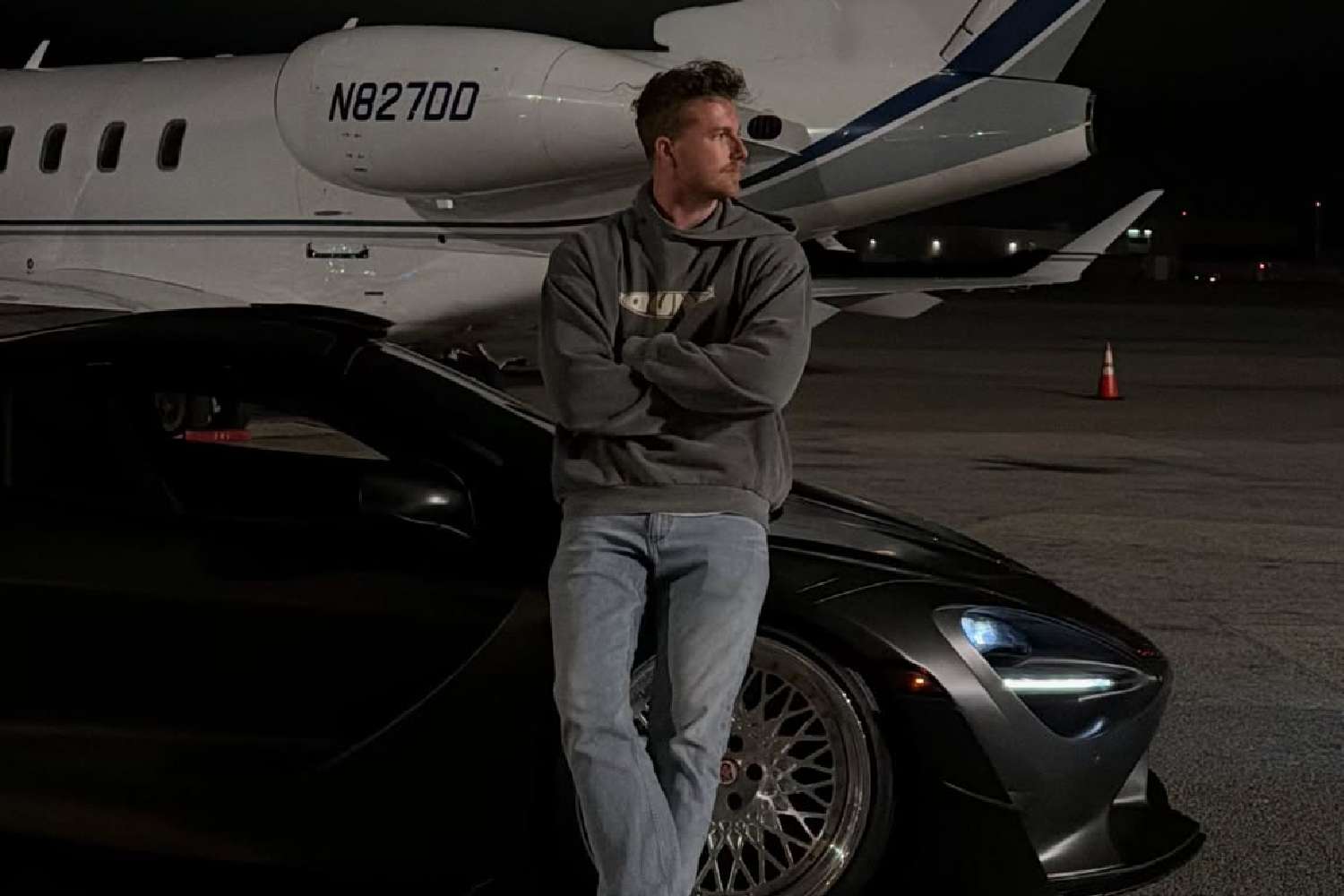

James Wehr and Lexi Kramer died when a McLaren 720S left Culver Drive, struck a tree and caught fire in Irvine, California, in the early hours of Sunday, 13 September 2026.
Police reported the single-vehicle crash at about 00:18 local time (09:18 SAST) at the intersection of Culver Drive and Deerfield Avenue, as reported by KTLA.
Both people inside the 2019 McLaren 720S were killed, and investigators believe speed was a factor.
How the James Wehr and Lexi Kramer McLaren crash unfolded
The car was travelling on Culver Drive when it accelerated at high speed after a traffic light changed, police said. It lost control, clipped a kerb and struck a tree with enough force to break apart, and the wreckage then caught fire at the roadside.
The 720S is a twin-turbocharged mid-engine supercar quoted at under three seconds to 100km/h, a rate of acceleration that leaves little margin on a suburban arterial road with signalled intersections. Authorities have not publicly confirmed which of the two occupants was driving, and the circumstances leading to the crash remain under investigation.
Who James Wehr and Lexi Kramer were
Wehr, 27, co-founded South OC Cars and Coffee, a weekly gathering in San Clemente billed as one of the largest car shows of its kind in the world. The event draws owners, spectators and exhibitors to southern Orange County each weekend, and had run on the Saturday before the crash.
Kramer, 22, was from Lakeland, Florida. She and Wehr had reportedly connected online, and she travelled to California to meet him in person shortly before the crash. The pair attended his car show on Saturday, 12 September 2026, and were in the Irvine and Newport Beach area that evening.
What investigators still need to confirm about the crash
Formal identification of Kramer required dental records, supplied by her family to the medical examiner’s office, a step used when a body cannot be identified by sight after a fire or severe impact.
Her sister, Gracie Kramer, has spoken publicly about the loss.
“She loved the car community, so it’s such a tragedy that that’s what ended her.”
Crash reconstruction in such cases relies on physical evidence rather than eyewitness impression. Investigators measure tyre marks, map the debris field and, where the car’s electronics survive, recover data that records throttle, braking and speed in the seconds before impact. Fire damage can limit how much of that record is retrievable.
Investigators have not set out a timeline for their findings. Until the vehicle’s data and the medical examiner’s report are complete, the identity of the driver and the exact speed at impact remain the two open questions in a case police have already tied to speed.