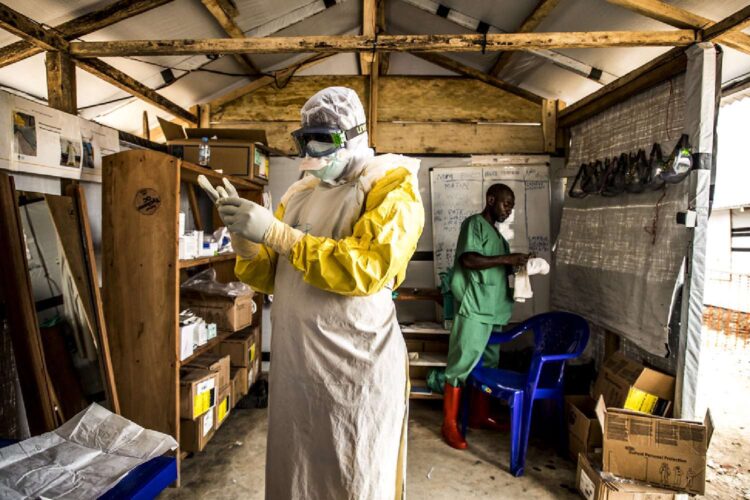


France confirmed its first Ebola case on Wednesday, 24 June 2026, after a doctor returning from a humanitarian mission in the Democratic Republic of Congo tested positive for the virus.
The patient is a healthcare worker who had been operating in one of the regions of the Democratic Republic of Congo where the virus is circulating, as reported by Al Jazeera.
The case is the first instance of the haemorrhagic fever being detected outside Africa during the current outbreak.
How France responded to the Ebola case
French authorities said the patient was isolated on arrival and moved to a specialist hospital under strict biosafety protocols.
The Health Ministry said:
“All precautionary measures, including the patient’s isolation, were implemented upon arrival in France, with transfer to the hospital under secure conditions to prevent any risk of contamination.”
Contacts of the doctor are being traced and asked to self-isolate for 21 days, the standard monitoring window for the disease.
Authorities placed the risk to the wider European population as low, noting that Ebola spreads only through direct contact with bodily fluids rather than through the air.
The infected doctor had been working with patients in one of the affected zones before travelling back to France, where symptoms emerged and prompted testing.
Officials have not released the worker’s name or current condition, citing medical confidentiality, and said only that treatment was under way.
What the first Ebola case outside Africa means
The current outbreak is driven by the Bundibugyo strain of Ebola, a form of the virus that has no approved vaccine or treatment.
That gap makes early detection and isolation the main tools available to health workers trying to contain its spread across the region.
The outbreak was declared a public health emergency by the World Health Organisation earlier in June, with cases concentrated in the Democratic Republic of Congo and neighbouring Uganda.
Health teams in both countries have been racing to trace contacts and set up treatment units in areas where access is difficult.
Swisher Post has followed the Bundibugyo outbreak since it was declared across the Democratic Republic of Congo and Uganda earlier this year, a crisis that has stretched health systems already short of beds and trained staff. The arrival of a case in Europe widens a story that had been contained to the continent.
French health authorities will monitor the traced contacts through the 21-day window and update their risk assessment if any develop symptoms.
The case is likely to sharpen scrutiny of screening for aid workers returning from outbreak zones as the Bundibugyo strain continues to spread.