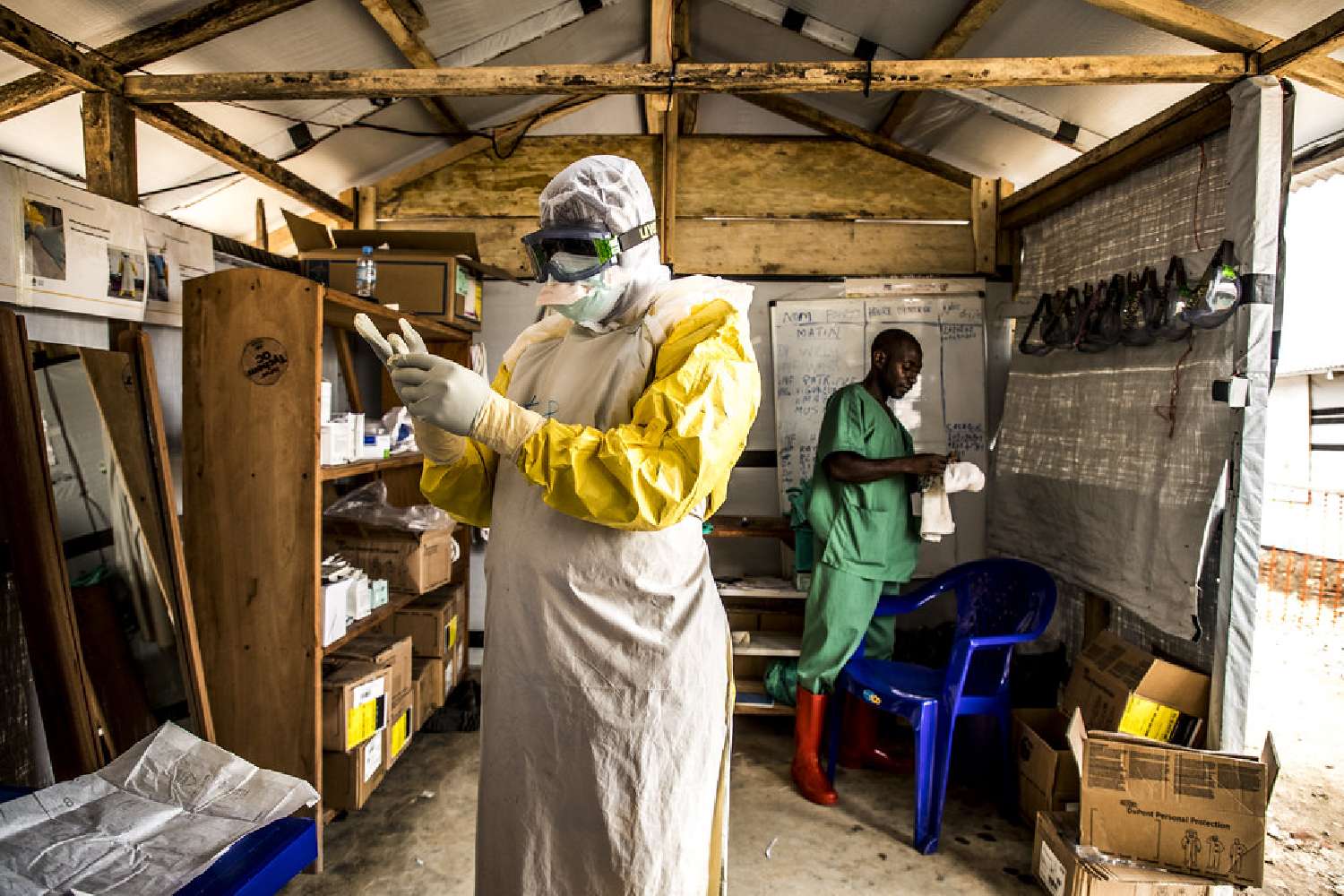


The Ebola outbreak in Congo has become the fastest-growing the continent has ever recorded, with deaths passing 700 as of Monday, 13 July 2026, across five affected provinces.
The current outbreak has close to 2,000 confirmed cases and is now the third-largest on record, according to the World Health Organisation.
Congo has been fighting the rare Bundibugyo strain of the virus since May 2026, when authorities declared it after weeks of undetected transmission.
What the Ebola outbreak in Congo looks like now
At least 1,926 people have been infected and 702 have died across the affected provinces, with the disease also confirmed in neighbouring Uganda.
The Africa Centres for Disease Control has described it as the fastest-growing Ebola outbreak the continent has seen, outpacing the response mounted against it.
There is still no approved treatment or vaccine for the Bundibugyo strain, which leaves containment resting on tracing contacts and isolating the sick. That is proving almost impossible in a region already strained by conflict and displacement.
This is the third time in a decade that Ebola has taken hold in the region, and the pattern is grimly familiar. Outbreaks flare in remote, hard-to-reach districts, spread through funerals and family care, and gain ground wherever the health system is thinnest.
Why the Congo Ebola outbreak is spreading unchecked
Around 80% of new cases are emerging from unknown chains of transmission, a sign the virus is now moving faster than health teams can map it. Many of the dead never reached a clinic before they died in their own communities.
Chikwe Ihekweazu of the WHO set out the gravest concern plainly.
“Perhaps the most alarming finding is that many of the newly reported deaths are people who died in their communities without ever reaching a health facility and without receiving care,” he said.
The response has been hampered on every front. A funding gap, repeated attacks on health centres, ongoing armed conflict in the east and deep mistrust among local communities have all slowed the teams trying to break the chains of infection.
The confirmation of cases in Uganda has raised fears of a wider regional emergency, echoing the cross-border spread that marked earlier outbreaks.
Health authorities in neighbouring countries have been placed on alert, screening travellers and watching for the first signs of imported infection.
With cases still climbing and most transmission invisible to health workers, the outbreak shows no sign of slowing.
The immediate task is to close the funding gap and reach the communities burying their dead unseen, before the Ebola outbreak in Congo pushes past the two largest on record.