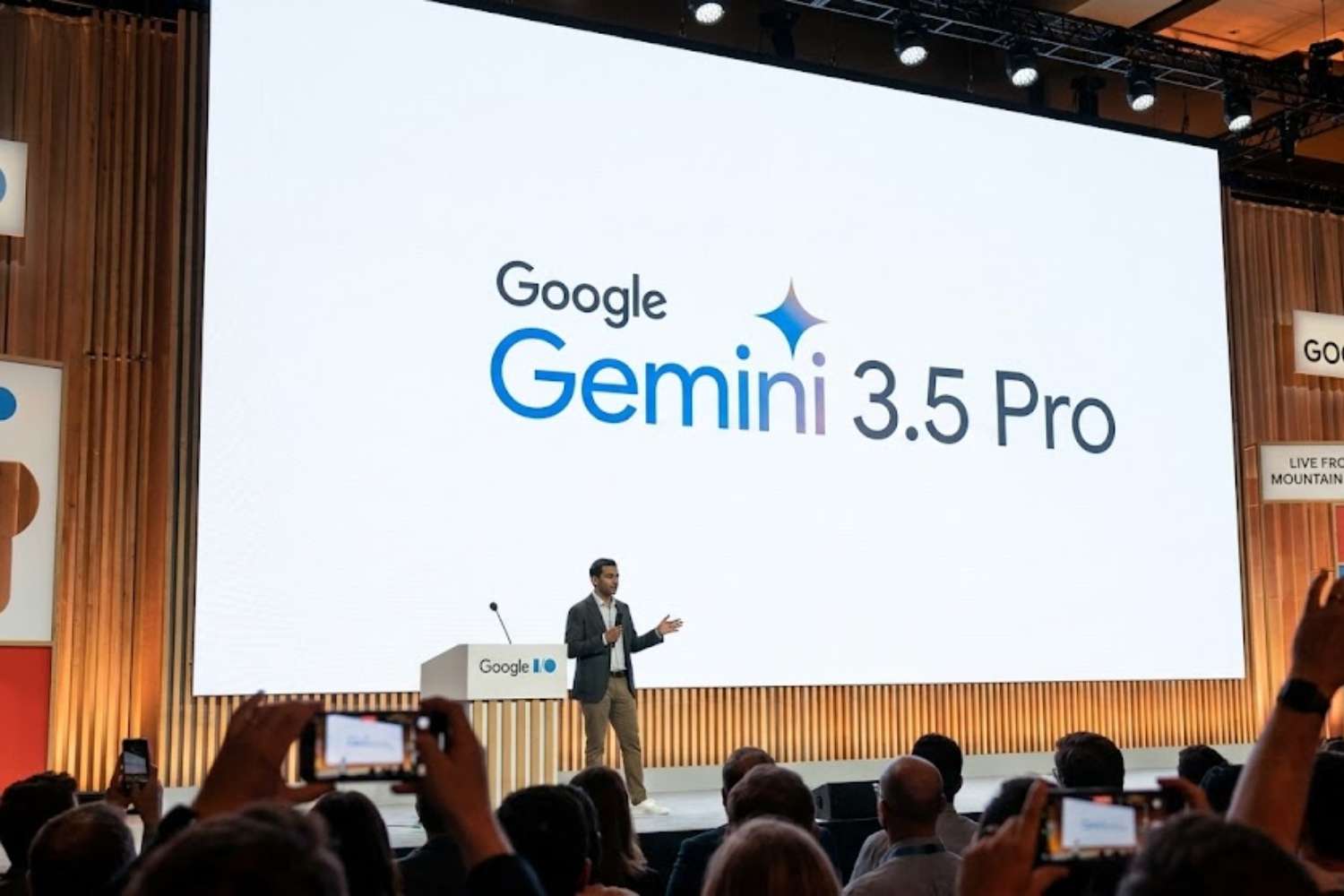


Google’s Gemini 3.5 Pro launch is targeted for Friday, 17 July 2026, according to a run of leaks and reporting, though Google itself has not confirmed the date, the specifications or the pricing tied to the model.
The 17 July target has been reported widely across technology outlets, as reported by TechTimes, after Google DeepMind reportedly scrapped its original base model and restarted pretraining.
Engineers are said to have found structural failures in recursive tool-calling and SVG generation, which is a fancy way of saying the model kept tripping over its own feet.
What the Gemini 3.5 Pro leaks actually claim
The headline number doing the rounds is a two-million-token context window, which would let the model hold enormous amounts of text, code or documents in memory at once.
Leakers also point to a new Deep Think reasoning mode, the kind of slower, step-by-step processing that has become the fashionable arms race among frontier labs this year.
Pricing is where it gets murky. Reporting has floated figures as steep as $15 per million input tokens and $60 per million output tokens, with the Deep Think mode gated behind an Ultra subscription tier at $250 a month.
None of this is official, so treat every figure as a rumour that has not been confirmed until Google says otherwise.
The rebuild matters because it explains the delay. A model that fails at recursive tool-calling cannot reliably chain actions together, and shaky SVG generation means it struggles to draw clean interface graphics on demand.
Both are exactly the sort of unglamorous plumbing that separates a demo from a product people trust.
Why the timing is loaded
Gemini 3.5 Pro is arriving into a crowded week. GPT-5.6 Sol launched publicly on Thursday, 9 July 2026, and Grok 4.5 opened to the public the same day, so Google is walking into a room where its rivals have already shipped.
DeepSeek V4 is also expected to graduate from preview to a stable release on Friday, 24 July 2026.
The launch also lines up with the 2026 World Artificial Intelligence Conference opening in Shanghai, which gives the whole thing a geopolitical backdrop of American and Chinese labs racing each other in public.
For a model that has already missed several internal deadlines, the pressure to actually ship is enormous.
The open question is whether Google hits the 17 July date or slips again.
The model has reportedly blown past three earlier deadlines, so a firm public release, rather than another quiet stopgap, is what everyone in the space will be watching for.