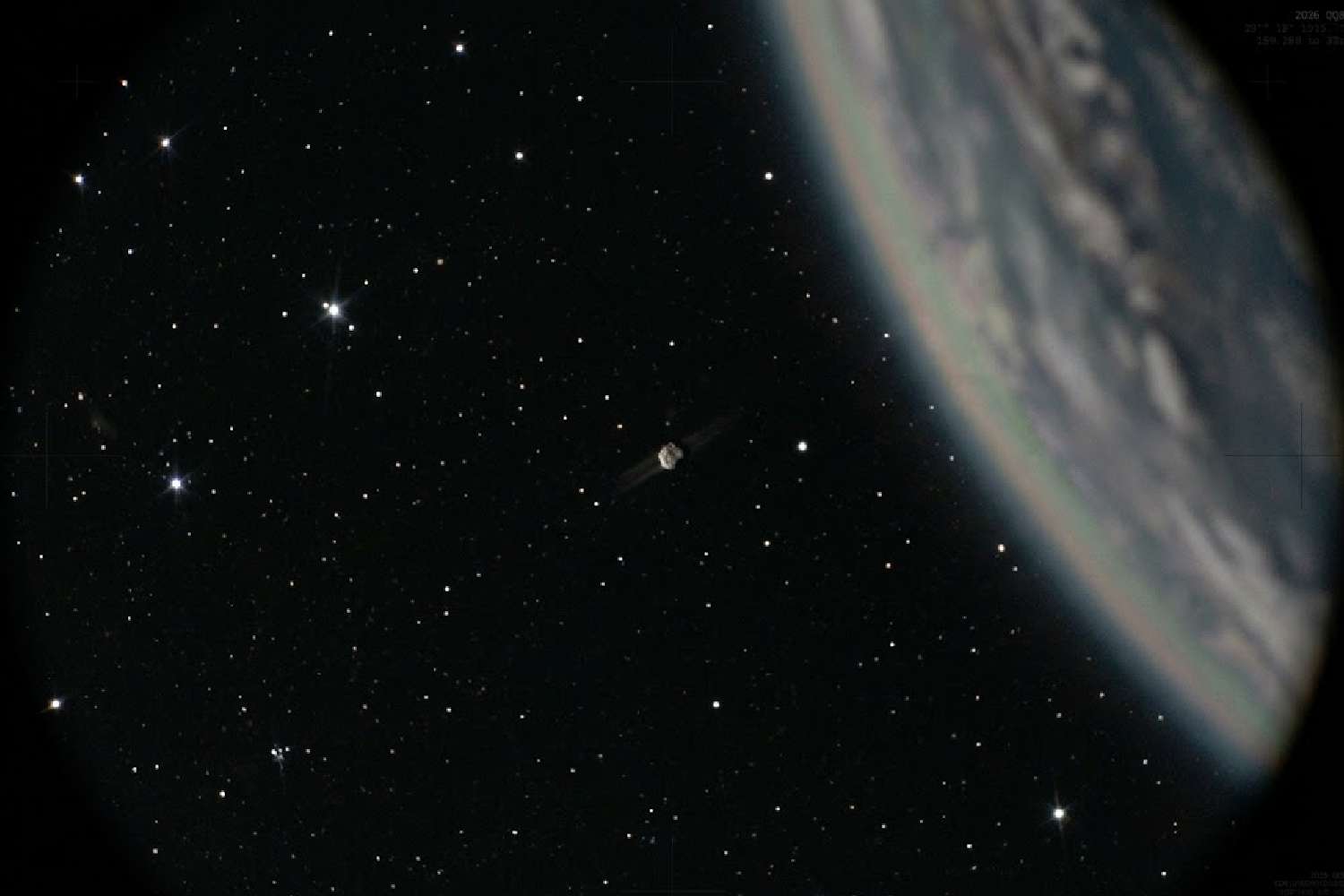


Earth has a temporary second moon, an asteroid named 2026 QQ8 that the Minor Planet Centre reported on Thursday, 29 October 2026 as temporarily bound to the planet by gravity.
According to Live Science, 2026 QQ8 entered orbit around Earth in April 2026 and should break free in January 2027. Hungarian astronomer Krisztián Sárneczky first observed it in August 2026, and the Minor Planet Centre, the body that logs and confirms new objects in the solar system, reported it on Thursday, 29 October 2026.
Does Earth really have a second moon?
Not in the way most people picture it. Our Moon is a permanent natural satellite about 3 474 kilometres wide. The 2026 QQ8 rock is a minimoon, or temporary satellite: a small asteroid that Earth’s gravity grabs for a while before letting go. Its label is a provisional designation given to newly found small bodies, not a name.
The International Astronomical Union puts the rock at about two metres across. It is too small and faint for the naked eye or amateur telescopes, so only professional observatories can track it. During its stay it comes no closer than about one and a half times the distance to the Moon, so it poses no collision risk.
How a second moon gets captured
Every planet has a Hill sphere, the bubble of space where its gravity outweighs the Sun’s. Earth’s reaches about four times as far out as the Moon’s orbit. When a slow-moving asteroid drifts in, it can swing around the planet instead of passing by. 2026 QQ8 crossed that boundary in April 2026 and now follows a wide, kidney-shaped loop around Earth.
Astronomers first mistook the object for space junk, possibly a spent rocket stage. The Minor Planet Centre held back a designation until extra observations let it estimate how hard sunlight pushes the object relative to its mass. A hollow rocket part has a lot of surface for little weight, so sunlight shoves it harder than solid rock. In its circular, the centre said:
No link to a known artificial object has been found.
Earlier second moon visitors
Earth has hosted a temporary second moon before. The asteroid 2024 PT5 was captured from 29 September to 25 November 2024, and it left Earth’s orbit on Monday, 25 November 2024 after about two months. A quasi-moon is a different case: 2025 PN7 orbits the Sun on a path that keeps it near Earth without being bound to the planet.
When the second moon leaves Earth
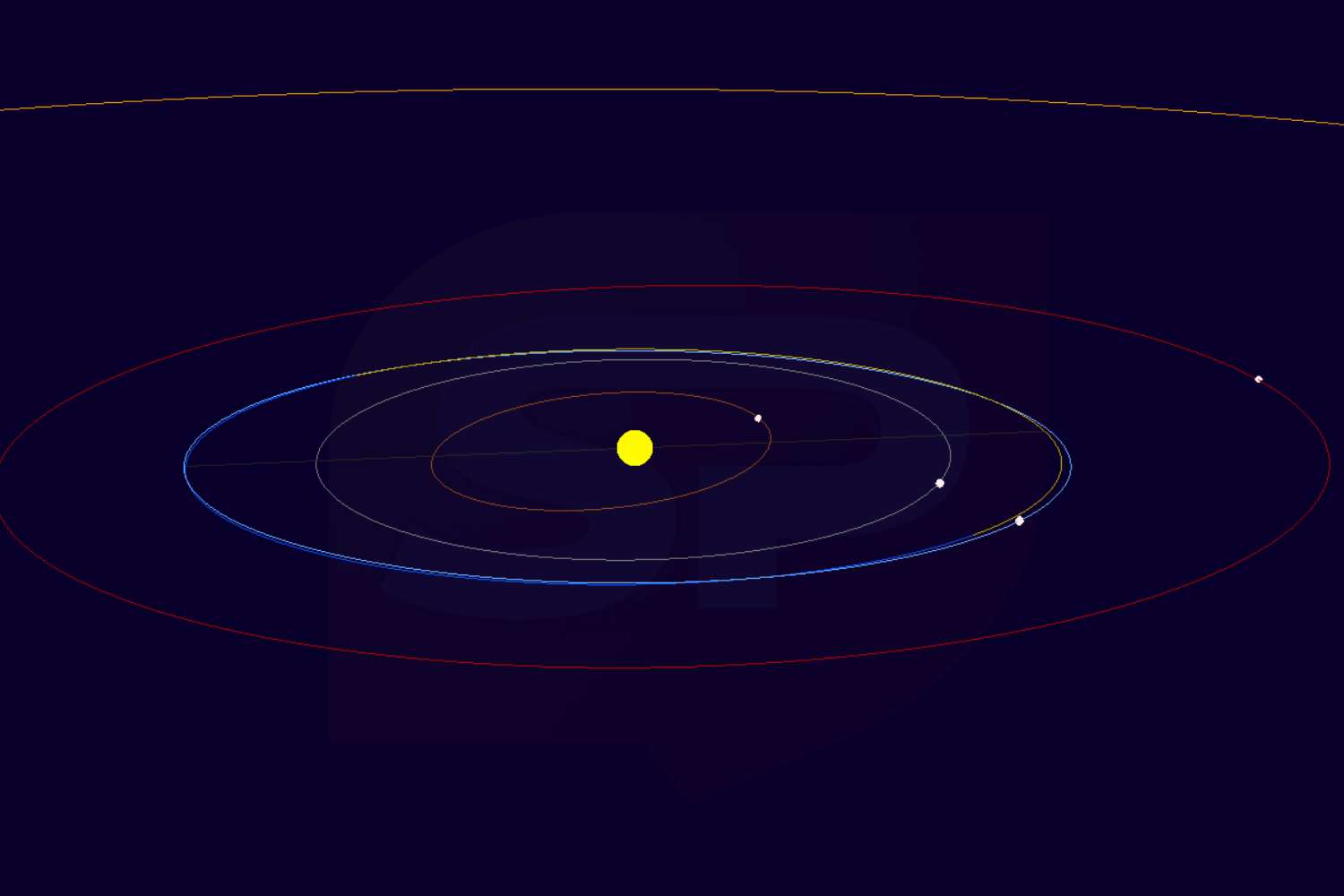
The rock takes 359 days to orbit the Sun and is an Aten asteroid, a group whose paths lie mostly inside Earth’s orbit. It comes close to Earth about once every 10 years, and it passed in 1965 without being captured, because capture depends on the geometry and speed of each encounter and not on distance alone.
Once it escapes, 2026 QQ8 will not come this close again until 2058. By then it is expected to pass too far from Earth to be captured, so the next visit will be a flyby rather than a stay of several months.
Sources
- Live Science, Astronomers confirm a tiny new moon is orbiting Earth, and it'll stick around for the holidays (13 November 2026)
- Gizmodo, Welcome Earth's new mini-moon. It's adorably tiny and has a loopy orbit (4 November 2026)
- EarthSky, A new mini-moon for Earth! Meet 2026 QQ8
- Space.com, Earth has captured a new mini moon but it won't stick around for long
- BBC Sky at Night Magazine, Earth has new mini-moon but it won't be around for long
- XenoSpectrum, Asteroid 2026 QQ8, a likely temporary Earth mini-moon, is ruled a natural object
- Geek Slop, 2026 QQ8 is Earth's tiny new mini-moon through the holidays
- Swisher Post, Earth now has a second moon: here's what it means (30 September 2024)
- Swisher Post, Earth's mini-moon left our orbit this week (26 November 2024)