
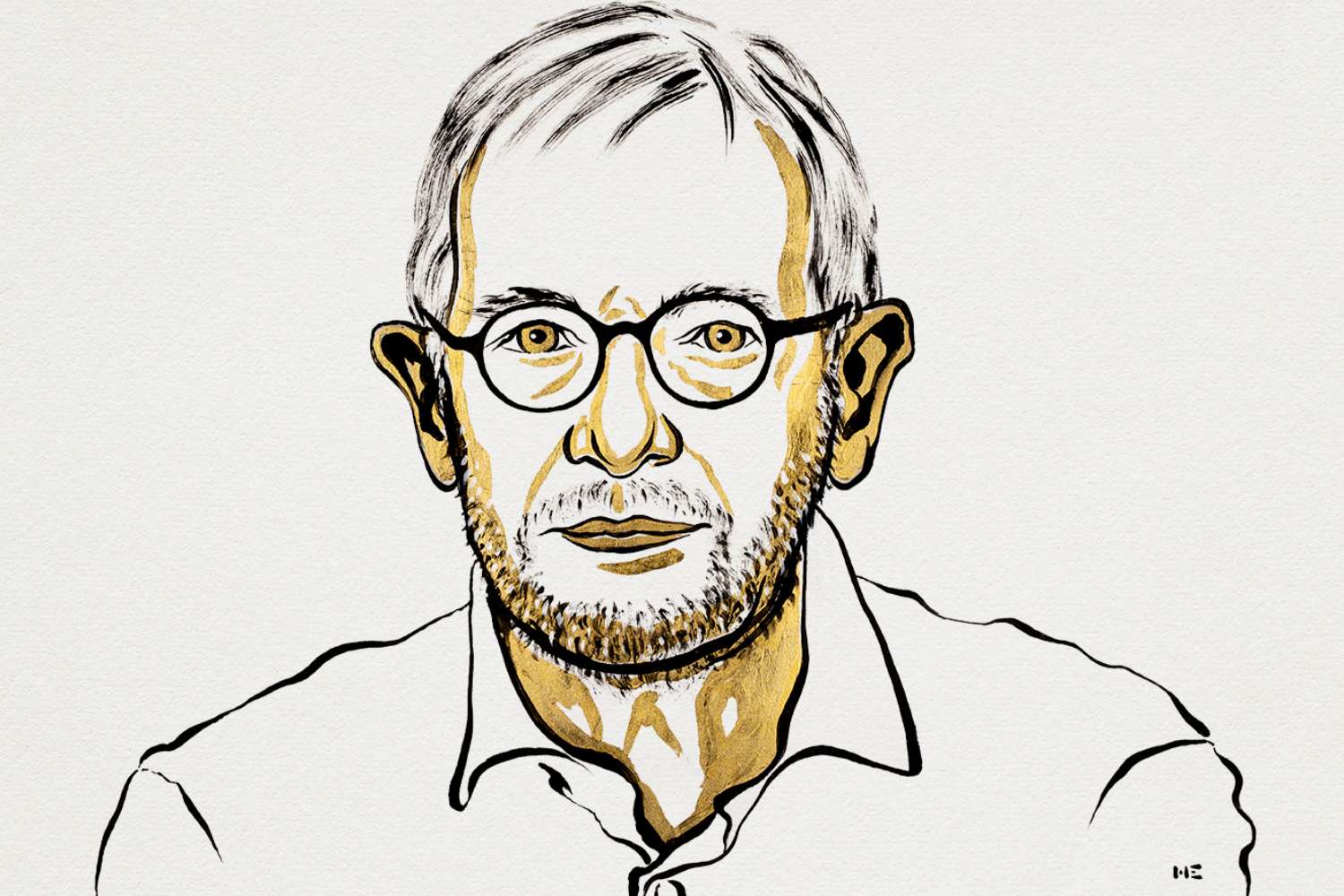
Nobel Prize in Physics 2026: Halzen wins for IceCube work
Francis Halzen won the Nobel Prize in Physics 2026 for the IceCube neutrino observatory.
Francis Halzen won the Nobel Prize in Physics 2026 for the IceCube neutrino observatory.
Moderna and Merck just kicked off the mRNA cancer vaccine wave with a melanoma trial win, and lung, bladder and kidney results are next.
OpenAI's rare disease model helped doctors confirm 18 previously unsolved childhood diagnoses in a study published on 18 June 2026.
Daraxonrasib nearly doubled survival in a Phase 3 pancreatic cancer trial, with results presented at ASCO 2026 on Sunday, showing 13.2 months vs 6.6 months.
SpaceX has confirmed a May 19 launch date for Starship V3, Flight 12, featuring new Raptor 3 engines targeting over 100 tonnes to low Earth orbit.
The Lyrid meteor shower peaks on 22 April 2026. South Africans in dark-sky areas can look north before dawn to catch the world's oldest meteor shower.
NASA's Artemis II crew broke the 56-year-old Apollo distance record on 6 April 2026, reaching 252,756 miles from Earth on a landmark lunar flyby mission.
NASA is moving closer to the Artemis II launch as engineers test the rocket and spacecraft that will carry astronauts on a historic journey around the Moon.
The California-based tech company 1X has launched the NEO home robot, which it calls the world’s first consumer-ready humanoid assistant capable of learning household chores and adapting to its owner’s lifestyle.
Interstellar comet 3I/ATLAS will soon reach its closest point to the Sun, and NASA says this encounter will alter the Manhattan-sized object in several ways as it continues its journey through our solar system.
The first supermoon of 2025 — known as the harvest full moon — will rise in early October, appearing brighter and closer to Earth than any moon so far this year.
Scientists using Cassini data have found all the necessary ingredients for life on Saturn’s moon Enceladus, strengthening hopes it could host habitable conditions.
A new study warns asteroid 2024 YR4 has a 4% chance of hitting the Moon in 2032.
The James Webb Telescope has captured new images of Sagittarius B2, the Milky Way’s largest star-forming cloud, revealing glowing stars, thick gas, and cosmic dust.
NASA is preparing for Artemis II, the first crewed Moon mission in decades, and people around the world can now send their names to fly aboard the spacecraft.
Sky gazers around the world captured striking images of the Blood Moon on Sunday, as the rare lunar eclipse painted the moon red for more than an hour.
On Tuesday, the Venus Jupiter conjunction will see the two brightest planets in the night sky appear side by side, creating a rare viewing opportunity with astrological meaning for certain zodiac signs.
August 2025 offers exciting skywatching moments including a close meetup between Venus and Jupiter, the Perseid meteor shower, and clear views of the Dumbbell Nebula.
An X1.1-class solar flare erupted from the Sun on Sunday, causing radio blackouts over the western Pacific.
According to the NRF, this new MoU establishes a strategic framework for enhanced cooperation in science, technology, and innovation, including the social sciences and humanities.
A clinical trial has found that near-infrared light therapy could help improve memory and mood in people living with Parkinson’s disease.
A new study found that alpha-lipoic acid may help reduce diabetes risk in people with schizophrenia treated with antipsychotic medications.
Some scientists have become publicly visible, regularly appearing in the media. Some have become media stars. There are even a few scientific celebrities.
Without the need for life support systems such as ejection seats and oxygen supplies, these aircraft can perform in ways that are beyond the scope of piloted aircraft.
A new research paper in the Astrophysical Journal suggests that Cambridge scientists have managed to find this type of emission with a certainty of 99.7% from a planet called K2-18b, 124 light years away.
Scientists at Colossal Biosciences have brought back the dire wolf using ancient DNA and modern genetic technology.
South Africa will witness a penumbral lunar eclipse on Friday, 14 March 2025, with the blood moon visible in select areas before moonset—here’s everything you need to know.
While concerns about an Earth impact have been ruled out, NASA scientists have noted a small possibility—currently estimated at 1.7%—that asteroid 2024 YR4 could impact the Moon on 22 December 2032.


