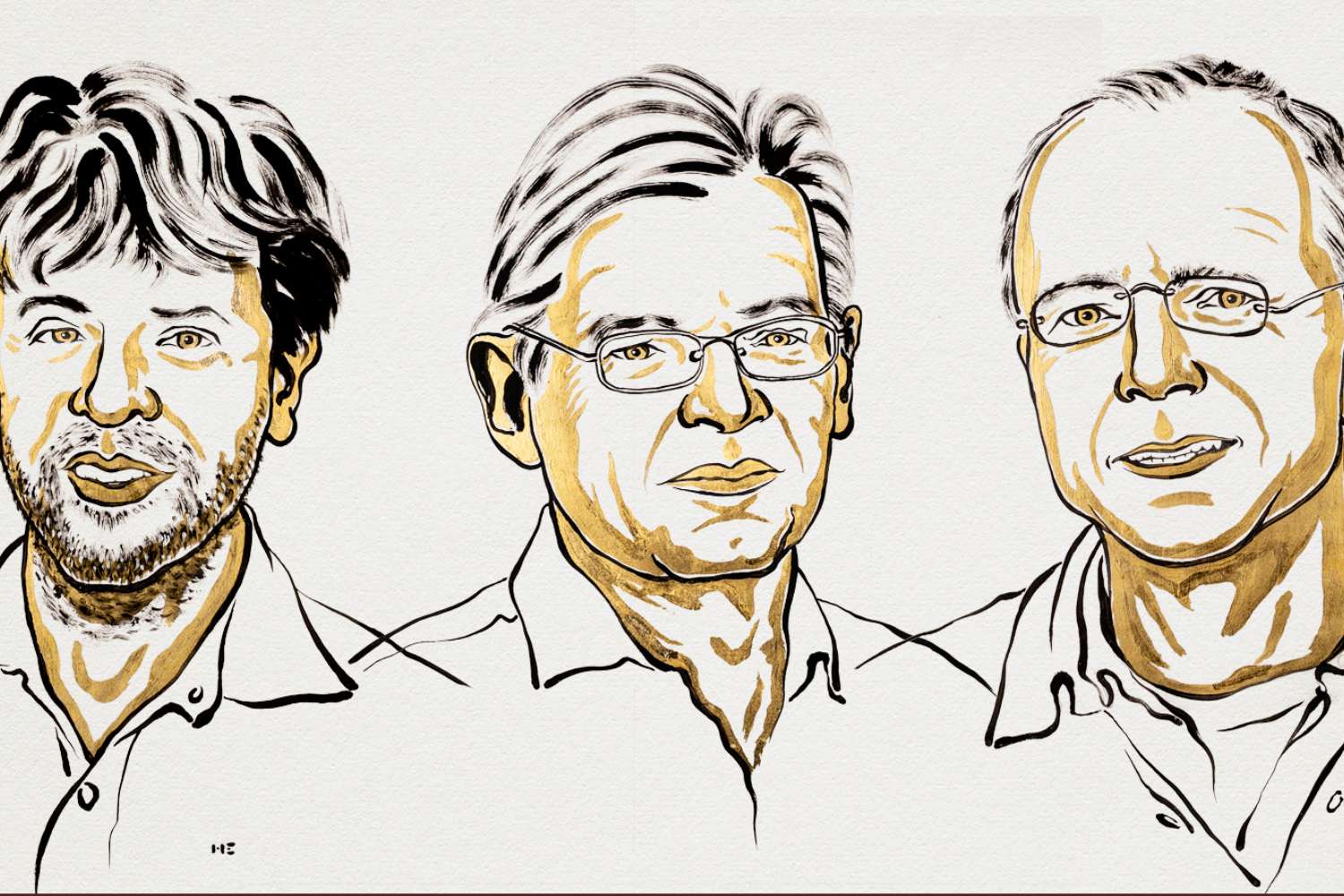


The optogenetics Nobel Prize in Physiology or Medicine went to Karl Deisseroth, Peter Hegemann and Georg Nagel on Monday, 5 October 2026, for tools that switch brain cells on and off with light.
According to STAT, the Nobel Assembly at Sweden’s Karolinska Institutet announced the winners in Stockholm, citing their “discoveries concerning light-gated ion channels and optogenetics”.
The announcement was scheduled for 11:30 local time (11:30 SAST), and the three laureates share a prize of 12 million Swedish kronor, about $1.2 million.
Who won the optogenetics Nobel Prize?
Karl Deisseroth is a professor of bioengineering and psychiatry at Stanford University in the United States and is also affiliated with the Howard Hughes Medical Institute.
Peter Hegemann is a neuroscience professor at Humboldt University of Berlin, while Georg Nagel is a professor of molecular plant physiology at the University of Würzburg, both in Germany.
Thomas Perlmann of the Nobel Assembly said all three laureates were delighted by the news.
He said they described the moment as “absolutely wonderful to receive the prize with the other two” and called each other “my friends”.
How does optogenetics work?
Optogenetics combines light with genetic engineering to control individual nerve cells, known as neurons. Hegemann and Nagel identified channelrhodopsin, a light-sensitive protein found in single-celled algae.
When blue light strikes the protein, it opens a channel in the cell membrane, which lets charged particles called ions through and produces an electrical signal.
Deisseroth then introduced the gene for that protein into nerve cells. In 2005, he showed that flashes of blue light could trigger activity in those cells, and later work showed the method also functioned in the brains of living mice.
The Nobel Committee described his contribution as turning the protein into “a light-controlled switch for nerve cells”.
What the optogenetics Nobel Prize means for medicine
Optogenetics “makes it possible to switch on, or off, the activity of individual nerve cells in a living brain”, Perlmann said. The Nobel Committee said the method shows “how nerve cells shape memories, feelings and behaviours in the living brain”, and its chair, Per Svenningsson, added:
“Optogenetics provides opportunities for mapping the brain in a way that we could once only dream of.”
David Pendlebury of Clarivate’s Institute for Scientific Information said the work had “fundamentally changed how scientists understand the brain and nervous system”. Perlmann pointed to the global use of the technique in research settings, saying:
“This method is now being used in laboratories around the world to reveal the brain’s mysteries.”
Clinical trials are also using light-sensitive proteins placed in the retina to restore vision in people blinded by retinitis pigmentosa, an inherited eye disease that damages the light-detecting cells at the back of the eye.
The Nobel announcements continue with Physics on Tuesday, 6 October 2026, at 11:45 local time (11:45 SAST), followed by Chemistry on Wednesday, 7 October 2026, and Literature on Thursday, 8 October 2026, at 13:00 local time (13:00 SAST).
The Peace Prize follows on Friday, 9 October 2026, at 11:00 local time (11:00 SAST).