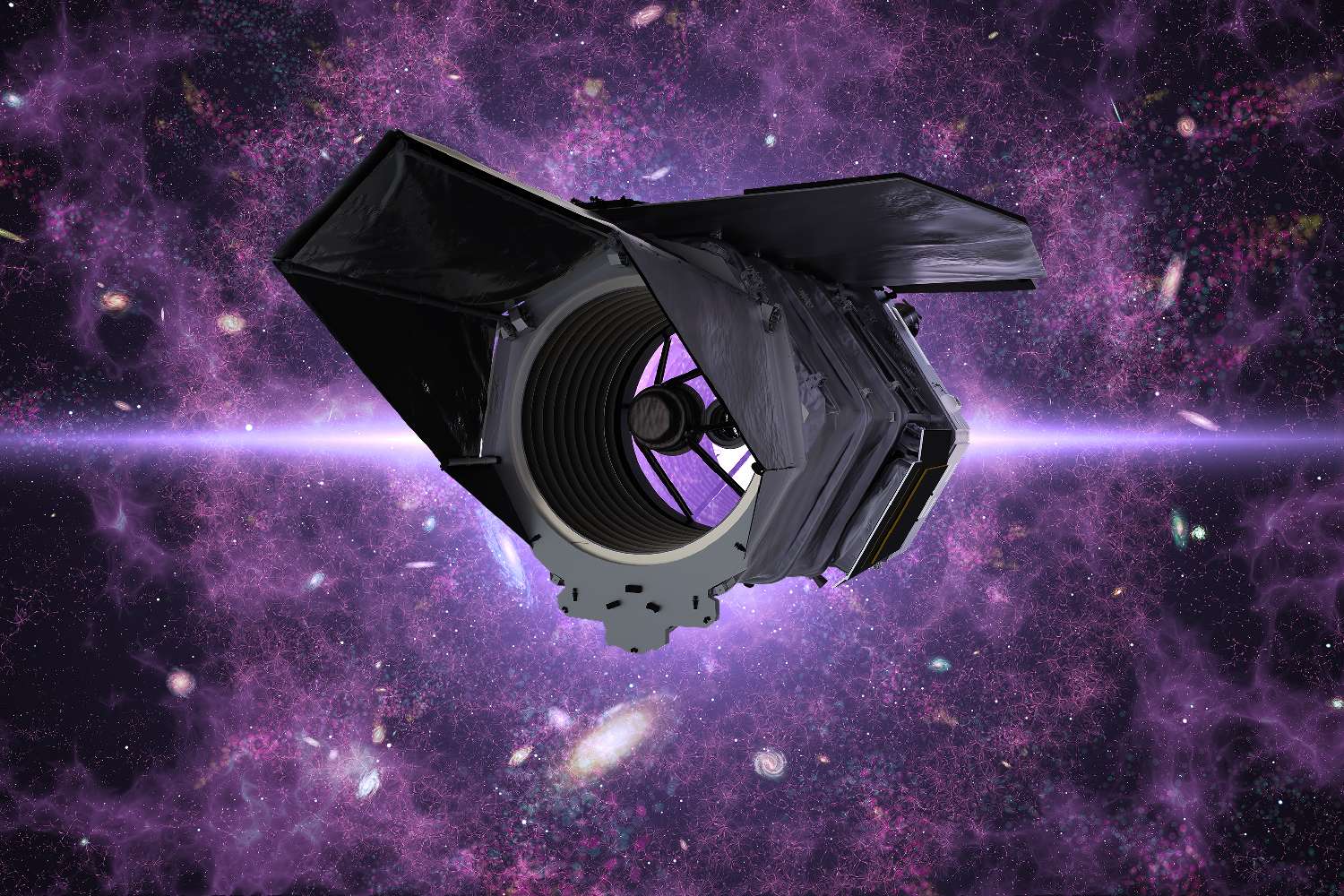


NASA’s Nancy Grace Roman Space Telescope launch went ahead at 07:26 US Eastern time (13:26 SAST) on Sunday, 30 August 2026, lifting off from the Kennedy Space Centre in Florida aboard a SpaceX Falcon Heavy rocket.
The observatory began a three-month cruise of roughly 1.6 million kilometres to its final orbit, according to NASA, which expects to release Roman’s first images by early 2027.
It flew from Launch Complex 39A, the same Kennedy pad that sent Apollo crews to the Moon.
Why the Nancy Grace Roman Space Telescope launch matters
Field of view is the phrase doing the heavy lifting here, and it simply means how much sky a telescope can capture in a single shot. Roman’s infrared field of view is 200 times greater than the one Hubble has been working with since 1990.
That width is what lets Roman produce the first wide-field maps of the universe at space-based resolution, meaning big pictures that stay sharp because there is no atmosphere blurring them.
NASA designed the observatory to survey the sky roughly a thousand times faster than Hubble managed.
Coronagraph tech on the Roman Space Telescope launch
A coronagraph is a light blocker, an instrument that masks the glare of a star so that the far dimmer planets orbiting it become visible. Dr Nicky Fox, NASA’s associate administrator for the Science Mission Directorate, singled out that hardware at the post-launch press conference.
Fox put it this way:
“With Roman we are going to make this giant leap forward with the coronagraph technology that is going to allow us to look at these distant, distant worlds and start to really resolve the atmosphere around them to let us know could they be habitable.”
The survey list runs wide. Roman was built to study dark matter and dark energy, the invisible mass and the unexplained force that together shape how the universe expands, alongside exoplanets and objects ranging from our own solar system out to galaxies at the edge of the observable universe.
The astronomer behind the Roman Space Telescope name
Nancy Grace Roman was NASA’s first chief astronomer and an early architect of the agency’s space telescope programme, the effort that eventually produced Hubble. She spent her career pushing the argument that observatories work far better parked above Earth’s atmosphere than under it, and the mission carries her name for that reason.
Getting to the pad was not guaranteed. The mission survived proposed budget cuts under the Trump administration before it reached launch, and Sunday’s liftoff put an observatory in space that had already been through a fight over whether it should be funded at all.
Roman now has three months of travelling ahead before it settles into its final orbit and begins survey work, with NASA’s first image release pencilled in for early 2027. It arrives as the agency’s next flagship observatory after Hubble and James Webb, and the first designed to map wide rather than deep.