


The White House arcade game that copied Tetris block-stacking to simulate building a border wall drew a rebuke from the Tetris Company on Friday, 4 September 2026, over copyright.
The official White House website added a page called “arcade” hosting browser-based games promoting the administration’s immigration enforcement agenda, as reported by Bloomberg.
One title, described as resembling “Build the Wall”, asked players to stack blocks into a barrier to stop migrants crossing the United States border.

What the White House arcade game actually asked players to do
The block-stacking mechanic sat at the centre of the complaint. Tetris, released in 1984 by Soviet engineer Alexey Pajitnov, built its entire identity on falling tetrominoes, the four-square shapes players rotate and slot into clean rows.
Swapping those rows for a border wall lifted a recognisable game grammar wholesale.
A second game on the page, “Rio Run”, put players on patrol along a river, picking up migrants as they went.
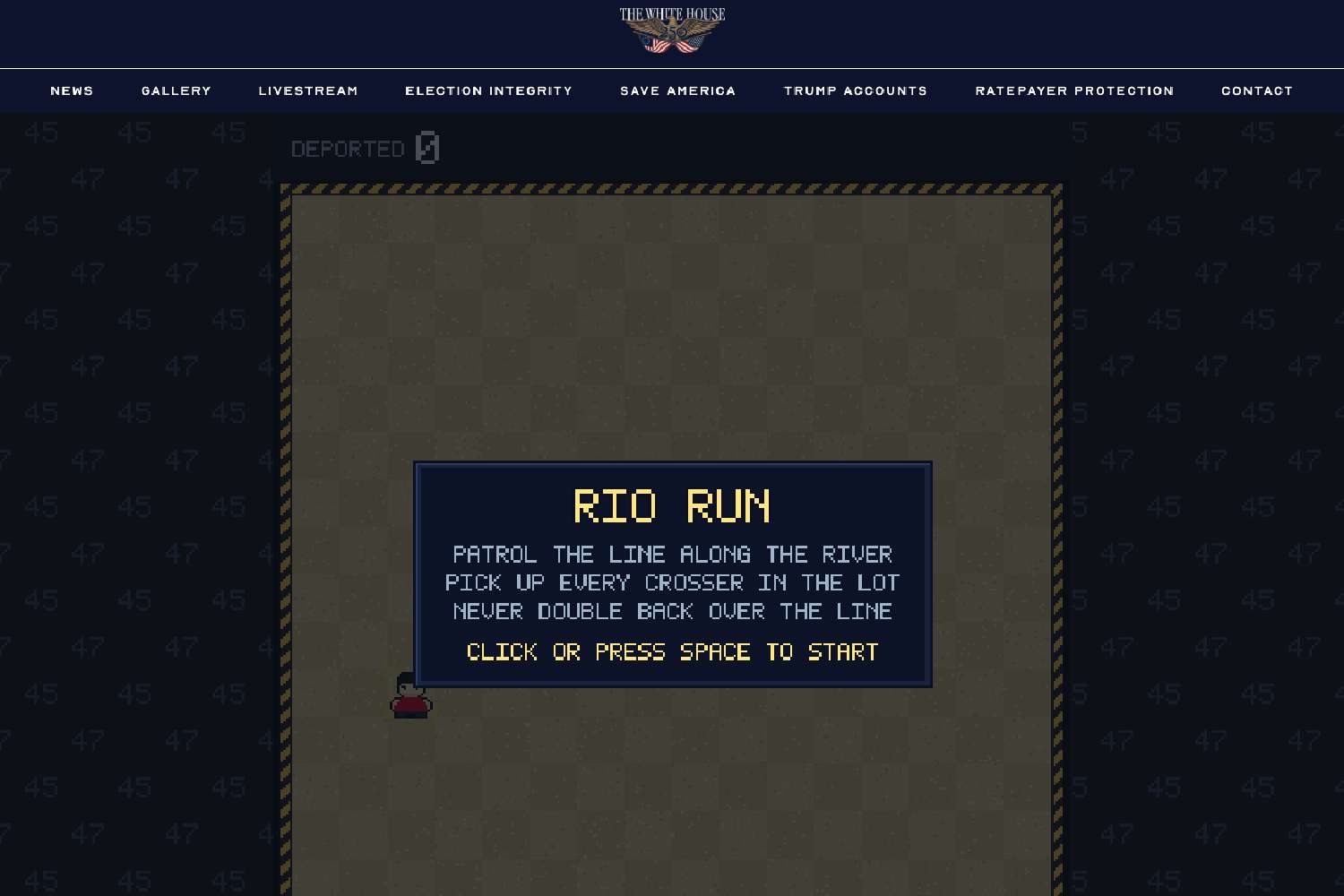
The arcade’s promotional material also carried imagery echoing franchises from Sega, Microsoft-owned Xbox and the Flappy Bird Foundation, none of which were reported to have granted permission.
Why the White House arcade game triggered a copyright fight
In its Friday post on X, formerly Twitter, the Tetris Company said it had no involvement in the creation of “Build the Wall” and that it treated copyright infringement very seriously.
The company did not announce legal action, and the exact wording of its statement could not be verified at the time of publishing.
The distinction at the heart of the row was between copyright, which protects the expression of a work such as its art, code and audio, and trademark, which protects the branding.
Bare game mechanics are notoriously hard to own, which is why clones exist, but a recognisable visual style sits on firmer ground.
The Tetris Company is the licensing body that controls the brand worldwide, and it has a long record of enforcing that ownership against imitators. That history mattered here, because the company rarely let an unlicensed block-dropper wearing its silhouette pass without a public objection.
Public condemnation focused less on intellectual property than on the framing. Critics called the games racist and dehumanising, singling out the mechanic that had players “picking up” migrants as if they were collectible objects, a scoring loop borrowed from decades of arcade design.
Where the arcade page goes from here
The other rights holders named in the coverage stayed quiet, and neither Sega nor Microsoft signalled whether they would pursue the matter. Any move would likely start with a takedown demand rather than a courtroom, leaving the arcade page live until someone with a portfolio of trademarks decides to test it.