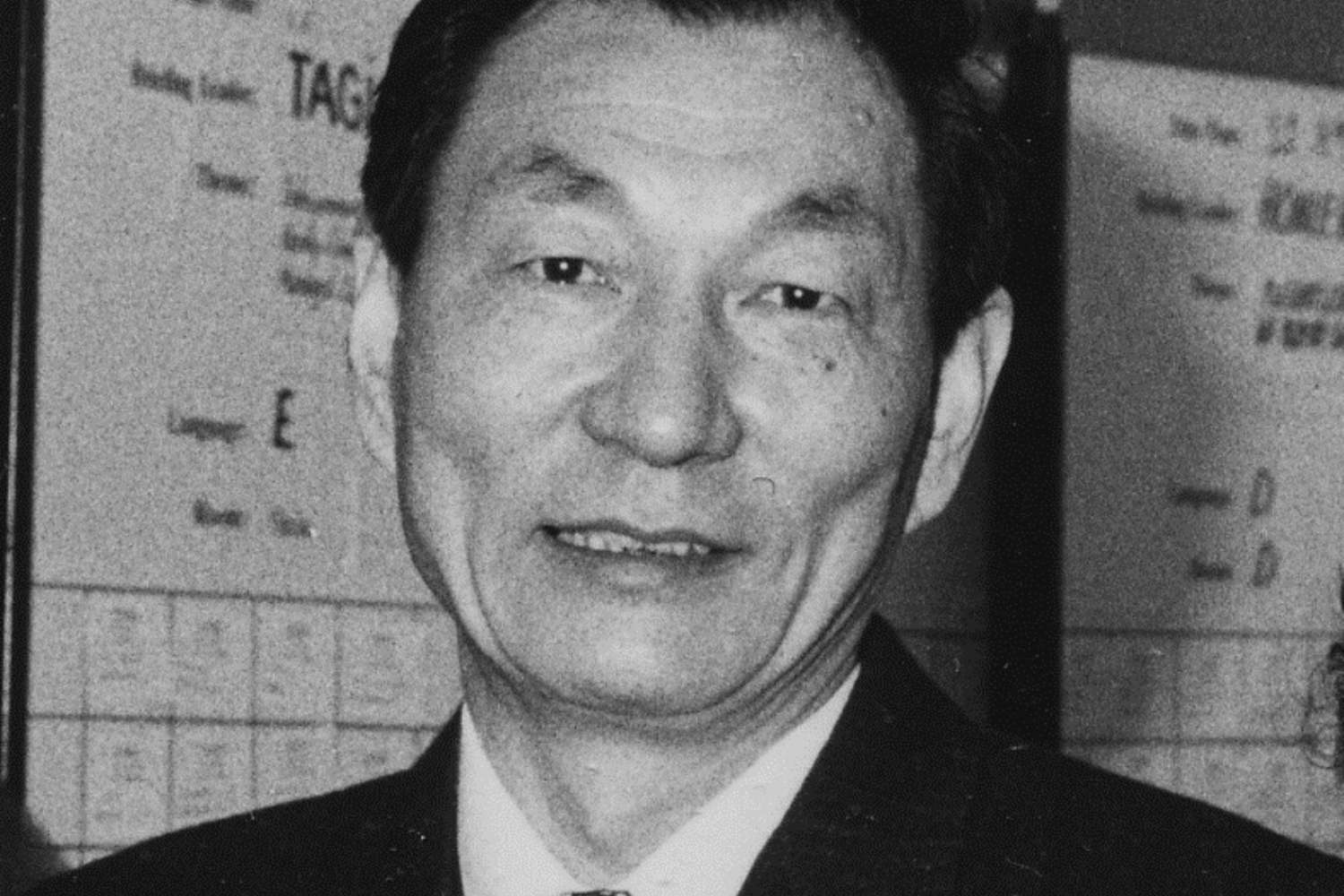


Zhu Rongji, the former Chinese premier who led his country into the World Trade Organisation, died at 97 on Wednesday, 12 August 2026, after an illness.
Zhu served as premier from 1998 to 2003, holding the country’s top economic post. Chinese state media gave the cause of death as illness, as reported by NPR.
He had lived quietly in Beijing since retiring.
Who was Zhu Rongji before he became premier?
Born in Changsha, in Hunan province, in 1928, Zhu lost his father before he was born and his mother when he was nine. He graduated in electrical engineering from Tsinghua University, led its student union, and joined the Chinese Communist Party in October 1949.
In 1958 he was labelled an ideological “rightist” and briefly expelled from the party for criticising Chairman Mao Zedong’s economic policies. He was purged again in 1970, during the Cultural Revolution, and sent to a re-education school for five years of manual labour.
Zhu was rehabilitated after Mao’s death in 1976, once Deng Xiaoping came to power. Addressing bureaucrats in 1987, shortly before he was appointed mayor of Shanghai, he described his own approach to government in plain terms:
“My defining characteristic is independent thought. I say what I think.”
How Zhu Rongji remade China’s state economy
As central bank governor he brought runaway inflation under control, and as vice premier he led a centralisation of the tax system. Appointed premier in 1998, he promised to fix indebted state banks in two years and state enterprises in three.
His most contested decision was the restructuring of China’s state-owned enterprises. Zhu closed smaller, inefficient companies, leaving an estimated 30 million state workers jobless. Dorothy Solinger, professor emerita at the University of California, Irvine, judged the government’s response harshly:
“The central government decided that the laid-off worker problem could just be ignored and forgotten.”
Zhu built a basic welfare system to offset the impact and took steps to improve rural healthcare, though parts of China’s north-east, reliant on state heavy industry, never fully recovered. He set out the stakes of his anti-corruption campaign bluntly:
“I have prepared 100 coffins: 99 for the corrupt officials and one for myself.”
What Zhu Rongji leaves behind at 97
The negotiation that defined his premiership abroad ran six and a half years and ended with China joining the World Trade Organisation in 2001, after the United States Senate voted in 2000 to grant Beijing preferential trading status.
The deal turned China into an export powerhouse. Charlene Barshefsky, the former United States Trade Representative who negotiated opposite Zhu, described the economic model he was working towards, one far removed from the planning orthodoxy that preceded him:
“[He] embraced the notion of a China whose economic system was more compatible with that of the West. And by compatible, I mean vastly reformed, more open, less state-dominated, very limited state intervention.”
Zhu retired in 2003 and withdrew almost entirely from public life, spending his final years at his Beijing home, where he listened to Peking Opera.
His death drew a line under an era when China’s leadership argued openly for a smaller state.