

The local government elections 2026 take place on Wednesday, 4 November 2026, when voting stations are open from 07:00 to 21:00 and registered voters choose councillors for their own wards and parties.
According to the Electoral Commission of South Africa (IEC), voters must show a valid identity document at the door of their voting station: a green barcoded ID book, a smart card ID or a temporary identity certificate. President Cyril Ramaphosa declared the day a public holiday on Tuesday, 15 September 2026.
Cooperative Governance and Traditional Affairs Minister Velenkosini Hlabisa proclaimed the date on Friday, 7 August 2026, which started an 89-day election timetable. Electoral Commission chairperson Mosotho Moepya, speaking to reporters in Pretoria, said of the proclamation:
“The proclamation provides certainty by formally setting Wednesday, 4 November 2026, as Election Day,” Moepya said.
How voting works in the local government elections 2026
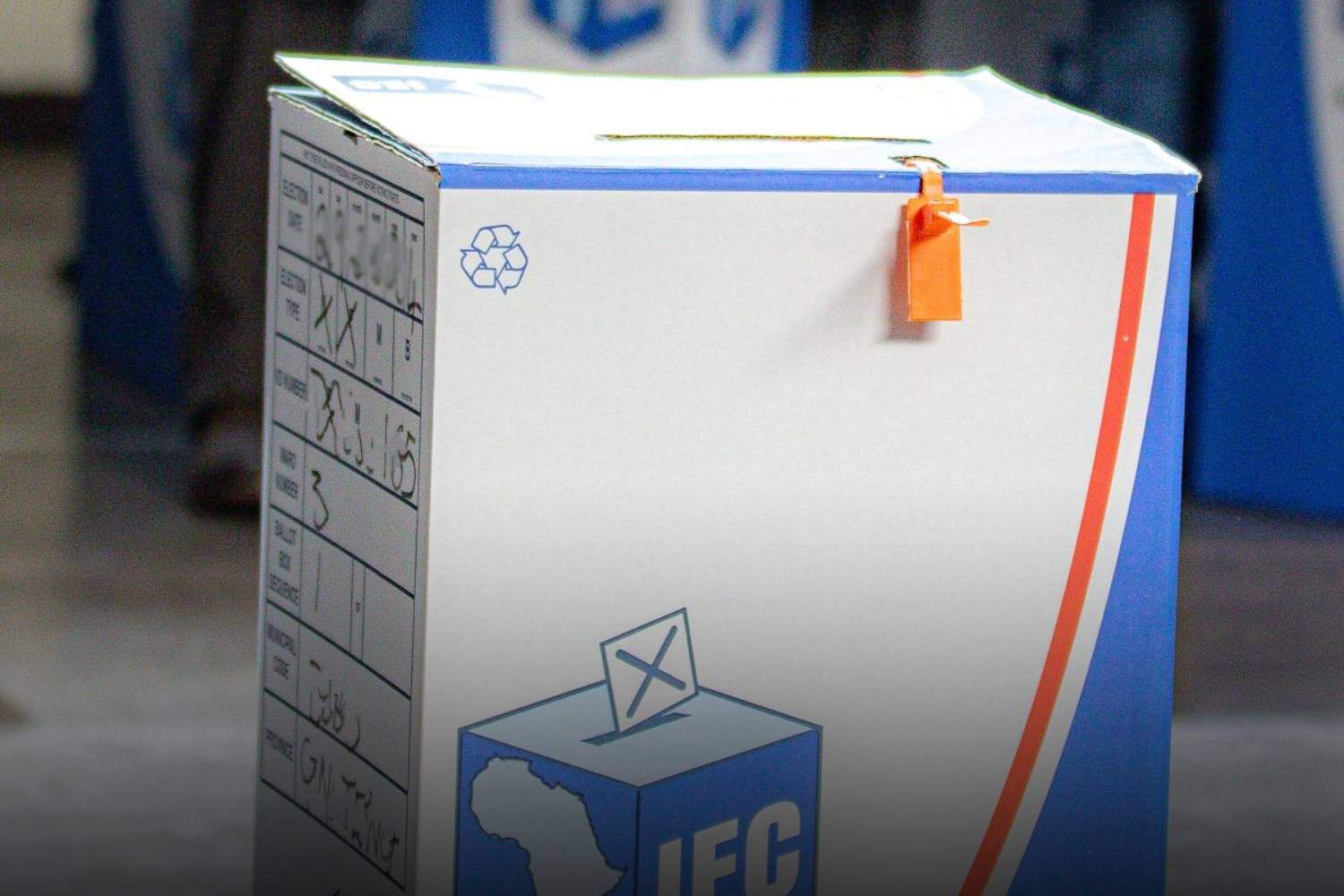
Voters can cast their ballots only at the voting station in the ward where they are registered. An official scans the identity document, the voter’s name is crossed off the voters’ roll and the left thumbnail is inked. The voter then marks the ballot papers in a booth and drops them in the ballot box. Photographing a marked ballot is not allowed.
Voters in metros receive two ballot papers, one for a ward candidate and one for a party; voters in local municipalities under a district council get a third. Seats on metro and local councils are split equally between ward and party-list councillors.
The voters’ roll closed at midnight on Friday, 7 August 2026, when the election was proclaimed. More than 29 million people are registered to vote after two registration weekends, held on 20 and 21 June 2026 and on 1 and 2 August 2026.
Polling day falls inside the matric examination period, and the national timetable lists no papers from Tuesday, 3 November 2026 to Thursday, 5 November 2026. Umalusi chief executive Mafu Rakometsi said the quality assurance council would work with education departments and other stakeholders to minimise disruption, especially at schools that double as voting stations.
Special votes before the local government elections 2026
Voters who cannot vote on polling day can apply for a special vote. Those who cannot travel because they are physically infirm, disabled or pregnant can be visited at home, while others vote at their own voting station. Both run on Monday, 2 November 2026 and Tuesday, 3 November 2026, from 08:00 to 17:00. Applications closed on Monday, 12 October 2026.
Where the results come from
Votes are counted at each voting station once polls close at 21:00. The results are captured in the IEC’s results system, which political parties were invited to test in an audit that began on Monday, 5 October 2026. The Commission then determines the outcome for each municipality and declares it in public.
The law gives the Commission seven days to declare the results, and it can ask the Electoral Court for more time. Results for these elections are published by the IEC on its online results dashboard.
Sources
- Electoral Commission of South Africa, Election Timetable for the 2026 Local Government Elections (PDF)
- Electoral Commission of South Africa, How to vote
- Electoral Commission of South Africa, About special vote
- Electoral Commission of South Africa, home page and results dashboard
- Electoral Commission of South Africa, 2021 Local Government Elections Electoral System presentation (How Council seats are calculated)
- South African Government, Electoral Commission opens special vote applications for 2026 Local Government Elections (21 September 2026)
- South African Government, President Cyril Ramaphosa declares Election Day, 4 November 2026, as a public holiday (15 September 2026)
- SAnews, LGE: President Ramaphosa declares 4 November as a public holiday
- SAnews, Electoral Commission publishes Election Timetable (7 August 2026)
- SAnews, Local Government Election Results System audit gets underway (6 October 2026)
- EWN, Voters' roll surpasses 29 million ahead of local government elections
- SAnews, Two ballots for Metro voters
- Local Government: Municipal Electoral Act, 2000, section 64, Determination and declaration of result of election
- Umalusi, Umalusi confirms readiness for the 2026 year-end national examinations (8 October 2026)
- IOL, Umalusi declares 2026 matric exams ready despite marker shortages and election disruption fears
- Swisher Post, ANC mayoral candidates for metros left undecided
- Swisher Post, Matric exam timetable 2026: What to know before paper one