Finance Minister Enoch Godongwana announced a fuel levy cut of R3 a litre for diesel and R1.50 a litre for petrol on Wednesday, 21 October 2026, effective from 4 November.
According to SAnews, Godongwana made the announcement while tabling the Medium-Term Budget Policy Statement in Parliament. The cut applies from 4 November 2026 to 1 December 2026, after which the relief continues at a lower amount until 5 January 2027, with diesel cut by R1.50 a litre and petrol by R1 a litre.
What the fuel levy cut means for diesel and petrol
The general fuel levy is a tax added to every litre of petrol and diesel sold in South Africa. On a 50-litre tank, the first phase takes R150 off a diesel fill and R75 off a petrol fill, and the second phase takes off R75 for diesel and R50 for petrol.
The monthly fuel price adjustment published by the Department of Mineral and Petroleum Resources is made up of the basic fuel price, taxes and levies, and margins, and the levy cut changes only the levy portion of that price.
Petrol 95 costs R30.25 a litre inland and R29.38 at the coast after the October 2026 fuel price increase, and Brent crude oil prices have risen because of conflict in the Middle East. Godongwana described the aim of the relief:
“This intervention will help to ease cost of living pressures without compromising the sustainability of the budget,” Godongwana said.
How the fuel levy cut is funded
The relief costs the fiscus R10 billion in foregone revenue. Godongwana said the R10 billion transferred to the Central Energy Fund will be returned to the National Revenue Fund to finance it. Several political parties had pressed him to cut fuel levies before the statement, citing high fuel prices and rising food and transport costs.
Fuel levy cut follows protest call and rising transport costs
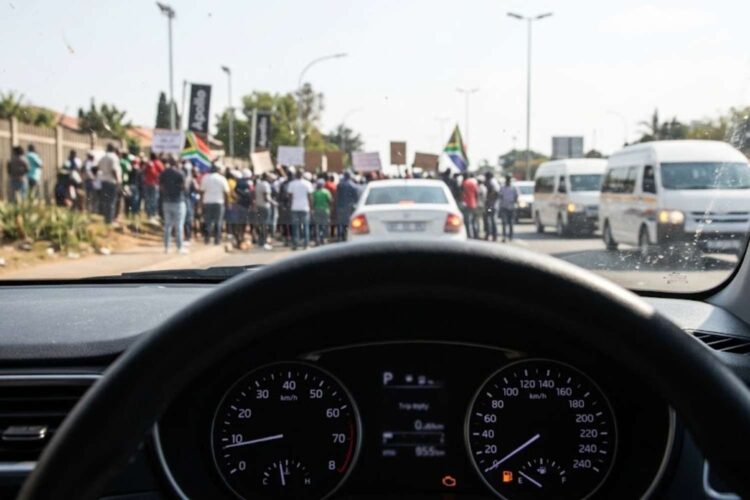
The announcement follows a call for a national shutdown on Monday, 19 October 2026 by Concerned Citizens of South Africa, which wanted cuts to fuel taxes and levies. Statistics South Africa data show consumer price inflation rose to 4.5% in September, with transport costs up 10.8% year on year.
Waldo Krugell, a professor of economics at North-West University, said the high-income group benefited most from the temporary levy relief that applied earlier this year and cost at least R17.2 billion:
“About R1 billion, one rand in every seventeen, reached the poorest 40% of households,” Krugell said.
The fuel levy cut takes effect on Wednesday, 4 November 2026, and runs at the higher rates until Tuesday, 1 December 2026. The lower rates apply after that date, and the relief is due to end on Tuesday, 5 January 2027.
Sources
- SAnews, Finance Minister announces fuel levy relief
- IOL, Fuel price relief confirmed: Godongwana announces temporary tax cut from November
- The Citizen, Godongwana reduces fuel levy until January: Here's by how much
- Swisher Post, October 2026 fuel price increase: How much a litre costs
- Swisher Post, National shutdown on 19 October: What the fuel protest wants
- Swisher Post, South Africa extends fuel levy cut as Iran war keeps oil above $120 a barrel