

A second round of US-Iran nuclear negotiations could take place as early as this week, President Donald Trump has indicated, after the collapse of talks in Islamabad last weekend triggered a US naval blockade of the Strait of Hormuz that has pushed Brent crude above $100 per barrel and threatens to add as much as R4.50 per litre to South African petrol prices in May.
The diplomatic crisis has deepened rapidly since Sunday 13 April 2026, when Vice-President JD Vance’s delegation left Islamabad without an agreement, prompting Washington to activate the military blockade it had threatened for weeks.
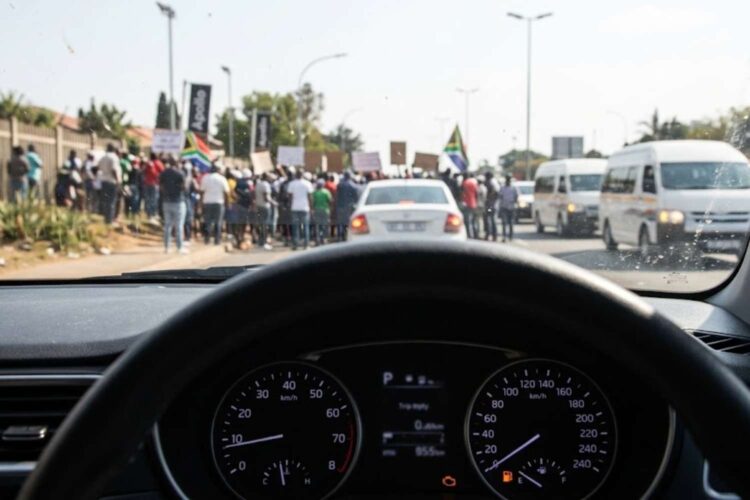
South African motorists are already paying approximately R25.18 per litre for 95 Unleaded petrol at inland stations following a R3.06 per litre increase on 1 April, the largest single-month adjustment in several years.
What broke down and what is being offered
The central sticking point in the Islamabad talks was the American insistence that Tehran commit to abandoning the capacity to produce a nuclear weapon, not merely agree to pause enrichment.
Iranian Foreign Minister Abbas Araghchi said his country had engaged in good faith but ran into “maximalism, shifting goalposts, and blockade” when the two sides were close to a framework. Iran maintains that its nuclear programme is entirely peaceful.
Vance, speaking after the collapse, said the direction of any future talks remained clear. “The ball is in Iran’s court,” Vance said.
Trump subsequently told the New York Post that new discussions “could be happening over next two days,” suggesting that back-channel mediators have kept a narrow window open ahead of the two-week ceasefire deadline, which expires on 22 April 2026.
What it means for South African consumers
For South Africa, the stakes are acutely practical. Brent crude climbed to approximately $102 per barrel following the blockade announcement, a dramatic reversal from the $94 level it had reached during the brief ceasefire.
Energy analysts now project a further increase of up to R4.50 per litre for the May 2026 fuel price adjustment, which would push inland 95 Unleaded close to R30 per litre.
The rand weakened to approximately R16.53 to the dollar on Monday as investors reacted to renewed geopolitical uncertainty. ETM Analytics warned that the crisis threatens to raise South Africa’s import costs, disrupt tanker routes previously protected by the country’s diplomatic non-alignment, and intensify domestic inflationary pressures across a range of goods that depend on diesel and petrol logistics chains.
The government has temporarily cushioned consumers through an emergency reduction of R3.00 per litre in the general fuel levy, effective from 1 April to 5 May 2026.
Whether that relief measure will be extended depends significantly on how quickly the blockade situation resolves.
What happens if talks succeed
A sustained oil price below $100 would not immediately lower pump prices but would reduce the upward pressure on May’s adjustment and potentially enable a reversal in June.
The rand, which tracks risk sentiment closely, would also be expected to strengthen against the dollar on any credible ceasefire extension or deal announcement, providing indirect relief through lower import costs across the broader consumer basket.
Mediators from Oman, Qatar, and Pakistan are reportedly working to bring both sides back to the table before the 22 April ceasefire deadline.
The next 72 hours are seen as decisive. Swisher Post will continue to monitor developments and their direct impact on South African fuel pricing.