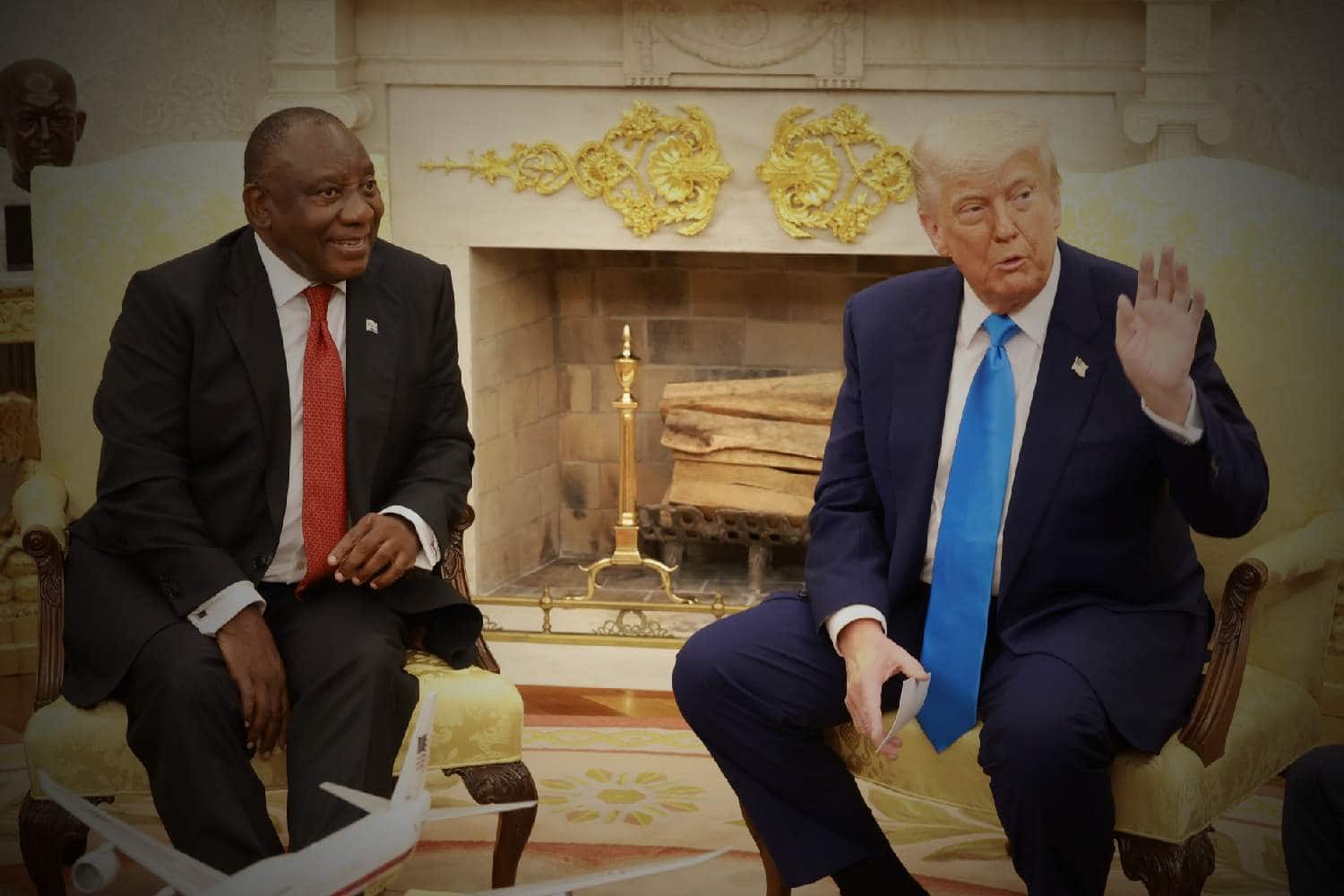


The South Africa AGOA removal was announced on Monday, 2 November 2026, when the US Trade Representative said President Donald Trump will end the country’s duty-free access to the American market from 1 January 2027.
According to the Office of the US Trade Representative (USTR), South Africa and Rwanda were removed for engaging in practices that are inconsistent with the eligibility criteria of the African Growth and Opportunity Act (AGOA). The programme, enacted in 2000, gives eligible sub-Saharan countries duty-free access to the US market for more than 1 800 products.
Why the South Africa AGOA removal was announced
The USTR statement gave no specific examples. Washington has previously criticised South Africa’s Expropriation Act, its black economic empowerment policies and its case against Israel at the International Court of Justice, and the US denied accreditation to South Africa’s finance minister and Reserve Bank governor at a G20 finance meeting in April 2026.
USTR Jamieson Greer said the administration “is working to ensure our African partners take the necessary steps” to meet the criteria, which would allow reinstatement. He also set out the concerns behind the decision in a statement released on Monday.
The administration is “deeply concerned by barriers to US trade and investment, corruption, and threats to US national security,” Greer said.
US Ambassador Brent Bozell wrote on X that the termination was “a predictable and preventable outcome” of policy. He added that he remained hopeful the two countries could “find a path forward to address our larger bilateral concerns.”
South Africa AGOA exports and the tariff gap
Trade, Industry and Competition Minister Parks Tau said AGOA exports were valued at about $1.7 billion in 2025, down from $4 billion in 2024. Only 10% of South Africa’s exports to the United States entered under AGOA in 2025, compared with 28% in 2024.
Losing AGOA adds a most-favoured-nation tariff of about 3.4 percentage points on top of the 12.5% tariff the US already applies, taking some products to 15.9%. That is below the 30% rate set under the 2025 “liberation day” measures.
The impact “would not necessarily be as catastrophic as we have faced in the past,” said Wandile Sihlobo, the presidential envoy on agriculture and land.
Sectors hit by the South Africa AGOA removal
Citrus Growers Association chairperson Gerrit van der Merwe warned of job losses in the Western and Northern Cape, where he said entire communities depend on trade with the US. Mandarin, lemon and grapefruit exporters face a disadvantage against Peru and Chile.
“A citrus grower cannot simply divert his crop to another market,” van der Merwe said.
Economist Eckart Naumann said automotive, steel and aluminium are unlikely to be affected because they already face special US tariffs, including a 25% levy on imported vehicles. Precious metals and minerals, almost two-thirds of exports to the US, were never AGOA-eligible. Edible ice is hit hardest, with more than $33 million in US exports in 2025.
South Africa has 60 days to address US concerns before any suspension takes effect, Trade Minister Parks Tau said, and the removal is due to take effect on Friday, 1 January 2027, after the USTR notified Congress.
Sources
- Office of the US Trade Representative, statement by USTR Jamieson Greer (2 November 2026)
- Daily Maverick, 'It doesn't spell doom': Experts weigh in after Trump boots SA from Agoa (3 November 2026)
- BusinessTech, United States deals severe blow to South Africa
- Associated Press, Trump administration will cut South Africa and Rwanda from the AGOA trade program (2 November 2026)
- US Ambassador Brent Bozell, post on X
- Swisher Post, Godongwana and Kganyago barred from G20 as US denies accreditation to South Africa
- Swisher Post, SA automotive industry wants Ramaphosa to counter Trump's 25% car tariff